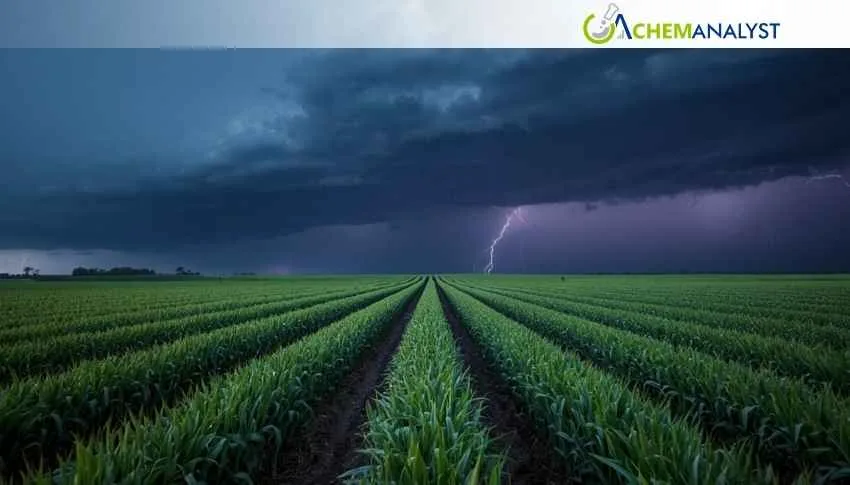
A major, high-impact El Niño event is expected to reach its threshold in the Pacific by the end of August, potentially becoming one of the strongest on record. This developing phenomenon poses significant global risks across various sectors, including climate, agriculture, and the economy. Experts are closely monitoring its rapid intensification, comparing it to powerful past events like those in 1997-98 and 2015-16.
The current El Niño is rapidly strengthening, with sea surface temperatures (SST) in the critical Niño 3.4 region showing a steady upward trend. This region, located in the equatorial Pacific, is a primary indicator for El Niño's intensity. Anomalously warm subsurface ocean temperatures are fueling this surface warming, providing a substantial heat reservoir. The Southern Oscillation Index (SOI), which measures atmospheric pressure differences between Tahiti and Darwin, Australia, also indicates El Niño conditions. Forecasts suggest an 81% chance of a "very strong" El Niño between October and December, potentially making it one of the largest since 1950.
This impending El Niño is set to influence global temperature and rainfall patterns, increasing the risk of extreme weather events worldwide. It typically causes heatwaves and droughts in some regions, while bringing heavy rain or cooler weather to others. Global temperatures could reach new highs, with widespread above-normal temperatures projected across nearly all parts of the globe for the June-July-August season. This heightens risks of heat stress and exacerbates drought conditions where rainfall is reduced.
The agricultural sector faces substantial threats, particularly in low- and middle-income countries. El Niño can weaken the summer monsoon in India, stressing rainfed crops like rice and maize. Southeast Asia, Australia, Southern Africa, Central America's Dry Corridor, and the Caribbean are highly vulnerable to agricultural drought and crop failures. Past El Niño events have led to failed harvests, livestock losses, rising household debt, and increased food insecurity, affecting millions and prompting significant humanitarian appeals. Commodity prices for staples such as rice, palm oil, coffee, cocoa, and sugar could experience volatility and inflation.
Beyond agriculture, El Niño can disrupt global supply chains and industries. Low water levels in the Panama Canal, for instance, could lead to shipping restrictions, impacting international trade. The energy sector may also see impacts on gas demand and renewable power generation, as changes in cloud cover, wind speeds, and precipitation affect solar, wind, and hydro output. Geopolitically, the increased frequency of extreme weather events could deepen humanitarian crises and potentially drive migration in vulnerable regions.
This El Niño event unfolds against a backdrop of global warming, which climate scientists believe will amplify its impacts. Human-driven climate change can boost Earth's temperature into uncharted territory, exacerbating extreme weather events that are already becoming more frequent and severe. This combination means the current El Niño could hit hardest in places already vulnerable, with limited capacity to cope.
Impact & Effect on Chemical Commodity Prices
This strong El Niño will disrupt crop yields, water availability, and logistics (notably the Panama Canal), tightening supply chains across agriculture and energy sectors, while pushing up costs for downstream manufacturing and transportation. For ChemAnalyst-tracked chemical commodities, expect price volatility: agrochemicals and fertilizers (urea, potash) may see demand shifts as farmers adjust to drought/flood risks; soda ash and caustic soda could face logistics-driven cost increases; and energy-linked chemicals (methanol, ethylene) may fluctuate with erratic power generation and fuel demand. Overall, feedstock disruptions, shipping delays, and weather-driven supply-demand imbalances are likely to create upward price pressure and increased volatility across key chemical value chains globally.








 About ChemAnalyst
Leave a Comment
Comments (0)