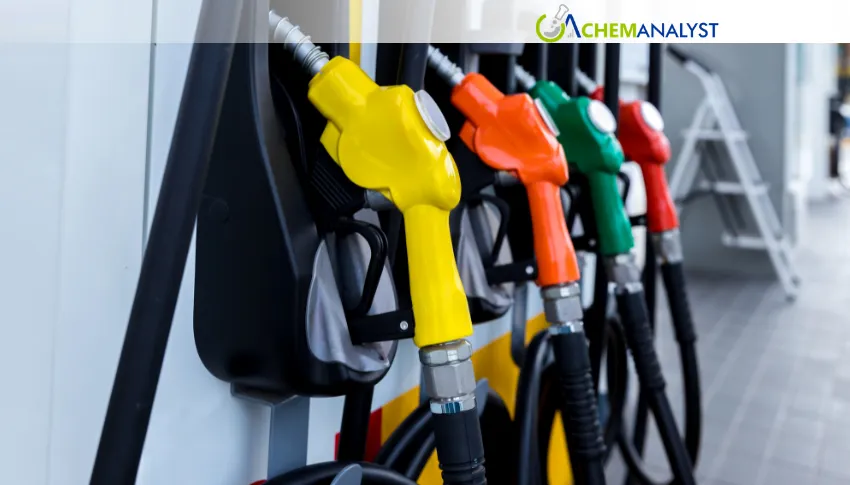
Malaysia's Ministry of Finance (MoF) announced that petrol and diesel prices will remain unchanged nationwide for the period of July 9 to July 15, 2026. This decision follows two consecutive weeks of price reductions. The MoF made the announcement on Wednesday, July 8, 2026.
For the specified week, unsubsidised retail prices are maintained. RON95 petrol remains at RM3.37 per litre, and RON97 petrol stays at RM4.00 per litre. Unsubsidised diesel is priced at RM3.97 per litre, with the Euro 5 B7 blend costing RM4.17 per litre.
The government also continues to heavily subsidise fuel for eligible citizens. Subsidised RON95 petrol, under the Budi Madani RON95 (Budi95) programme, is RM1.99 per litre. Subsidised diesel, through the Budi Madani Diesel (Budi Diesel) scheme, is RM2.10 per litre for eligible private vehicle owners, with a monthly quota of 200 litres. Diesel prices under the Subsidised Diesel Control System (SKDS) are RM2.05 per litre, while the SKDS fleet card mechanism sets the price at RM2.15 per litre. In Sabah, Sarawak, and Labuan, diesel also remains at RM2.15 per litre.
The stability in fuel prices stems from a moderation in international petroleum market prices. These global prices have eased from the peaks recorded during the ongoing Middle East conflict, now in its fifth month. This moderation is attributed to a reduction in geopolitical risk premiums, a restoration of supply flows, and increased price competition among major producers.
Despite this moderation, the MoF highlighted that risks to prices and supply persist. Recent developments in West Asia, including renewed clashes between the United States and Iran, could trigger significant price fluctuations if the conflict remains unresolved. In the medium term, expectations of a global oversupply, driven by recovering production and moderating demand, are anticipated to limit further price increases. However, any new disruptions to key trade routes could still introduce considerable volatility.
Malaysia employs an Automatic Pricing Mechanism (APM), introduced in 1983, to stabilise domestic fuel prices. This mechanism adjusts prices weekly based on global oil markets, currency exchange rates, and government subsidies. The APM specifically uses the Mean of Platts Singapore (MOPS) index, which reflects refined product prices, as a benchmark rather than crude oil prices.
The government maintains a prudent approach to shield consumers from global price volatility. While the national fuel supply remains sufficient, the MoF encourages the public to practice prudent fuel consumption. More efficient travel planning and reducing unnecessary trips can help manage national fuel demand and ease pressure on government subsidy expenditures.
Impact & Price Outlook
The unchanged pricing reflects easing global petroleum markets as geopolitical risk premiums recede and supply flows normalize after months of Middle East-driven volatility. For Malaysian consumers and businesses, this stability offers short-term relief, supporting predictable input costs for transportation, logistics, and manufacturing sectors reliant on diesel and petrol.
From a chemical commodities standpoint, this moderation signals a potential stabilization in feedstock costs tracked by ChemAnalyst, particularly for petroleum-derived products like naphtha, polymers, and petrochemical intermediates, since MOPS-linked benchmarks influence regional pricing sentiment. However, renewed US-Iran clashes introduce downside risk—any escalation could reverse this trend, pushing up crude and refined product costs, thereby increasing feedstock prices for olefins, aromatics, and downstream derivatives across Southeast Asia.
Medium-term expectations of global oversupply, driven by recovering production, may cap further price hikes, offering some cushion for chemical manufacturers dependent on stable energy costs, though volatility remains a persistent risk factor.







 About ChemAnalyst
Leave a Comment
Comments (0)