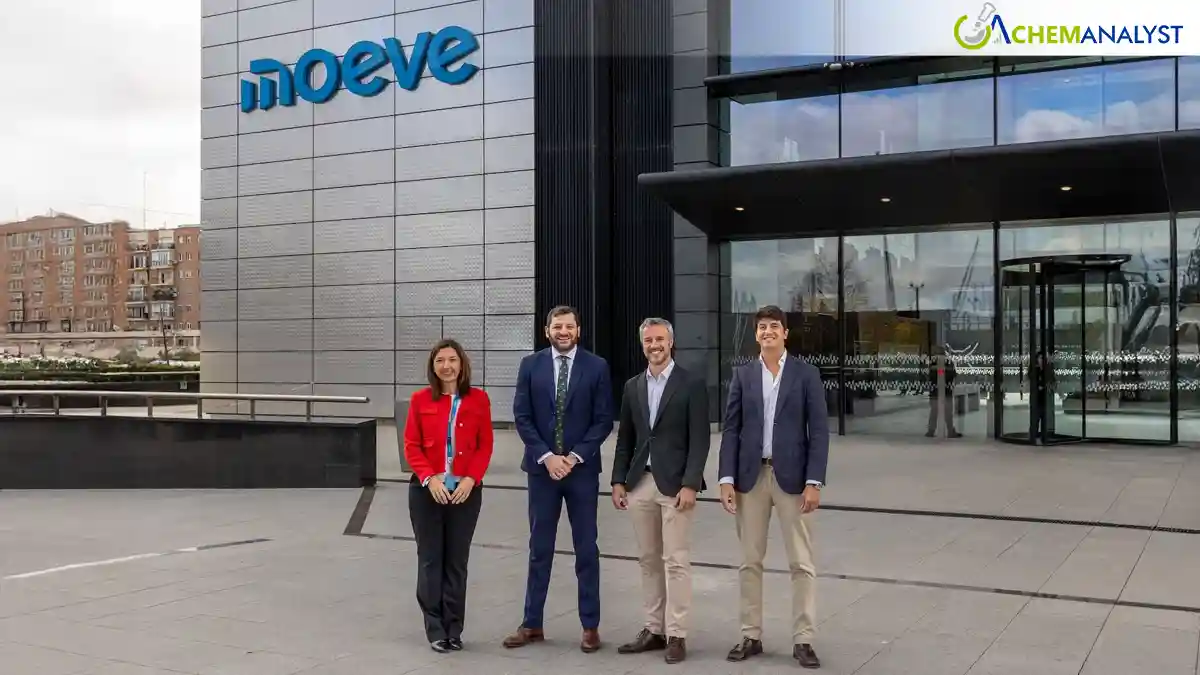
Moeve has taken another significant step forward in its biomethane development strategy by entering into a strategic collaboration with Pretium Renovables. Through this agreement, the two companies will jointly promote the development of between four and six new biomethane production plants across Spain. Each of the planned facilities is expected to have an annual production capacity of approximately 60 gigawatt-hours (GWh), reinforcing Moeve’s ambition to scale up renewable gas generation nationwide.
This partnership forms a key pillar of Moeve’s broader biomethane roadmap and aligns closely with its Positive Motion transformation strategy, which focuses on accelerating the energy transition, strengthening the circular economy, and advancing decarbonization efforts. By incorporating Pretium Renovables—a company with proven expertise in biomethane project development—as a strategic partner, Moeve aims to expedite project execution and maximize regional impact.
The new biomethane plants will be developed in multiple regions of Spain, with Andalusia identified as a priority area due to its high availability of agricultural and livestock waste, as well as its strong renewable energy potential. Each facility is expected to reduce carbon dioxide emissions by approximately 14,600 tonnes per year. This reduction is equivalent to the emissions produced by more than 11,400 households using conventional natural gas, highlighting the substantial environmental benefits of the initiative.
Adrien Souchet, Director of Biomethane at Moeve, emphasized that the agreement significantly strengthens the company’s ecosystem of strategic partnerships. He noted that collaborating with specialized developers such as Pretium Renovables will allow Moeve to accelerate the deployment of biomethane projects and support the implementation of decarbonization initiatives in regions with strong growth potential. According to Souchet, these efforts will also stimulate economic activity and generate social value in rural areas, particularly in southern Spain.
Laureano Parrilla, Director of Pretium Renovables, described the agreement as a defining milestone for his company. He stated that the partnership consolidates Pretium Renovables’ position as a leading biomethane developer in Spain and supports its mission to deliver integrated projects that create tangible value for local territories. Parrilla underlined that the collaboration will contribute to decarbonization, strengthen the circular economy, and promote rural economic development, while positioning Andalusia as a benchmark region for renewable gases.
The agreement complements Moeve’s long-term roadmap to establish an integrated ecosystem centered on second-generation (2G) biofuels. In pursuit of this goal, Moeve has already built a robust network of partners, including ID Energy Group, Kira Ventures, PreZero, and InproEner.
Biomethane will play a crucial role in reducing emissions from Moeve’s energy parks and chemical facilities, while also helping customers and industrial partners lower their carbon footprints. Additionally, biomethane serves as a complementary energy vector for green hydrogen production and the advancement of sustainable mobility solutions. These initiatives support Moeve’s target of reducing scope 1 and 2 CO2 emissions by 55% by 2030 compared with 2019 levels.
Moeve has set an ambitious objective to manage up to 4 terawatt-hours (TWh) of biomethane production in Spain by 2030. This commitment will enable the conversion of agricultural and livestock waste into renewable gas, promoting resource recovery and supporting the decarbonization of energy-intensive sectors.
Biomethane offers significant advantages, including lifecycle emission reductions exceeding 90% compared to conventional natural gas and seamless integration into existing gas infrastructure. Produced through the upgrading of biogas generated by anaerobic digestion of organic waste, biomethane also enables the creation of valuable by-products such as organic fertilizers. As a result, biomethane plants contribute not only to cleaner energy but also to energy security, rural revitalization, and sustainable economic growth in Spain.







Leave a Comment
Comments (0)