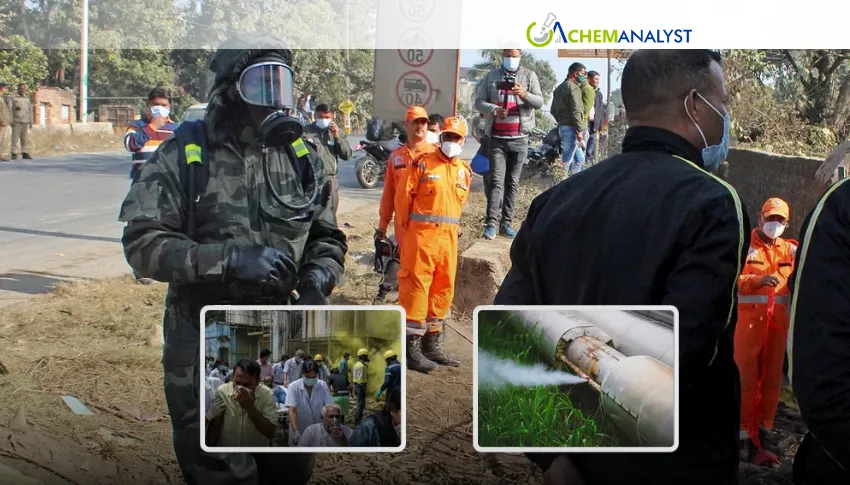
A chlorine gas leak at a water treatment plant in Nagpur, Maharashtra, early Monday, August 24, 2026, triggered panic among nearby residents and led to several hospitalisations, according to civic officials.
The incident occurred at around 1 a.m. at the water treatment facility in Godhani village when a chlorine gas cylinder with a capacity of about 900 kilograms developed a leak. Chlorine gas quickly spread beyond the plant premises and reached nearby residential areas, causing residents to experience coughing, breathing difficulties and other respiratory symptoms.
The Nagpur Municipal Corporation (NMC) said the leakage prompted an immediate emergency response, with authorities moving residents away from the affected zone. Police evacuated people living within a 200-meter radius of the plant and cordoned off the area to prevent further exposure.
Several affected residents sought medical attention. Some people went to hospitals on their own after experiencing breathing problems, while police personnel transported others for treatment. The number of hospitalised individuals was not immediately specified by officials.
Emergency teams were deployed soon after authorities received information about the leak. Civic fire personnel reached the facility with two water tenders and breathing apparatus to support the containment operation. Employees of Orange City Water Pvt. Ltd. (OCW), which operates Nagpur’s drinking-water supply system, also joined the response.
A National Disaster Response Force (NDRF) team was subsequently called to assist with the emergency. Personnel from the NDRF, fire department and OCW worked together to control the leak and secure the damaged cylinder.
By approximately 5:30 a.m., emergency responders had successfully plugged the leak. As an additional safety measure, the chlorine cylinder was placed inside a tank containing water mixed with caustic soda. The treatment was intended to neutralize residual chlorine and reduce the risk of further gas release.
Police maintained security around the affected area while residents were directed to remain at safe locations until the situation was brought under control. The incident highlights the risks associated with the storage and handling of chlorine, a highly reactive and hazardous industrial chemical widely used in municipal water treatment.
Authorities are expected to assess the cause of the cylinder failure and evaluate safety procedures at the facility. The incident could also prompt renewed scrutiny of chlorine storage, emergency preparedness and containment systems at water treatment plants.
Impact on Chlorine and Chemical Commodity Prices
The incident is unlikely to create a major sustained impact on chlorine prices because it involves a localized leakage rather than a significant production shutdown. However, temporary safety inspections or operational disruptions at the Nagpur facility could marginally affect local chlorine demand and supply logistics. If authorities impose stricter storage and handling requirements, operating costs for water-treatment facilities could rise, potentially increasing chlorine procurement costs in the short term. Broader chemical commodities tracked by ChemAnalyst, including caustic soda and chlorine derivatives, are unlikely to experience significant price movements unless the incident results in prolonged supply interruptions or tighter regional regulations.







 About ChemAnalyst
Leave a Comment
Comments (0)