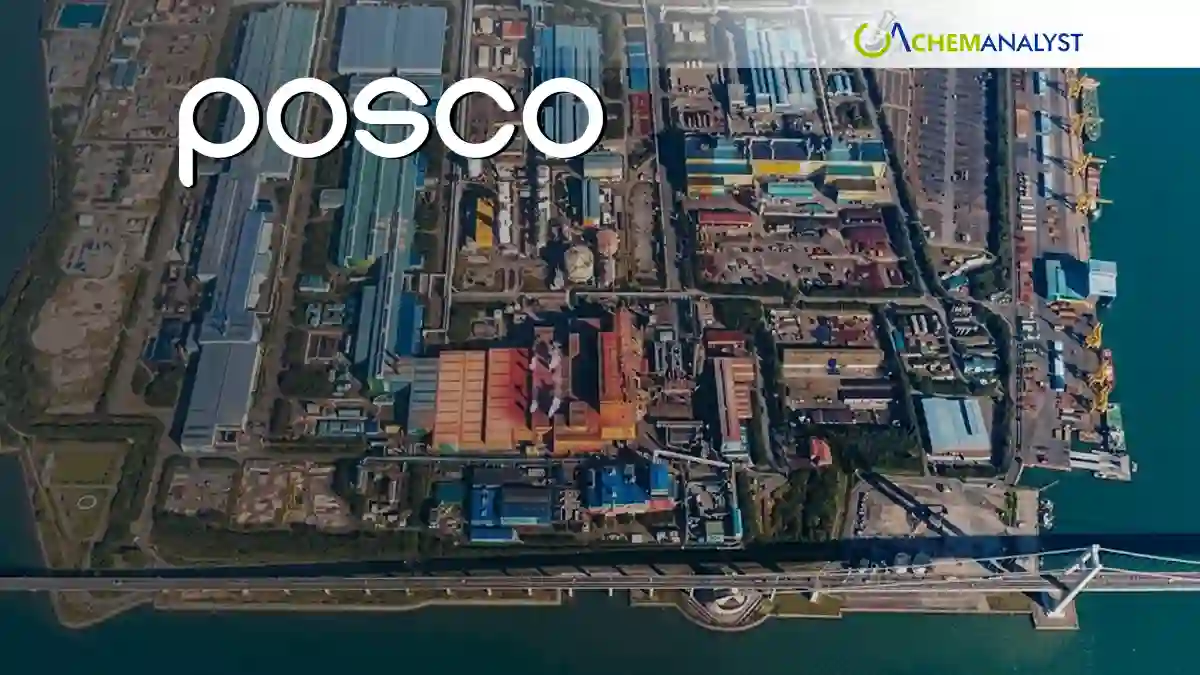
POSCO has marked a major milestone in its sustainability journey with the completion of South Korea’s largest electric arc furnace (EAF) at its Gwangyang steel complex on the country’s southern coast. The company officially announced the completion of the new facility on June 17, highlighting it as a significant step in its broader strategy to transition toward lower-carbon steel production and strengthen its long-term environmental commitments.
The development represents POSCO’s first major investment in large-scale upstream steelmaking capacity in more than two decades. According to several media reports, this is the first large-scale steel production facility established by the company since the ignition of the No. 5 blast furnace at the Gwangyang steelworks in April 2000. The completion of the EAF demonstrates POSCO’s renewed focus on transforming its production processes to align with changing global climate policies and increasing demand for greener industrial materials.
The newly commissioned electric arc furnace has an annual production capacity of approximately 2.5 million tonnes, making it the largest single EAF facility currently operating in South Korea. Unlike traditional blast furnace operations that depend heavily on iron ore and coking coal, the EAF primarily utilizes recycled steel scrap as its feedstock. This technological shift is expected to significantly lower the environmental footprint of steel manufacturing, with POSCO estimating that carbon dioxide emissions can be reduced by as much as 75% compared with conventional blast furnace-based production methods.
A completion ceremony was organized to celebrate the achievement, attended by government officials and industry representatives. During the event, South Korea’s Prime Minister Kim Min-seok recognized the project as a landmark advancement in the country’s transition toward environmentally responsible industrial practices. According to Korean media reports, the construction of the EAF required more than two years to complete and involved an investment of approximately KRW 600 billion, equivalent to around USD 396.7 million.
The newly operational facility is expected to serve as a crucial bridge in POSCO’s wider decarbonization roadmap before the expected commercialization of its next-generation HyRex hydrogen-based steelmaking technology, which the company aims to introduce around 2030. The HyRex process is designed to replace traditional carbon-intensive steel production methods by utilizing hydrogen as a reducing agent, enabling the manufacture of steel with substantially lower greenhouse gas emissions.
POSCO’s investment comes at a time when the global steel industry is facing increasing pressure to reduce carbon emissions due to stricter environmental regulations. The company is preparing to comply with evolving climate policies, including Phase 4 of South Korea’s Emissions Trading Scheme (K-ETS) and the European Union’s Carbon Border Adjustment Mechanism (CBAM), both of which are increasing the need for steel producers to adopt cleaner manufacturing technologies.
In addition to expanding its electric arc furnace capabilities, POSCO is also advancing another innovative decarbonization approach that combines molten iron produced through both blast furnaces and EAFs. According to media reports, this hybrid production method is intended to maintain the superior quality standards required for high-value products, such as automotive-grade and electrical steels, while simultaneously reducing overall carbon emissions.
POSCO Group Chairman Chang In-hwa emphasized the strategic importance of the project, stating that the new electric arc furnace reflects the company’s dedication to addressing the worldwide challenge of decarbonization while strengthening the future competitiveness of the steel industry. The completion of the Gwangyang EAF highlights POSCO’s commitment to balancing sustainability, technological innovation, and the continued production of premium steel products in a rapidly changing industrial landscape.
Market impact: POSCO’s commissioning of South Korea’s largest electric arc furnace (EAF) is expected to have a significant impact on the steel value chain, particularly by accelerating the production of low-carbon steel. The increased use of steel scrap instead of iron ore and coking coal will reduce dependence on traditional blast furnace raw materials while supporting the supply of greener steel products for automotive, electrical, and high-end manufacturing sectors. This transition could strengthen demand for high-quality scrap and advanced steel processing technologies in the long term.
From the perspective of chemical commodities tracked by ChemAnalyst, the immediate price impact is likely to remain limited, as the EAF primarily changes the steelmaking route rather than creating direct large-scale shifts in chemical consumption. However, reduced reliance on coke production may exert slight downward pressure on coal-derived chemicals, including coal tar derivatives such as benzene, toluene, and naphthalene, over the long term due to lower demand from conventional blast furnace operations.
Additionally, the future commercialization of POSCO’s HyRex hydrogen-based steelmaking technology may support long-term demand growth for hydrogen and related industrial gases. Overall, the announcement is expected to have a neutral to slightly bearish impact on certain coal-based chemical commodities, while promoting long-term opportunities for low-carbon energy and industrial gas markets.







Leave a Comment
Comments (0)