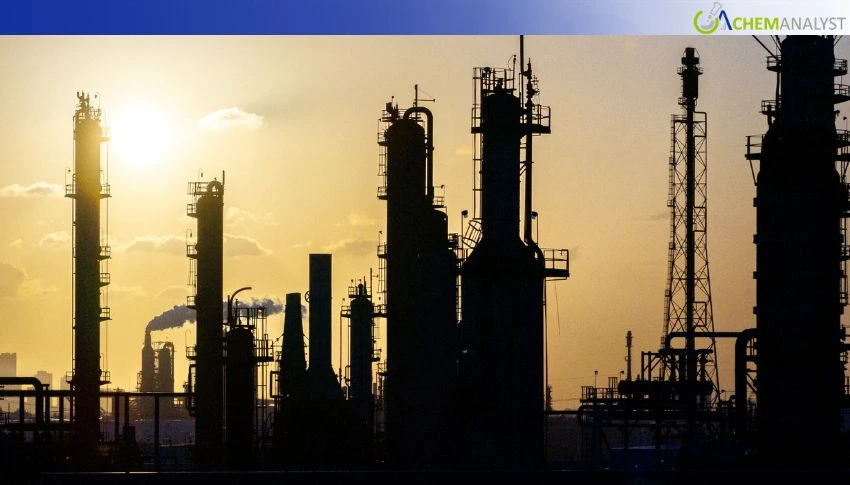
The government of South Korea has decided to import more than six million barrels of crude oil from the United Arab Emirates as part of an emergency strategy to stabilize rising fuel prices in the domestic market. The move comes as global oil markets face heightened volatility following the intensifying conflict between the United States and Iran, which has raised concerns about energy supply disruptions and triggered sharp fluctuations in petroleum prices worldwide.
According to the presidential office, the emergency purchase was finalized after President Lee Jae Myung directed government officials to negotiate with the UAE for an immediate crude oil supply arrangement. Kang Hoon-sik, the president’s chief of staff, stated on Friday that the deal was successfully secured following the president’s instructions to take swift measures to address the rising cost of fuel.
Kang explained that government officials held discussions with UAE counterparts and confirmed the procurement of more than six million barrels of crude oil. He emphasized that the additional supply is expected to ease pressure on the domestic fuel market and help stabilize oil prices, which have recently surged due to geopolitical tensions in the Middle East.
The decision to increase crude imports came shortly after President Lee convened an emergency Cabinet meeting to address the rapid increase in retail fuel prices across the country. During the meeting, he criticized the pace at which gasoline prices had risen despite the fact that South Korea had not yet experienced significant disruptions to its crude oil imports. He warned against opportunistic pricing behavior by market participants during periods of crisis.
President Lee stressed that the government would take firm action against any attempts by businesses to hoard fuel supplies or generate excessive profits by exploiting the current situation. He noted that while financial gains are part of market dynamics, taking advantage of a national crisis for unreasonable profits would not be tolerated.
As part of the government’s response, officials have been instructed to examine several potential policy measures aimed at protecting consumers. These measures include reviewing the possibility of imposing temporary price caps on petroleum products if fuel prices continue to escalate sharply in the coming weeks.
Meanwhile, Deputy Prime Minister and Finance Minister Koo Yoon-cheol announced that authorities have already detected signs suggesting that gasoline prices may be rising excessively. The government is therefore planning to conduct investigations to determine whether any collusion, price manipulation, or unfair market practices are occurring among fuel suppliers and distributors.
Data from the state-run Korea National Oil Corporation shows that the average gasoline price at fuel stations in Seoul climbed to 1,889 won (about $1.28) per liter as of Thursday. This represents an increase of 7.7 percent compared with last Friday, when gasoline was priced at 1,754 won per liter before tensions escalated in the Middle East.
Diesel prices have risen even more sharply. According to the same data, diesel costs jumped 13.7 percent over the same period, increasing from 1,667 won per liter to 1,895 won per liter.
Industry officials from oil refining companies stated that the price increases were partly driven by a sudden spike in consumer demand after the outbreak of the regional conflict. They noted that many gas stations are seeing their fuel inventories depleted more quickly than usual because of the surge in purchases.
One industry representative explained that as demand surged after the geopolitical crisis began, gas station fuel stocks have been running down rapidly. As a result, some price adjustments have been unavoidable despite efforts to maintain stable supply levels.
Financial markets also reflected the uncertainty surrounding the energy sector. Shares of major South Korean refiners declined on Friday as broader market sentiment weakened. S-Oil saw its stock fall 3.7 percent to 129,700 won, while SK Innovation, the parent company of the country’s largest oil refiner SK Energy, dropped 1.3 percent to close at 124,900 won.
The emergency crude purchase from the UAE is expected to help cushion the domestic fuel market in the short term while the government continues monitoring global energy developments closely.








 About ChemAnalyst
Leave a Comment
Comments (0)