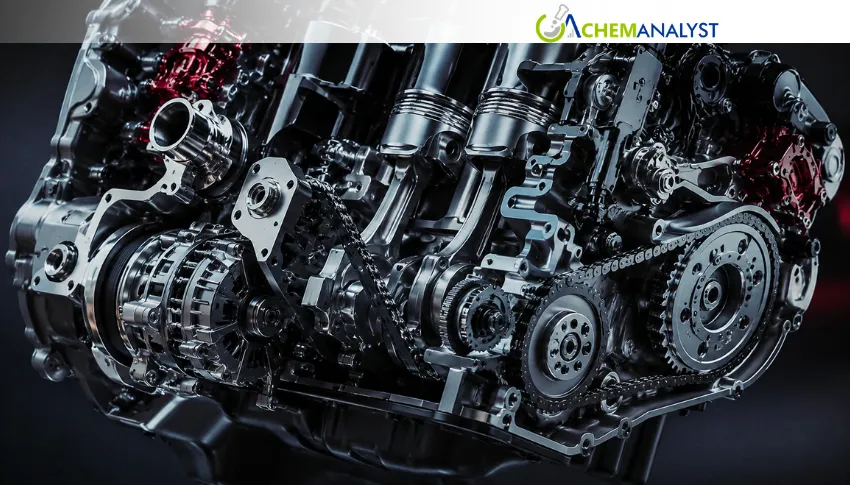
The maritime industry has achieved a significant milestone in its decarbonization efforts with the delivery of the ANTWERPEN, the world's first ocean-going vessel designed to operate on ammonia fuel. This pioneering ship, a 46,000-cubic-meter carrier for LPG and ammonia, was developed through a collaboration between Swiss marine engine developer WinGD and Belgian shipping firm EXMAR, alongside HD Hyundai Engine & Machinery Division and HD Hyundai Heavy Industries. Powered by WinGD's X52DF-A two-stroke engine, which injects high-pressure ammonia with a small amount of pilot fuel, the vessel has successfully completed sea trials and is set to begin commercial operations as part of EXMAR's order for four such ammonia dual-fuel midsize gas carriers.
This development is a direct response to the urgent need for sustainable, low-emission fuels to help the shipping sector meet stringent environmental regulations and the International Maritime Organization's (IMO) ambitious net-zero emissions goals. Ammonia is considered a promising alternative fuel because its combustion produces no carbon dioxide (CO2) or other carbon-based pollutants. Furthermore, it benefits from existing global infrastructure for production and transportation, primarily for fertilizer use, and has a higher volumetric energy density than hydrogen, making it suitable for long-distance shipping.
However, the adoption of ammonia as a marine fuel presents several challenges. A primary concern is its toxicity and corrosive nature, which necessitates rigorous safety measures, specialized handling systems, adapted ship designs, and extensive crew training to mitigate risks to personnel and marine life. While ammonia combustion is carbon-free, incomplete combustion can release nitrous oxide (N2O), a potent greenhouse gas, and nitrogen oxides (NOx), which contribute to air pollution. Unburned ammonia, known as "ammonia slip," is also a concern.
Economically, green ammonia, produced using renewable energy, is currently significantly more expensive than conventional marine fuels. However, forecasts suggest that costs could fall by 2050, approaching parity with traditional fuels, especially with the implementation of carbon pricing mechanisms like the EU Emissions Trading System and potential IMO levies. From an industry perspective, ammonia's lower volumetric energy density compared to diesel means ships require larger fuel storage capacities, potentially impacting cargo space and operational range.
Despite these hurdles, there is growing momentum in the industry. Engine developers like WinGD, MAN Energy Solutions, and Everllence (formerly MAN B&W) are rapidly advancing dual-fuel ammonia engine technology, with several models already achieving type approval and nearing commercial delivery. Orders for ammonia-capable vessels are increasing, reflecting growing confidence in this fuel's commercial viability. The IMO has also made progress, approving interim guidelines for the safe use of ammonia as a marine fuel, providing a regulatory framework for designers and operators. These developments highlight ammonia's critical role in the shipping industry's journey toward a sustainable, decarbonized future.






Leave a Comment
Comments (0)