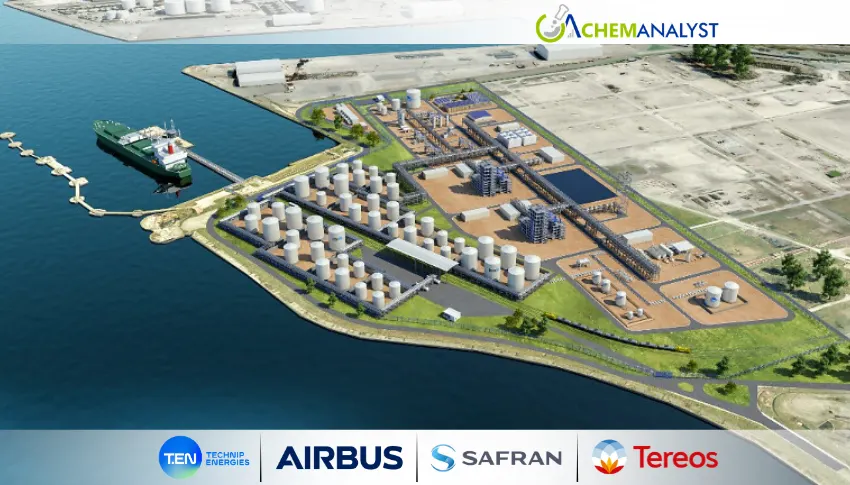
Technip Energies, Airbus, Safran, and Tereos have entered into a strategic partnership to establish Rebound, a joint venture dedicated to developing one of Europe’s largest Sustainable Aviation Fuel (SAF) production facilities. The proposed project will be located at the Port of Dunkirk in northern France and is expected to play a significant role in accelerating the decarbonization of the aviation sector while strengthening Europe’s energy independence.
The planned facility will utilize the Alcohol-to-Jet (AtJ) production pathway, an emerging technology that converts advanced ethanol into sustainable aviation fuel. Once operational, the plant is expected to produce approximately 160,000 tons of SAF annually, positioning it among the largest facilities of its kind in Europe. The project reflects the growing commitment of European industries to develop domestic low-carbon fuel production capabilities and reduce reliance on imported energy resources.
Under the newly signed agreement, the four partners will jointly finance the project's development phase. This phase will include detailed engineering studies, technical assessments, environmental evaluations, and other preparatory activities required before reaching a Final Investment Decision (FID). By pooling their expertise and resources, the partners aim to create a robust and commercially viable SAF production platform capable of supporting Europe's long-term climate objectives.
Sustainable Aviation Fuel is increasingly viewed as the most practical and immediate solution for reducing carbon emissions from air transport. The European Union’s RefuelEU Aviation regulation mandates a gradual increase in SAF blending requirements, rising to 6% by 2030 and eventually reaching 70% by 2050. These ambitious targets are expected to trigger a dramatic increase in SAF demand over the coming decades. Industry forecasts suggest that demand could grow more than eightfold between 2030 and 2050, creating a substantial need for large-scale production facilities.
Among the various SAF production technologies available today, the Alcohol-to-Jet route is gaining attention because of its scalability, economic competitiveness, and ability to utilize advanced ethanol derived from agricultural and forestry residues. The resulting fuel can be blended directly with conventional jet fuel and used in existing aircraft engines and infrastructure without requiring major modifications, making it an attractive pathway for rapid adoption.
Each partner will contribute unique expertise to the Rebound initiative. Technip Energies will serve as the lead developer and engineering partner, leveraging its extensive experience in industrial-scale energy projects and technology deployment. Airbus and Safran will participate as industrial partners, helping facilitate future fuel offtake agreements while also evaluating opportunities to use the SAF produced by the facility. Tereos, one of Europe’s leading ethanol producers, plans to provide and source the advanced ethanol feedstock required for the project, bringing deep expertise in agricultural supply chains and biofuel production.
A significant milestone has already been achieved with the allocation of an industrial site at the Port of Dunkirk. The strategic location offers excellent logistics infrastructure for both feedstock delivery and fuel distribution, while also supporting a streamlined permitting process that could accelerate project development.
Moving forward, the partners will follow a structured development roadmap that includes selecting a technology licensor, obtaining regulatory permits, conducting pre-FEED and FEED engineering studies, finalizing feedstock supply and SAF offtake agreements, and securing project financing for construction. Subject to customary approvals and closing conditions, the creation of the Rebound joint venture is expected to be completed during the second half of the year.
Company executives emphasized that the project represents a major step toward building a competitive European SAF industry. They highlighted its potential to reduce aviation emissions, strengthen energy security, create new economic opportunities, and establish a sustainable bioeconomy supported by European agricultural resources. Through Rebound, the partners aim to create a fully integrated value chain spanning feedstock production, fuel manufacturing, and aviation end use, supporting the aviation industry's transition toward a lower-carbon future.








 About ChemAnalyst
Leave a Comment
Comments (0)