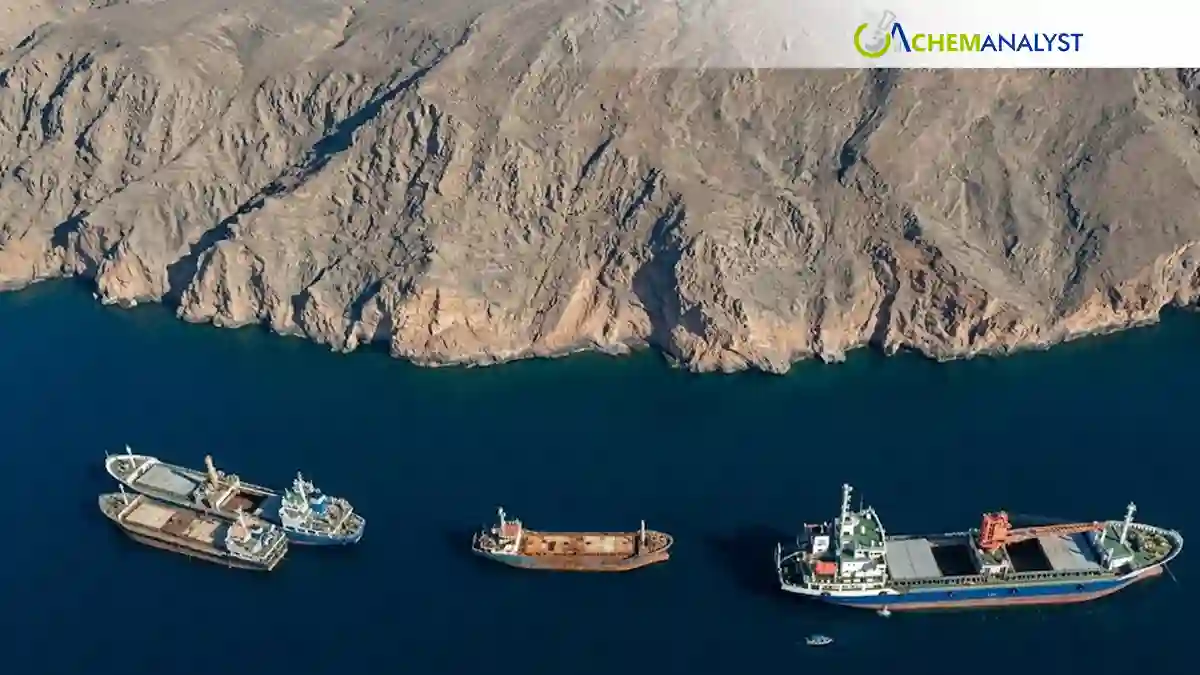
The closure of the Strait of Hormuz, a critical global maritime chokepoint, has triggered a significant disruption to international trade and supply chains, prompting the United Arab Emirates (UAE) and Oman to activate vital alternative trade corridors. This closure, stemming from escalating geopolitical tensions and war-related disruptions, including an Iranian blockade and threats against shipping, has severely impacted the movement of essential cargo and energy resources through the waterway. The Strait typically handles approximately 20% of the world's crude oil shipments, a substantial portion of liquefied natural gas (LNG), and significant volumes of fertilizers, making its closure an unprecedented challenge to global energy security and trade.
The immediate consequences have been far-reaching, particularly in energy markets. Oil prices surged, with Brent crude reaching around $120 per barrel following the closure on March 4, 2026, amid fears prices could rise to $200 per barrel if hostilities persist. This has led to a drastic reduction in oil and LNG exports from Gulf countries, with QatarEnergy declaring force majeure on all exports and over 11 million barrels per day of crude and condensate production curtailed. The disruption is also causing a "systemic agrifood shock," threatening a severe global food price crisis within six to twelve months due to increased energy and fertilizer costs. Food imports to the region were disrupted by 70% in March, leading to significant spikes in consumer prices.
In response, the UAE and Oman have swiftly launched new overland logistics corridors to bypass the Strait of Hormuz. A key initiative is the integrated logistics corridor linking Sharjah's ports (Khalid, Hamriyah, Khor Fakkan) with Omani ports, notably Sohar Port, via land crossings like Khatmat Malaha. This corridor, operational since May 14, 2026, is designed to transport consumer goods, food supplies, pharmaceuticals, and industrial materials, though not oil or natural gas. The UAE has bolstered its eastern ports' capacity by 20 times and increased Etihad Rail freight services sixfold to manage redirected cargo. Coordinated efforts between customs authorities in the GCC have streamlined clearance processes and reduced inspection times for priority cargo across land corridors linking the UAE with Saudi Arabia and Oman.
The geopolitical impact underscores a broader strategy among Gulf states to diversify trade routes and reduce vulnerability to maritime chokepoints. The crisis has been described as a "structural break" in the global trade model, exposing a deep-seated fragility beneath the region's economic facade and potentially reshaping long-term investment narratives. Industry-specific impacts include significant congestion at transshipment ports, increased shipping costs, and a near-total cessation of regional aviation due to airspace closures. The closure also affects global supplies of sulfur and helium, crucial for fertilizer production and semiconductor manufacturing, respectively. The establishment of these alternative corridors is vital for maintaining supply chain continuity and mitigating the severe economic and humanitarian consequences of the Strait of Hormuz closure.







 About ChemAnalyst
Leave a Comment
Comments (0)