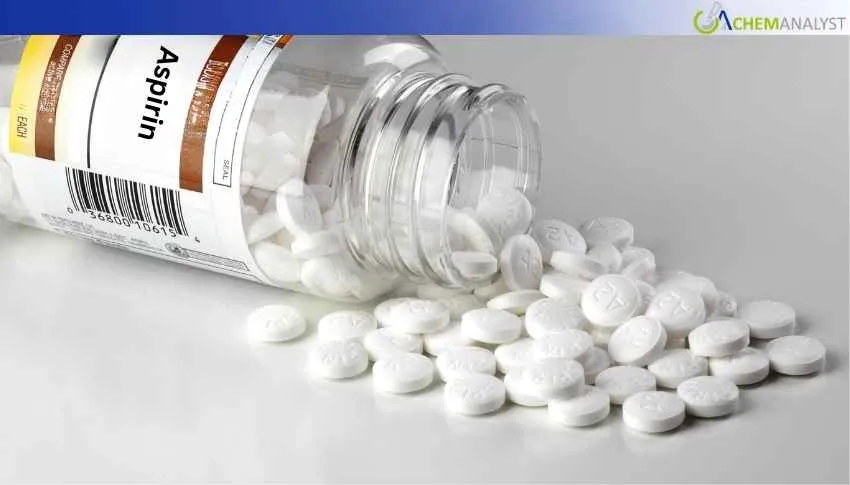
Aspirin prices in the United States rose 1.5% month-on-month in February 2026 as winter retail demand and cautious buying by distributors firmed offers. Early–mid February saw buyers accept slightly higher import offers to secure March forward cover amid ongoing FDA cGMP scrutiny of some Asian plants, supporting transaction activity into the month. Meanwhile, improved West Coast throughput helped keep shipments flowing, tempering what could otherwise have been a sharper uptick in Aspirin prices. Overall market sentiment was constructive rather than volatile, with incremental feedstock pressure and seasonal pharmacy replenishment nudging headline prices higher.
Aspirin demand was uneven across end markets. Retail pharmacy and OTC channels were the strongest driver, with winter demand for cold-and-flu remedies lifting pharmacy pull-through and reinforcing over-the-counter analgesic sales. In contrast, low-dose cardiovascular prophylactic use remained a weak Aspirin spot as evolving U.S. Preventive Services Task Force guidance continued to moderate growth in that segment; however, this weakness was more than offset by broader pain-relief consumption. Pharmaceutical distributors and manufacturers provided supporting demand as firms increased forward-cover Aspirin purchases and inventory positions ahead of spring, accepting slightly higher offers to secure supplies. Hospital tender volumes stayed steady as elective procedures remained stable, leaving institutional Aspirin procurement neither a significant source of upside nor downside.
On the supply side, upstream dynamics were largely steady but with some modest cost pass-through for Aspirin. Salicylic acid feedstock costs were effectively flat, contributing only marginal upward pressure of around 0.2% month-on-month into formulator quotations, while exposure to acetic anhydride and aromatic precursor supply chains leaves producers sensitive to petrochemical route disruption. Operating rates in China and India were reported steady during February and no new plant shutdowns surfaced, limiting upside from production-side disruptions. Logistics eased versus the congestion peaks seen in 2021–2022, with twenty-foot container lead times normalising to below four weeks on the U.S. West Coast per ChemAnalyst data, although geopolitical risks such as potential Strait of Hormuz disruptions remain an upside risk to freight and insurance costs.
Looking ahead, the near-term outlook for Aspirin is mixed with a bias toward further short-term firmness before moderation as shipping normalises and Chinese producers adjust schedules. Proactive Aspirin inventory builds by U.S. distributors, winter-driven retail restocking and the potential for higher freight insurance or rerouting costs all support the case for upside in coming weeks, while easing logistics and steady operating rates argue for a pullback in mid-summer. Our analysts note that geopolitical freight risks and persistent regulatory scrutiny in Asian manufacturing remain wildcards; any escalation would likely amplify upward pressure on Aspirin prices, whereas continued flow improvements would check gains. This projection is based on current Aspirin market trends and is subject to market conditions.







Leave a Comment
Comments (0)