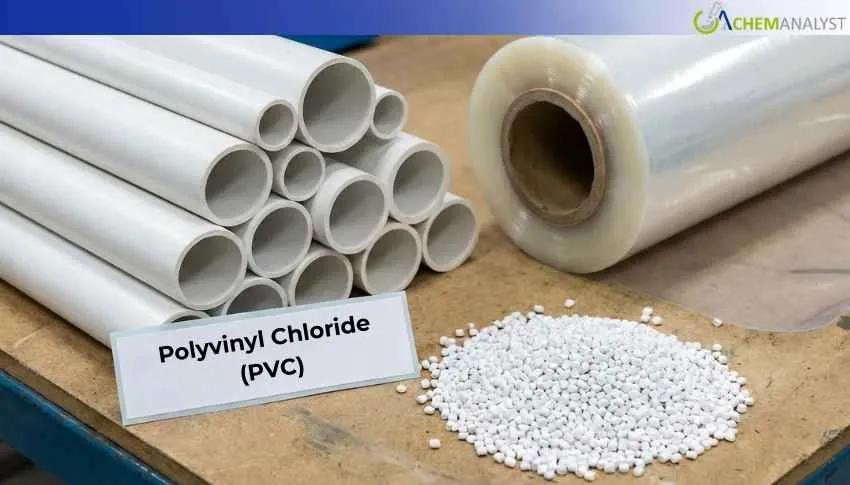
Prices of Polyvinyl Chloride (PVC) in the US began to move upward in the week ending January 2, 2026, after a drastic change following more than a year of decreasing prices and poor consumption from the construction segment. While the general market has still not had strong expectations for a recovery in consumption during 2026, speculations regarding supply cuts grew dramatically, thus boosting prices for that week. With feedstock ethylene dichloride prices remaining rather stable, the most recent increase in PVC price can be attributed more to supply-side developments than to cost push.
During 2025, global volume of trade for PVC was on the rise and was forecasted to set a new record this year. The lifting of this volume movement did little to ease the pressure posed to the notion of oversupply. Many PVC producers are trading at a loss and are looking for ways to boost prices or hold back on quantities until reasonable profits return.
The Westlake's announcement on December 15, 2025, that it would be shutting down several PVC-related plants in the US driven the prices upward. These included a big suspension PVC unit in Mississippi and a VCM plant in Louisiana. Market sources see this as saying that current margins are unsustainable. According to a distributor, the decision shows that producers may have to take "aggressive action" to restore balance, even if it brings short-term pain. Low supply expected in the early 2026, which has been a raging factor behind the recent increase in PVC prices.
The dynamics of the global trade are impacting the scenario. In the one of largest importers of PVC, India fell in prices by more than 30% from December 2024 to December 2025. With the junking of BIS quality control norms and no new antidumping duty announcement, India is set to attract even more Chinese PVC in the year 2026. This further allows the Chinese producers to sell less cheap in other regions and forge ahead with competition against suppliers from Taiwan, Korea, and possibly the US.
The impact of India's changing import landscape for its market remains unclear for the US producers. Some argue that the US could possibly avoid confronting China directly for PVC, while others still see new avenues of opportunity with duties being relaxed. Yet with increasing trade barriers in other markets, website under the banner of new EU's antidumping duties of up to 77% and Mexico's investigation into US PVC, ambiguities creep in.
Analysts expect global trade volumes of PVC to be high in 2026. Production in the United States has been tightening further due to shut down and maintenance, thus traders are of the opinion that supply would remain low.
As per ChemAnalyst, a mixture of supply cuts, shifting trade flows, and improved sentiment have led U.S. PVC prices to rally sharply escalating to a start for 2026 after a troublesome year for most producers.







Leave a Comment
Comments (0)