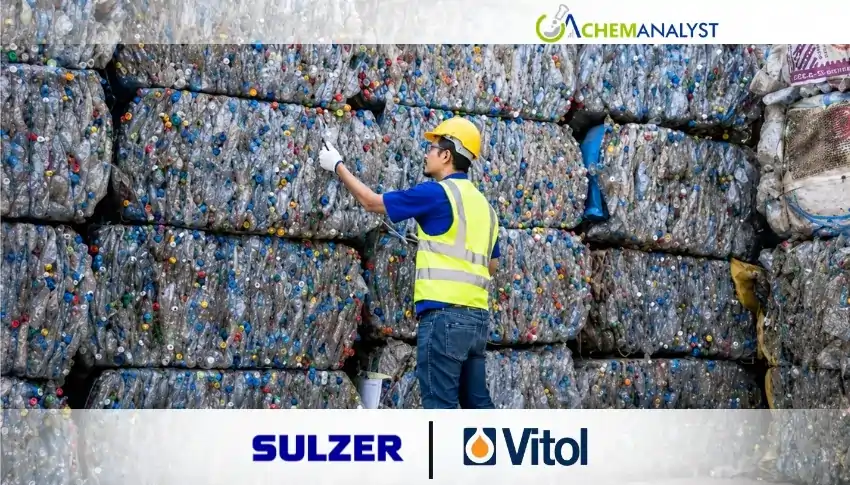
Sulzer has secured a key contract from WPU, a subsidiary of global energy and commodities company Vitol, to supply its advanced PyroCon™ technology and comprehensive engineering services for a large-scale chemical recycling facility being developed in the Netherlands. The project represents a significant step toward expanding circular solutions for plastic waste management by transforming end-of-life plastics into valuable feedstock that can be reused in the production of new plastic materials.
The upcoming facility will be situated adjacent to Vitol’s VPR refinery within the Port of Rotterdam, one of Europe’s largest industrial and logistics hubs. Designed to process up to 80,000 tonnes of mixed plastic waste annually, the plant will focus on converting difficult-to-recycle plastic waste into reusable raw materials, reducing dependence on virgin fossil-based feedstocks and supporting broader sustainability goals within the plastics industry.
At the heart of the project is WPU’s proprietary pyrolysis technology, which thermally decomposes mixed plastic waste in an oxygen-free environment. This process transforms discarded plastics into hydrocarbon-rich gases. Sulzer’s proprietary PyroCon™ technology is then used to rapidly cool and condense these gases, producing a high-quality liquid feedstock suitable for downstream petrochemical applications. The resulting recycled feedstock can be integrated into the manufacturing process for producing new plastic products, helping establish a more circular plastics value chain.
In addition to providing its advanced condensation technology, Sulzer will deliver a full range of engineering services to facilitate project execution. The company’s scope includes supplying a complete skid-mounted modular solution that simplifies installation, improves construction efficiency, and enables faster deployment. Basic engineering activities for the project were successfully completed during the first quarter of 2026, while deliveries of the first modular skids are scheduled to commence in the first quarter of 2027, in line with the overall development schedule.
One of the distinguishing features of Sulzer’s PyroCon™ system is its ability to efficiently process a broad spectrum of plastic waste streams, including materials containing varying levels of contaminants. This capability makes the technology particularly suitable for handling complex and mixed plastic waste that is often unsuitable for conventional mechanical recycling methods. Furthermore, the system has been engineered with operational flexibility, allowing it to adapt to changing feedstock compositions, varying process conditions, and future plant expansion requirements.
By ensuring rapid cooling and efficient condensation of pyrolysis vapors, the PyroCon™ technology delivers a stable and consistent liquid feedstock with reliable quality. This consistency is essential for downstream chemical manufacturers seeking dependable recycled raw materials that can seamlessly integrate into existing production processes. The project therefore represents a meaningful advancement in improving the commercial viability of chemical recycling technologies at an industrial scale.
Commenting on the collaboration, Tim Schulten, Division President of Sulzer Chemtech, expressed confidence in the significance of the project. He stated that Sulzer is proud to serve as a strategic partner for Vitol and emphasized that years of technological development have culminated in landmark industrial projects such as this. According to Schulten, the partnership validates the industrial readiness and commercial potential of Sulzer’s uniquely positioned PyroCon™ solution for large-scale plastic waste recycling.
Tom Baker, Vitol’s Global Head of Naphtha and Head of Middle East, highlighted the growing urgency of addressing global plastic waste challenges. He noted that plastic waste continues to be a significant environmental issue worldwide and that large-scale pyrolysis offers a promising pathway to recover valuable resources from end-of-life plastics. Baker added that Vitol is pleased to collaborate with Sulzer on the Rotterdam project, which aims to produce recycled feedstock capable of supporting the plastics industry’s transition toward more sustainable and circular manufacturing practices.
The project underscores increasing investment in advanced recycling technologies as governments and industries seek scalable solutions to reduce plastic waste, improve resource efficiency, and lower the environmental footprint of plastic production. By combining WPU’s pyrolysis expertise with Sulzer’s advanced vapor condensation technology, the facility is expected to contribute significantly to the development of a circular economy for plastics while strengthening Rotterdam’s position as a leading hub for sustainable industrial innovation.
Impact on Products and Chemical Commodity Prices
The establishment of WPU's 80,000-tonne-per-year chemical recycling facility is expected to strengthen the availability of pyrolysis oil, a recycled hydrocarbon feedstock that can partially replace virgin naphtha in petrochemical production. As production ramps up, downstream manufacturers of ethylene, propylene, polyethylene (PE), polypropylene (PP), and other polymer resins may benefit from a more sustainable and diversified raw material supply. While the project will not immediately alter global supply-demand dynamics, it supports the long-term transition toward circular plastics production.
For chemical commodities tracked by ChemAnalyst, the near-term price impact is expected to be limited, as the facility's capacity represents only a small share of the global petrochemical feedstock market. However, over the medium to long term, increased adoption of chemical recycling technologies could gradually ease dependence on virgin fossil-based feedstocks, potentially moderating price volatility for naphtha, recycled feedstocks, and selected olefins and polyolefins, particularly in the European market where demand for recycled-content plastics continues to grow.







 About ChemAnalyst
Leave a Comment
Comments (0)