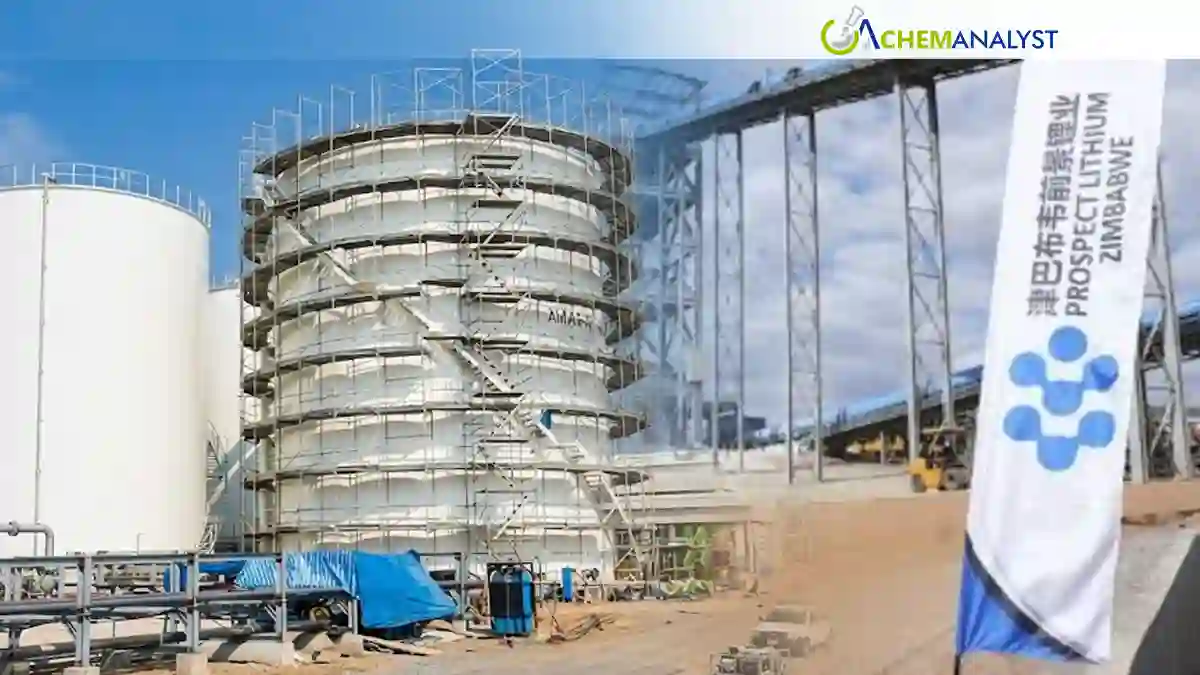
Zimbabwe has officially commissioned its first lithium processing facility, marking a significant milestone in the country's efforts to strengthen domestic mineral beneficiation and establish a stronger position in the global electric vehicle (EV) battery supply chain. The development reflects the government's broader strategy to reduce dependence on raw mineral exports while encouraging value-added manufacturing within the country.
The newly inaugurated facility, valued at approximately $400 million, is situated in the Goromonzi district, nearly 30 kilometres east of Harare. The plant has been developed by Prospect Lithium Zimbabwe (PLZ), a subsidiary of China's Zhejiang Huayou Cobalt. It is designed to process hard-rock lithium ore into lithium sulphate, an important intermediate chemical used in the production of battery-grade lithium hydroxide and lithium carbonate. These materials are essential for manufacturing lithium-ion batteries used in electric vehicles and renewable energy storage systems.
According to Zimbabwe's Ministry of Mines, the project is the first lithium sulphate processing plant on the African continent. The ministry described the commissioning as an important transition from exporting raw lithium ore toward establishing a domestic mineral processing and chemical manufacturing industry. The move is expected to improve the country's participation in higher-value segments of the global battery materials supply chain.
The commissioning aligns with Zimbabwe's ongoing policy initiatives aimed at promoting local mineral beneficiation. Earlier this year, the government suspended exports of raw lithium ore as part of preparations for a nationwide prohibition on unprocessed lithium exports scheduled to take effect in 2027. Under the upcoming regulations, mining companies will be required to process lithium within Zimbabwe before exporting it.
Zimbabwe possesses the largest known lithium reserves in Africa and ranks among the world's major producers of the battery mineral. By encouraging local processing, the government aims to retain a greater share of the economic value generated from its natural resources. Officials believe the strategy will stimulate industrial development, generate skilled employment opportunities, attract additional investment into downstream industries, and reduce the country's vulnerability to fluctuations in global raw material prices.
Looking ahead, Zimbabwe plans to further expand its battery materials industry by developing domestic production of battery-grade lithium carbonate. Authorities also intend to establish manufacturing capabilities for solar panels and rechargeable batteries, supporting broader industrial diversification and positioning the country as an important supplier within the rapidly expanding clean energy and electric mobility sectors.
Impact on Product and Chemical Commodity Prices
The commissioning of Zimbabwe's lithium sulphate processing plant is expected to strengthen the regional supply of intermediate lithium chemicals, supporting the production of lithium sulphate, lithium hydroxide, and lithium carbonate used in EV batteries. Increased domestic processing could improve supply reliability and reduce dependence on raw ore exports over the long term. For chemical commodities tracked by ChemAnalyst, lithium sulphate availability is likely to improve, while lithium hydroxide and lithium carbonate prices may experience moderate downward pressure in the medium to long term as additional processed material enters global markets. However, immediate price movements are expected to remain limited due to steadily growing EV battery demand.






Leave a Comment
Comments (0)