Maintaining balanced pool chemistry is essential for safe swimming, water clarity, and equipment protection.
Introduction
Maintaining balanced pool chemistry is essential for safe swimming, water clarity, and equipment protection. Among the various chemicals used in water treatment, soda ash for pools plays a crucial role in regulating pH levels and improving water stability. Whether in residential backyard pools, commercial swimming facilities, or public aquatic centres, soda ash remains one of the most widely used alkaline balancing agents in the pool maintenance industry.

As global temperatures rise and swimming pool construction expands across residential, hospitality, and recreational sectors, the demand for pool treatment chemicals is steadily increasing. This has also strengthened the market outlook for soda ash, particularly in regions experiencing rapid urbanization and infrastructure development. This blog explains how soda ash works in pools, why it is important, the difference between soda ash and other alkalinity chemicals, and the broader global demand outlook shaping the industry.
What Is Soda Ash?
Soda ash, chemically known as sodium carbonate (Na2CO3), is an alkaline inorganic compound widely used across industries including glass manufacturing, detergents, chemicals, water treatment, and metallurgy. In swimming pool maintenance, soda ash is primarily used to raise the pH level of pool water.
Pool water chemistry must remain within a balanced range to ensure swimmer comfort and prevent damage to pool systems. Low pH water becomes acidic, which can corrode metal fixtures, damage liners, irritate skin and eyes, and reduce sanitizer efficiency. This is where soda ash for swimming pool treatment becomes important.
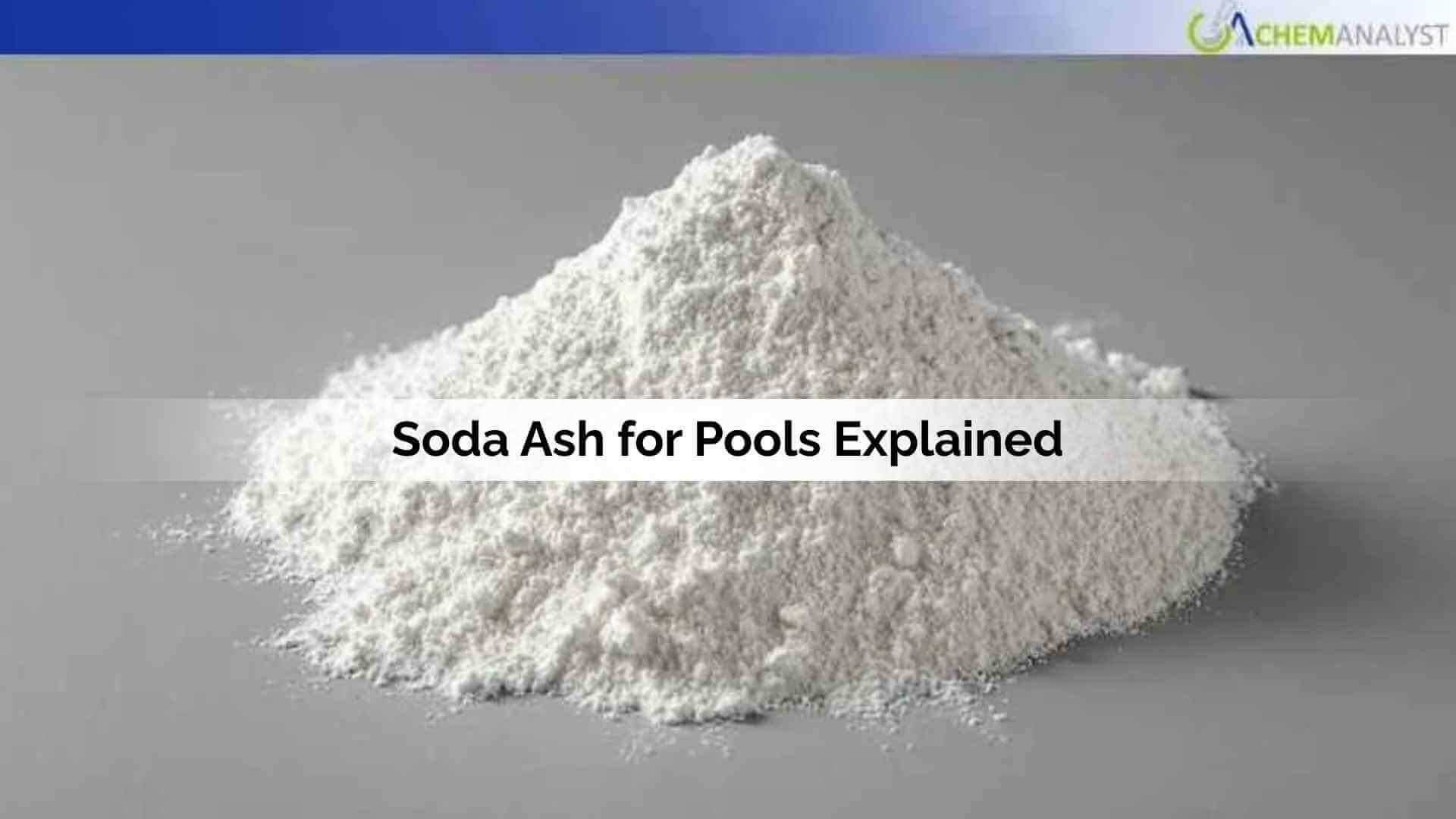
Soda ash dissolves quickly in water and neutralizes acidity by increasing alkalinity and pH simultaneously. It is commonly available as a white powder or granular material and is easy to apply during regular pool maintenance routines.
Does Soda Ash Raise pH?
One of the most common questions pool owners ask is: does soda ash raise pH? The answer is yes. Soda ash is specifically designed to increase the pH level in swimming pools.
When pool water becomes too acidic, typically below a pH of 7.2, soda ash is added to restore the recommended balance, usually between 7.2 and 7.8. Maintaining this range is critical because chlorine disinfectants work most efficiently within it.
Chemically, soda ash reacts with water to reduce hydrogen ion concentration, thereby increasing alkalinity and raising pH levels. Compared to sodium bicarbonate (baking soda), soda ash raises pH more aggressively and rapidly.
However, excessive use must be avoided. Overdosing can make water cloudy and lead to calcium scaling on pool surfaces and filtration equipment. For this reason, pool operators typically test water before application and add soda ash gradually.
How Soda Ash Works in Swimming Pools
The effectiveness of soda ash for pools lies in its ability to stabilize water chemistry quickly and efficiently. The treatment process generally involves the following steps:
1. Water Testing
Pool water is first analyzed using testing kits or digital meters to determine pH and total alkalinity levels. If pH falls below the recommended range, soda ash treatment is considered necessary.
2. Chemical Dissolution
Soda ash is either broadcast directly into the pool or pre-dissolved in water before application. Pre-dissolving helps minimize cloudiness and ensures even distribution.
3. pH Adjustment
Once added, soda ash reacts with acidic compounds in the water, increasing pH levels and improving chemical balance.
4. Circulation and Filtration
The pool filtration system circulates the treated water, ensuring uniform distribution throughout the pool.
5. Retesting
Water is retested after circulation to confirm that pH and alkalinity levels remain within target parameters.
Because of its fast-acting nature, soda ash for swimming pool applications is widely preferred in both residential and commercial pool operations.
Benefits of Using Soda Ash for Pools
The popularity of soda ash in pool maintenance is driven by several operational and economic advantages.
1. Fast pH Correction
Soda ash rapidly raises low pH levels, making it ideal for quick water treatment adjustments.
2. Improved Swimmer Comfort
Balanced pH reduces eye irritation, skin discomfort, and unpleasant chlorine odors.
3. Enhanced Chlorine Efficiency
Proper pH allows chlorine sanitizers to function effectively, reducing overall disinfectant consumption.
4. Equipment Protection
Balanced water chemistry minimizes corrosion of metal components, pumps, ladders, and filtration systems.
5. Water Clarity Improvement
Maintaining proper chemical balance helps prevent cloudy water and improves overall pool appearance.
6. Cost-Effective Treatment
Soda ash is relatively affordable and widely available, making it a practical choice for large-scale pool operations.
Manufacturing and Supply Chain Overview
Soda ash is produced through two primary methods:
1. Natural Soda Ash Mining
Natural soda ash is extracted from trona ore deposits, primarily located in:
• United States
• Turkey
• Botswana
The ore is refined into dense or light soda ash for industrial applications.
2. Synthetic Soda Ash Production
The synthetic Solvay process converts salt and limestone into sodium carbonate. Major producing countries include:
• China
• India
• Russia
• European nations
After production, soda ash is transported in bulk containers, railcars, or industrial bags to distributors and end-use industries including water treatment and pool chemical suppliers.

Major Production Hubs for Soda Ash
• China – the world’s largest soda ash producer with extensive synthetic soda ash manufacturing capacity supporting glass, chemicals, and water treatment industries
• United States – leading producer of natural soda ash from trona ore deposits, supplying major export markets across Asia-Pacific, Europe, and Latin America
• Europe (Germany & Poland) – advanced industrial-grade soda ash production supported by mature chemical processing infrastructure and environmental compliance technologies

Pricing Trends in the Soda Ash Market
Global soda ash pricing is influenced by several interconnected factors.
1. Energy Costs
Soda ash production is energy intensive. Rising natural gas and electricity prices significantly affect manufacturing expenses.
2. Freight and Logistics
Shipping costs, port congestion, and container availability directly influence international soda ash trade pricing.
3. Industrial Demand
Glass manufacturing remains the largest consumer of soda ash globally. Strong construction and automotive demand can tighten supply availability for secondary applications such as pool chemicals.
4. Seasonal Pool Demand
Demand for soda ash for pools typically increases during warmer months, especially in North America, Southern Europe, Australia, and the Middle East.
5. Environmental Regulations
Stricter emissions policies and sustainability requirements may increase compliance costs for soda ash producers.
Global Demand Outlook for Soda Ash in Pools
The long-term outlook for soda ash demand remains positive, supported by growth in recreational infrastructure and water treatment applications.
North America
The United States continues to represent one of the largest swimming pool markets globally. Rising residential pool installations and commercial aquatic projects are supporting steady demand for pool maintenance chemicals.
Europe
Southern European countries including Spain, Italy, and Greece maintain strong seasonal demand due to tourism-driven swimming pool usage. Sustainability initiatives are also increasing focus on efficient water treatment practices.
Asia-Pacific
Rapid urbanization, rising disposable incomes, and hospitality sector growth are accelerating swimming pool construction in:
• China
• India
• Thailand
• Indonesia
• Vietnam
This trend is strengthening regional demand for soda ash for swimming pool maintenance.
Middle East
Extreme temperatures and luxury real estate development continue to drive pool infrastructure investments across Gulf countries.
Latin America
Brazil and Mexico are witnessing growing adoption of residential pools and resort developments, contributing to gradual market expansion.
Challenges Facing the Industry
Despite positive growth trends, the soda ash market faces several challenges:
• Volatility in energy and freight costs
• Competition between industrial and water treatment sectors
• Environmental concerns regarding chemical production
• Supply disruptions linked to geopolitical tensions.
• Seasonal fluctuations in pool chemical demand
In addition, overapplication of soda ash by untrained users can create water imbalance issues, increasing the need for consumer education and professional maintenance services.
Sustainability and Future Market Trends
Sustainability is becoming increasingly important within the global soda ash industry. Manufacturers are investing in:
• Lower-emission production technologies
• Energy-efficient processing systems
• Circular economy initiatives
• Improved water treatment formulations
• Eco-friendly pool maintenance products
Digital pool monitoring systems and automated dosing technologies are also gaining popularity, helping optimize chemical consumption and reduce waste.
As smart residential infrastructure expands globally, the integration of automated pool chemistry management systems is expected to further influence demand patterns for soda ash-based treatments.
Conclusion
Soda ash remains a critical component in modern swimming pool maintenance due to its effectiveness in balancing pH levels and improving overall water quality. For pool operators and homeowners alike, understanding how soda ash for pools works is essential for maintaining safe, clear, and comfortable swimming environments.
For those asking, does soda ash raise pH, the answer is straightforward—it is one of the most effective chemicals available for correcting acidic pool water quickly and efficiently. As global pool construction continues to expand alongside hospitality, recreation, and residential infrastructure development, demand for soda ash for swimming pool applications is expected to remain strong.
Although pricing and supply dynamics may fluctuate due to energy markets, logistics conditions, and industrial demand cycles, long-term market fundamentals continue to support steady industry growth. With increasing focus on sustainability, automation, and efficient water treatment technologies, soda ash is likely to remain an essential part of the global pool maintenance industry for years to come.
FAQ
1. What is soda ash used for in pools?
Soda ash is used to raise the pH level of pool water and improve chemical balance. It helps prevent acidic water conditions that can damage pool equipment and irritate swimmers.
2. Does soda ash raise pH in swimming pools?
Yes, soda ash effectively raises pH levels in pool water. It is commonly used when the pH falls below the recommended range of 7.2–7.8.
3. Is soda ash the same as baking soda?
No. Soda ash is sodium carbonate, while baking soda is sodium bicarbonate. Soda ash raises pH more strongly, whereas baking soda mainly increases alkalinity.
4. How often should soda ash be added to a pool?
The frequency depends on pool usage, weather conditions, rainfall, and existing water chemistry. Regular water testing helps determine when treatment is needed.
5. What are the major drivers of global soda ash demand?
Key drivers include glass manufacturing, water treatment, detergents, chemical processing, and increasing demand for swimming pool maintenance chemicals worldwide.