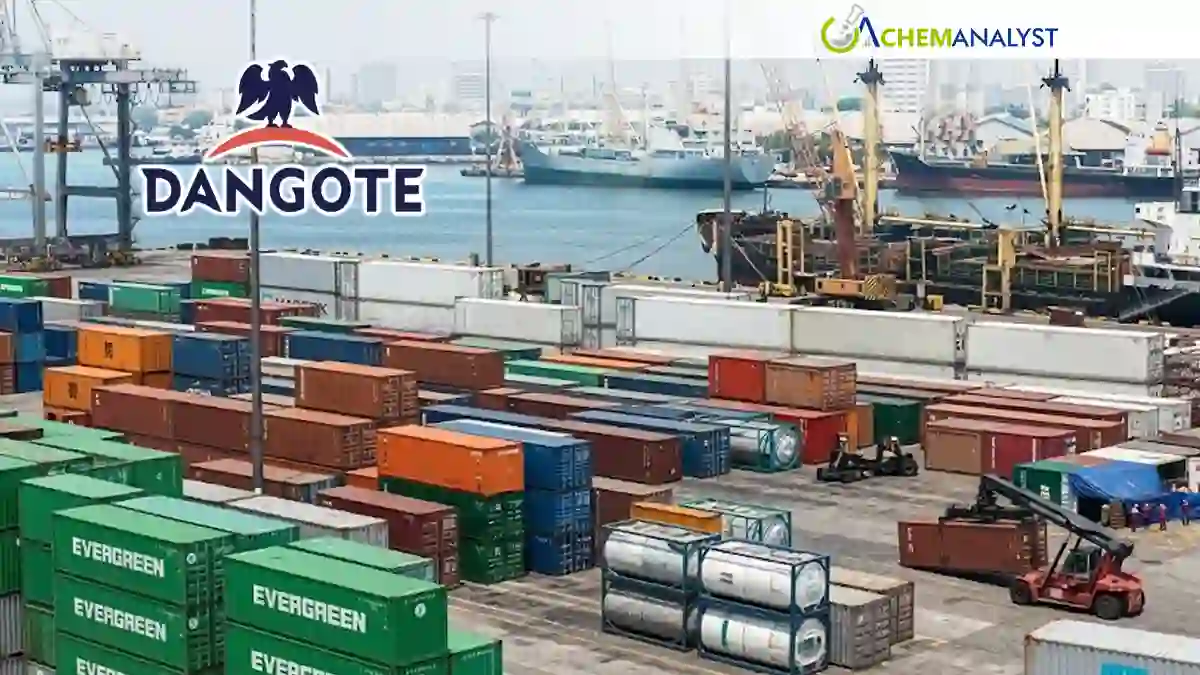
Nigeria’s petroleum products trade has undergone a major transformation following the start-up and expansion of the Dangote Petroleum Refinery, according to the latest assessment by the U.S. Energy Information Administration (EIA). The refinery has emerged as the primary factor behind a sevenfold increase in Nigeria’s seaborne petroleum product shipments since 2023.
The EIA reported that Nigeria’s seaborne petroleum product shipments averaged 561,000 barrels per day (bpd) in the second quarter of 2026, compared with only 79,000 bpd on an annual average basis in 2023. The sharp increase reflects stronger refinery output and growing demand for Nigerian refined products in both domestic and international markets.
The Dangote refinery began operations in January 2024 and has since substantially changed Nigeria’s petroleum supply structure. Before its commissioning, the country depended heavily on imported refined fuels, while its state-owned refineries collectively shipped less than 100,000 bpd. However, refinery production gains have allowed Nigeria to increase domestic availability while expanding exports.
Data from energy intelligence company Vortexa showed that around 350,000 bpd of the 561,000 bpd shipped during the second quarter of 2026 were exported. This compares with an average of just 46,000 bpd in 2023. The refinery also received a further boost after maintenance and expansion work was completed in February 2026.
As part of the expansion, the Dangote refinery increased its crude distillation capacity from 650,000 bpd to approximately 700,000 bpd. Higher production has contributed to increased fuel availability across Nigeria. Domestic shipments reached 211,000 bpd in the second quarter of 2026, up from 81,000 bpd in 2025 and 33,000 bpd in 2023.
The rise in domestic production has also sharply reduced Nigeria’s dependence on imported petroleum products. Seaborne imports fell below 130,000 bpd in the second quarter of 2026 from nearly 400,000 bpd in 2023.
Nigeria is also gaining importance as a supplier to international markets. Exports to Europe averaged 130,000 bpd during the second quarter of 2026, compared with 40,000 bpd in 2025 and 15,000 bpd in 2023.
The refinery’s expansion could further strengthen this position. Dangote has announced plans to add another 700,000 bpd of fully complex refining capacity by the end of 2028, potentially taking total capacity to around 1.4 million bpd. CEO David Bird said long-lead equipment has been procured and construction contracts are being awarded.
Product and Chemical Commodity Price Impact
The development is bearish to neutral for refined petroleum products in the near term, as higher Dangote output increases regional supply and reduces Nigeria’s import requirements. Greater exports could add competition in European and African markets, potentially pressuring prices of gasoline, diesel and other refinery products if supply growth outpaces demand. For chemical commodities tracked by ChemAnalyst, the impact is more mixed. Increased refinery throughput could improve availability of naphtha and other refinery-linked feedstocks, potentially limiting price gains for downstream petrochemicals. However, stronger crude processing and export activity could support demand for petrochemical feedstocks and logistics, moderating any downward pressure on chemical prices.








 About ChemAnalyst
Leave a Comment
Comments (0)