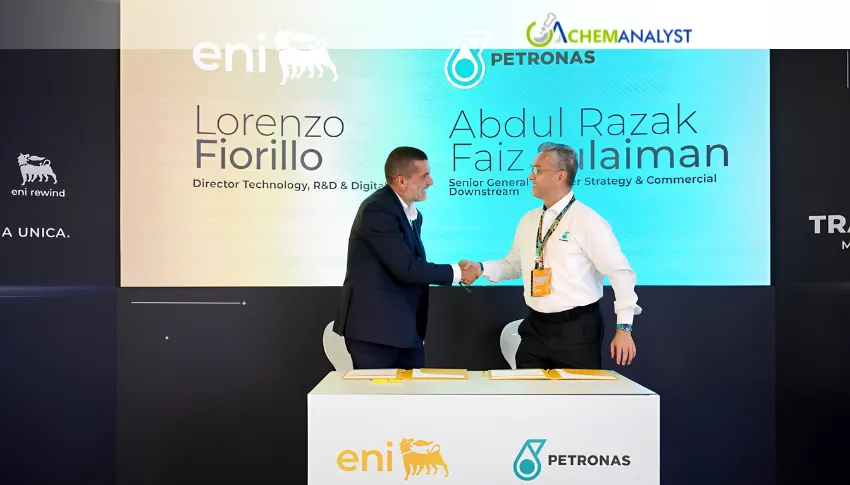
Eni and PETRONAS have expanded their cooperation in sustainable fuels by signing a Feasibility Agreement to investigate the development of innovative, high-performance bio-gasoline. The agreement was signed during the 2026 Formula 1 Italian Grand Prix and will evaluate whether renewable bio-gasoline can meet the demanding technical requirements of motorsport while offering a pathway toward future commercial applications.
The feasibility study will examine the proposed bio-gasoline from several perspectives, including technical performance, market potential, sustainability credentials and compatibility with high-performance engines. The companies intend to use the established Ecofining™ technology platform developed by Eni as a starting point. Eni has used the technology since 2014 to produce HVO biofuels from renewable feedstocks.
The collaboration combines the complementary capabilities of both companies. Eni will contribute its experience in sustainable energy solutions and renewable-fuel production through its Enilive biorefineries. Its existing portfolio includes commercially available HVO diesel and sustainable aviation fuel, while the company is also advancing technologies for renewable bio-gasoline.
PETRONAS will bring its expertise in fuel formulation, engine-performance requirements and advanced product development. The Malaysian energy company has experience spanning conventional fossil-based fuels and the development of sustainable, high-performance fuels designed for combustion engines.
The latest agreement builds on a broader relationship between Eni and PETRONAS in the renewable-energy sector. The companies recently established Searah, a 50:50 independent joint venture combining selected operations in Indonesia and Malaysia. The venture includes a portfolio of 19 gas production and development assets across the two countries.
The companies are also involved in the Pengerang Biorefinery in Johor, Malaysia, through a partnership involving PETRONAS, Enilive and Euglena. The facility is expected to begin operating at significant scale by the second half of 2028, with the ability to process up to 650,000 tonnes of renewable feedstocks annually. Its planned product slate includes Sustainable Aviation Fuel, HVO diesel and bio-naphtha.
The new bio-gasoline initiative could therefore strengthen the companies' renewable-fuel portfolios beyond diesel and aviation applications. Motorsport could provide a testing environment for advanced formulations, allowing the partners to validate performance before considering wider commercial deployment.
For the transport sector, the project supports efforts to reduce the carbon intensity of internal-combustion engines without requiring an immediate transition to fully electric powertrains. If technically and commercially successful, the technology could eventually create additional demand for renewable feedstocks and expand the market for lower-carbon fuels.
Product and Chemical Commodity Price Impact
The development is bullish for biofuels and renewable-feedstock demand over the medium to long term, although the immediate price impact should remain limited because the project is still at the feasibility stage. Successful commercialization could increase demand for vegetable oils, waste oils, renewable hydrocarbons and bio-naphtha, potentially supporting their prices. HVO and SAF markets could also gain from broader investment in renewable-fuel capacity. For petrochemical commodities tracked by ChemAnalyst, conventional gasoline components and fossil-based naphtha could face modest long-term demand pressure if renewable bio-gasoline achieves commercial scale. However, near-term chemical prices are unlikely to move significantly based solely on this agreement.








 About ChemAnalyst
Leave a Comment
Comments (0)