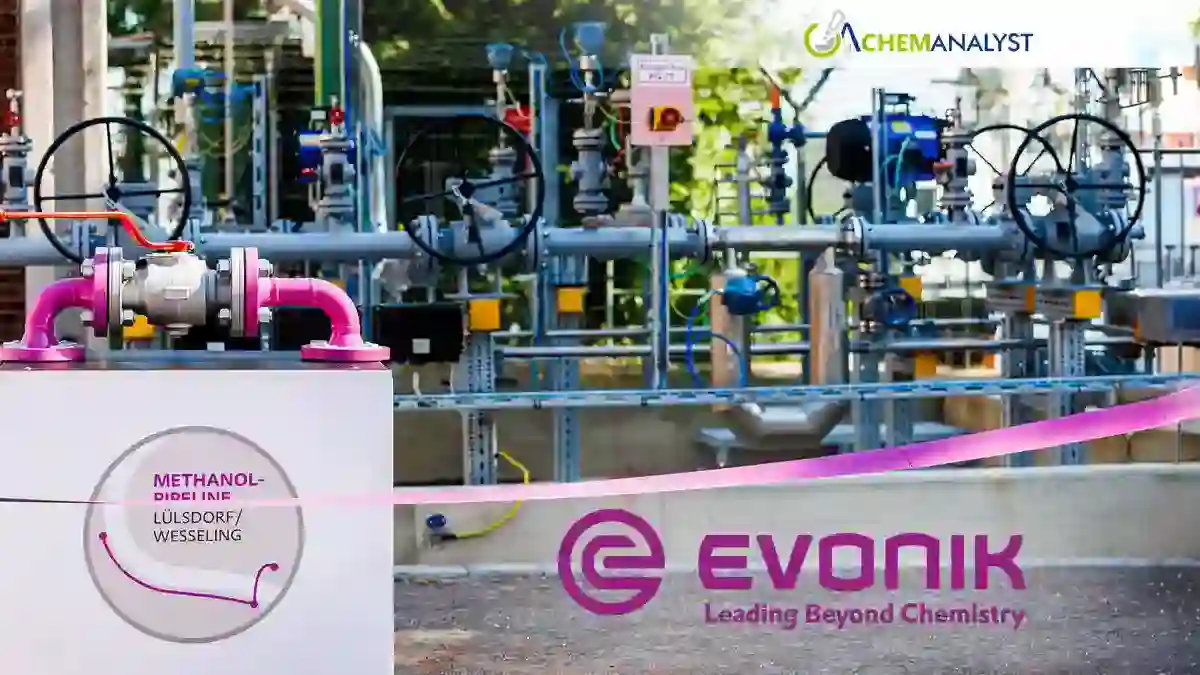
Evonik has taken a significant step toward reinforcing its long-term raw material procurement strategy by introducing an innovative solution to secure the methanol supply required for its methionine production operations in Europe. The initiative is designed to ensure a stable and sustainable supply of a key feedstock used in the manufacturing of methionine, an essential amino acid widely utilized in animal nutrition.
The project was developed through a collaborative effort involving Evonik, Lülsdorf Functional Solutions GmbH, Röhm GmbH, and pipeline infrastructure specialists from SYNEQT Pipelines. By leveraging existing regional logistics assets and integrating a newly constructed long-distance pipeline connecting Lülsdorf and Wesseling, the partners have established a more efficient and reliable methanol transportation network. The pipeline officially commenced operations in June 2026, marking a major milestone in the region’s industrial infrastructure development.
According to Evonik, the new supply arrangement delivers several strategic benefits. First, it strengthens long-term methanol availability for the company’s Wesseling production facility, reducing exposure to potential supply disruptions. Second, the optimized logistics chain contributes to a significant reduction in Scope 3 greenhouse gas emissions associated with raw material transportation and procurement. Third, the infrastructure creates future opportunities for incorporating green methanol into the supply chain as sustainable alternatives become more commercially available.
Norbert Steier, Head of Production and Technology for Evonik’s Animal Nutrition business line, emphasized that the project aligns with the company’s broader objectives of improving supply reliability, enhancing sustainability, and preparing for the transition toward lower-carbon feedstocks. To support the initiative, Evonik invested a high single-digit million euro amount in the development and implementation of the infrastructure.
The newly established system utilizes shared storage and logistics facilities in the region. Methanol imported through Lülsdorf is now transported directly to the Wesseling site via the dedicated pipeline, creating a streamlined supply route that benefits both Evonik and Röhm. This arrangement not only enhances operational efficiency but also improves supply competitiveness by reducing transportation complexity and logistical bottlenecks.
An important environmental advantage of the new setup is the transition to methanol produced from natural gas rather than crude oil. Evonik estimates that the carbon footprint of this methanol will be approximately 70% lower than the crude-oil-derived methanol previously utilized. This shift supports the company’s sustainability goals while helping reduce emissions across its value chain.
At the Wesseling facility, methanol serves as a critical raw material in the production of methylmercaptopropionaldehyde (MMP), an intermediate used in the manufacture of MetAMINO® (DL-methionine). The MMP produced in Wesseling is supplied to Evonik’s Antwerp facility in Belgium, where it is further processed into methionine products for global markets.
The enhanced methanol infrastructure strengthens Evonik’s broader strategy of maintaining reliable operations across its three global methionine production hubs. By securing raw material availability and improving logistical efficiency, the company aims to provide uninterrupted product supply to customers in the animal nutrition industry.
MetAMINO® plays a vital role in livestock production by helping improve animal health, feed efficiency, and sustainability. Through its science-driven approach, Evonik continues to develop products, services, and integrated nutritional solutions that support the production of affordable, high-quality animal protein while meeting the growing food demands of an expanding global population.
Market Impact: The new methanol supply infrastructure is expected to have a positive impact on Evonik’s methionine value chain, particularly for MMP and MetAMINO® production. By securing a dedicated and reliable methanol supply route, the company reduces risks associated with feedstock shortages, transportation disruptions, and logistics costs. This enhanced stability should improve production continuity at both the Wesseling and Antwerp facilities, ensuring consistent methionine availability for the animal feed sector.
From a sustainability perspective, the transition to lower-carbon natural-gas-based methanol strengthens the environmental profile of Evonik’s methionine products. The future possibility of integrating green methanol could further improve product competitiveness among customers increasingly focused on carbon footprint reduction and sustainable sourcing.
Regarding chemical commodities tracked by ChemAnalyst, the immediate impact on European methanol prices is expected to be neutral to slightly firm. The project primarily optimizes logistics rather than significantly increasing methanol demand. However, improved procurement efficiency may reduce Evonik’s exposure to spot-market volatility. Methionine and MMP markets may experience greater supply stability, potentially limiting sharp price fluctuations. In the longer term, increased adoption of natural-gas-based and green methanol could support demand for sustainable methanol grades, potentially creating a premium segment within the methanol market. Overall, the development is likely to promote supply security and price stability rather than triggering major commodity price increases.

Leave a Comment
Comments (0)