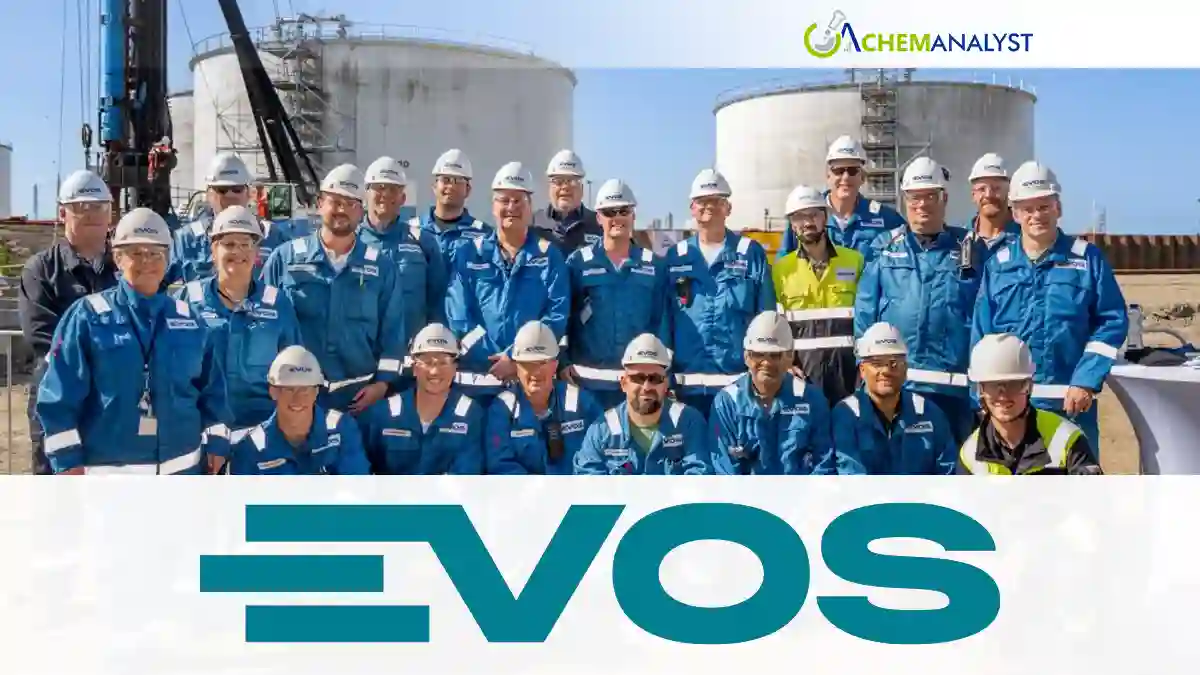
Evos Rotterdam has officially commenced the construction phase of its significant methanol and ethanol terminal expansion project at the Port of Rotterdam, marking an important milestone in the company’s long-term strategy to strengthen its liquid bulk storage and logistics capabilities. The project was inaugurated through a formal ground-breaking ceremony attended by company executives, project partners, contractors, and representatives from the Port of Rotterdam. This development highlights Evos Rotterdam’s commitment to supporting the growing demand for methanol and ethanol storage while reinforcing the port’s strategic role as one of Europe’s leading energy and chemical logistics hubs.
The expansion project represents a substantial investment in new storage infrastructure and is designed to enhance Evos Rotterdam’s ability to meet evolving market requirements, particularly those driven by the transition toward cleaner and more sustainable energy solutions. The project will not only increase the company’s storage capacity for conventional methanol and ethanol but will also support the handling of low-carbon methanol, a product gaining significant attention as industries and the maritime sector seek lower-emission fuel alternatives.
Speaking at the ceremony, Daan Vos, Chief Executive Officer of Evos, emphasized that the groundbreaking event symbolizes the beginning of a construction phase that has been made possible through years of detailed planning, technical expertise, and close collaboration among various stakeholders. He expressed appreciation to the Port of Rotterdam, construction contractors, engineering teams, and all project partners whose collective efforts helped transform the project from concept to reality.
Vos stated that the expansion will significantly strengthen Rotterdam’s position as a leading logistics hub for methanol and ethanol products. He noted that increasing market demand, changing supply chains, and the growing focus on sustainable fuels require additional infrastructure capable of efficiently handling larger product volumes. According to him, the project will provide customers with the storage flexibility and logistics capacity needed to adapt to rapidly evolving market conditions while supporting future growth in the low-carbon fuel segment.
Christiaan Kop, Managing Director of Evos Rotterdam, also addressed attendees during the ceremony, expressing gratitude to everyone involved in launching the project. He described the event as an excellent start to what is expected to become one of the company’s most important infrastructure developments in recent years. Kop particularly acknowledged the dedication and professionalism demonstrated by the project team, praising their commitment to ensuring that both the planning process and the ceremonial launch were executed successfully. He remarked that the confidence, expertise, and collaborative spirit shown by the team reflect the high standards associated with the project.
The expansion project includes the construction of five modern storage tanks with a combined gross storage capacity of approximately 67,500 cubic metres. In addition to the new tanks, Evos Rotterdam will build a new pump station and develop a dedicated jetty to improve vessel handling and product transfer operations. These new facilities have been designed in close coordination with the Port of Rotterdam to maximize operational efficiency and ensure seamless integration with the port’s existing logistics infrastructure.
Once completed, the expanded terminal will significantly improve Evos Rotterdam’s operational capabilities by increasing storage availability and streamlining product loading and unloading processes. The additional infrastructure will allow the company to accommodate higher import, export, and distribution volumes while improving service reliability for industrial customers across Europe.
The project also aligns with broader industry efforts to facilitate the energy transition. Low-carbon methanol is increasingly viewed as an attractive alternative fuel for the shipping industry due to its potential to reduce greenhouse gas emissions compared with conventional marine fuels. As demand for sustainable marine fuels continues to rise, the expanded terminal will play a crucial role in supporting the storage, distribution, and bunkering of these products.
Scheduled to become operational in early 2028, the new facilities are expected to position Evos Rotterdam to better serve both traditional chemical markets and emerging low-carbon fuel sectors. The investment underscores the company’s confidence in the long-term growth prospects of methanol and ethanol logistics while strengthening the Port of Rotterdam’s status as a key gateway for sustainable energy products in Europe. By expanding its storage capacity and enhancing its infrastructure, Evos Rotterdam aims to provide customers with greater supply chain flexibility, improved operational efficiency, and the ability to respond effectively to the changing dynamics of global energy and chemical markets.
Impact of the Product:
The commencement of Evos Rotterdam’s methanol and ethanol terminal expansion is expected to have a positive long-term impact on the European methanol and ethanol supply chain by increasing storage capacity, improving logistics efficiency, and strengthening product availability. Although the project will not become operational until early 2028, the additional infrastructure will enhance the handling of conventional and low-carbon methanol, supporting growing demand from the chemical, industrial, and marine fuel sectors. In the near term, the announcement is unlikely to influence spot prices significantly, as no immediate supply is being added. However, over the medium to long term, improved storage and distribution capabilities could reduce supply bottlenecks and increase market liquidity. For chemical commodities tracked by ChemAnalyst, methanol prices may experience moderate downward pressure once the facility becomes operational due to improved availability and logistics. Ethanol prices could also stabilize, while downstream products such as formaldehyde, acetic acid, MTBE, biodiesel intermediates, and marine fuel blends may benefit from enhanced feedstock accessibility and more reliable regional supply.







Leave a Comment
Comments (0)