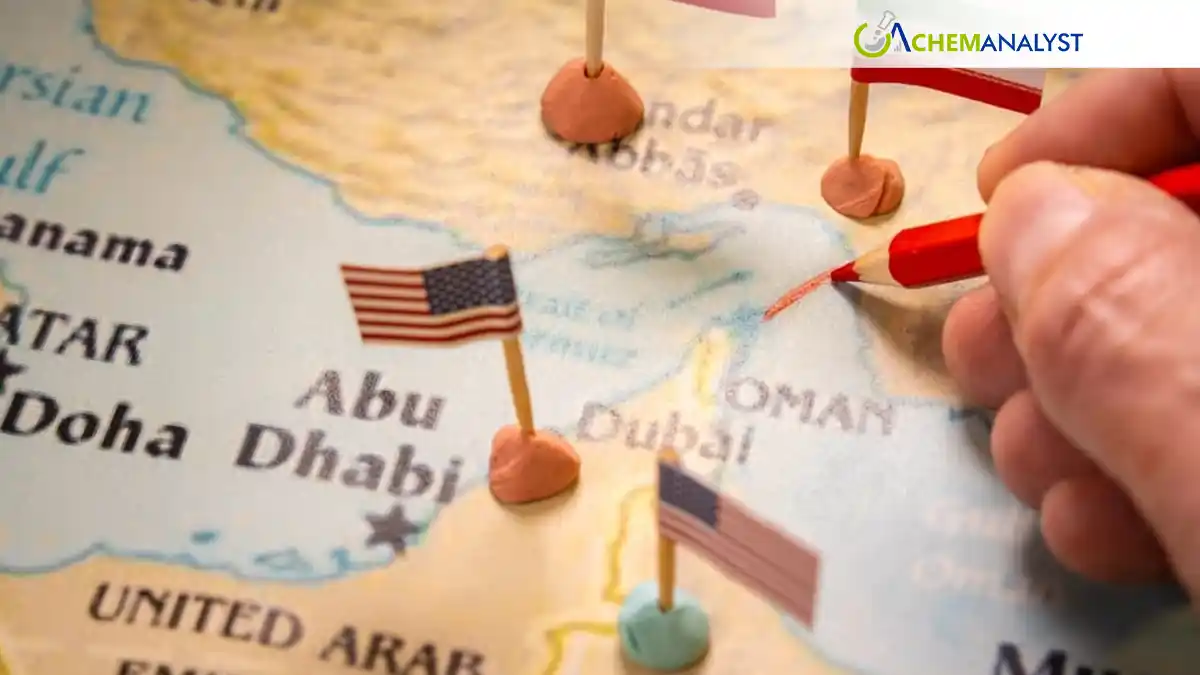
In a significant development for global energy markets, the first liquefied natural gas (LNG) tanker has successfully made its way through the Strait of Hormuz following a peace deal brokered between the United States and Iran earlier this week. The vessel ultimately docked at the port of Dahej, located in the western Indian state of Gujarat, marking a pivotal moment for regional and international energy trade.
The tanker in question, known as the Disha, sails under Malta's flag and is managed by India's government-owned Shipping Corporation of India. Beyond being the first LNG carrier to transit the strait after the ceasefire, the Disha also holds the distinction of being the first Indian merchant vessel to pass through these critical waters in approximately two months — a testament to just how severely the ongoing conflict had disrupted maritime operations in the area.
Officials from India's Ministry of Shipping confirmed that the vessel was transporting approximately 62,370 tonnes of LNG sourced from Qatar. Upon unloading at the Dahej terminal, the gas will be distributed across various regions of India to meet domestic energy demands. The cargo was procured under a contract held by Petronet LNG, the country's largest importer of natural gas. Petronet operates under a long-term supply arrangement with Qatar, committing to the purchase of 7.5 million tonnes of LNG annually. This landmark agreement, finalized in 2024 and spanning two decades, carries an estimated total value of $78 billion.
Prior to this transit, the Disha had been anchored on the western approaches of the strait for over three months. The escalating military conflict between the United States, Israel, and Iran had effectively shut down one of the planet's busiest corridors for energy shipments, leaving dozens of vessels stranded and cutting off vital fuel supplies to importing nations.
Shortly after the Disha's crossing, another tanker — the Mraikh — followed suit, ferrying LNG from the Ras Laffan refinery in Qatar to Port Qasim in Karachi, Pakistan. Additionally, data analytics firm Kpler reported that three oil-carrying vessels had also successfully transited the waterway by early afternoon UAE time, suggesting a gradual resumption of normal shipping activity.
The Strait of Hormuz holds unparalleled strategic importance in the global energy landscape. Serving as the maritime gateway connecting some of the world's most prolific oil and gas producers — including Qatar, Saudi Arabia, and the United Arab Emirates — to international markets, the strait facilitates the movement of roughly one-fifth of all LNG traded globally. Any disruption to this narrow passage, as witnessed over the past months, has far-reaching consequences for energy security worldwide.
During an inter-ministerial briefing, Opesh Kumar Sharma, Director in India's Ministry of Ports, Shipping and Waterways, underlined that the government is actively working to ensure the safe and timely return of remaining Indian vessels and energy shipments. He noted that multiple government ministries — including those responsible for petroleum, chemicals, fertilizers, and external affairs — are coordinating their efforts to normalize operations as swiftly as possible. However, he cautioned that as of the briefing, the Disha remained the only Indian-flagged vessel to have resumed movement through the strait.
For India's energy sector, the reopening of the Hormuz route carries profound implications. The country relies on Qatar for more than 40% of its total LNG imports, making the uninterrupted flow through the strait critically important. India's LNG import volume exceeded 27 million tonnes in the 2024–25 fiscal year, with Qatar alone supplying over 11 million tonnes of that total. The months-long blockage proved enormously expensive: India reportedly incurred an additional cost of approximately $353 million between March and April alone, as buyers were forced to seek alternative and typically more expensive supplies from the United States and other spot-market sources.
The crisis has also underscored India's vulnerability to geopolitical disruptions in the Gulf region, likely accelerating efforts to diversify its LNG supply base. Government-owned energy companies are increasingly exploring procurement agreements with producers in the United States, Australia, and other regions to reduce over-reliance on Gulf supplies. The UAE is also reportedly developing plans to expand its port infrastructure as a way to offer alternative shipping routes less dependent on the Hormuz corridor.
The human toll of the conflict was also brought into sharp focus during this period. Three Indian crew members lost their lives when vessels came under military attack near Oman, adding a deeply personal dimension to what might otherwise appear to be a purely economic or geopolitical story.
While the arrival of the Disha at Dahej is being widely viewed as an encouraging first step toward normalizing LNG trade through the Strait of Hormuz, Indian officials have urged measured optimism. Multiple Indian vessels remain in the region, and shipping patterns have not yet returned to pre-crisis levels. A full recovery could take several months. In parallel, QatarEnergy is expected to gradually scale up production at its Ras Laffan facility, targeting around 50% of full capacity within one month of passage being declared safe, and reaching approximately 80% within two months.
Based on the latest developments surrounding the Strait of Hormuz reopening, here is a detailed breakdown of the expected price impact across key chemical and energy commodities.
On the crude oil front, the peace deal and Hormuz reopening led to an immediate drop in global oil prices of approximately 4–5% on Monday, reflecting market optimism about renewed energy flows. A prior ceasefire in April had already demonstrated this dynamic, when oil prices tumbled over 10%, with Brent crude falling to $89 per barrel. The broader trend points to lower and more stable crude prices as tanker availability improves and supply concerns ease.
On natural gas and LNG, European natural gas (TTF) prices had surged more than 60% in March alone — the biggest monthly increase since September 2021 — driven by the Middle East conflict which effectively shut the Strait of Hormuz and forced closure of Qatar's largest LNG facility. With the strait now reopening, these prices are expected to correct downward as Qatari LNG volumes resume flowing to Asian and European markets.
For petrochemicals and plastics, cheaper crude oil and natural gas feedstocks are likely to lower production costs for petrochemicals, plastics, fertilizers, and industrial chemicals, improving global supply chain stability. This is a significant positive signal for downstream chemical buyers who had been absorbing elevated input costs for months. On the fertilizer side, the conflict had severely disrupted shipping of vital commodities like aluminum and urea through the Strait, but the agricultural sector could now benefit from improved movement of essential commodities such as urea and other fertilizers through the region, potentially lowering fertilizer prices and supporting crop production.
Regarding aluminum, helium, and sulfur, key commodities flowing through the Strait of Hormuz had seen increases in global prices — key inputs for the construction, technology, and agriculture sectors — putting upward pressure on finished products. The reopening should progressively ease these pressures as supply chains normalize.
However, a note of caution remains for the short term. Physical freight rates are expected to remain elevated and trading slow until confidence in free passages builds over several weeks. An estimated 155 tankers were in the Mideast Gulf area as of June 15, down from 201 at the end of May, and experts suggest that under unrestricted navigation the existing traffic pile-up could be resolved within 8–10 days. Furthermore, banks and insurers are also waiting for signed text, U.S. guidance, and proof of safety before fully engaging.
The overall trajectory for tracked commodities is downward on prices in the medium term, particularly for crude oil, LNG, petrochemicals, plastics, urea, and fertilizers. The short-term picture, however, remains cautious — freight costs and insurance premiums will stay elevated until full maritime safety is confirmed and market confidence solidly returns.







Leave a Comment
Comments (0)