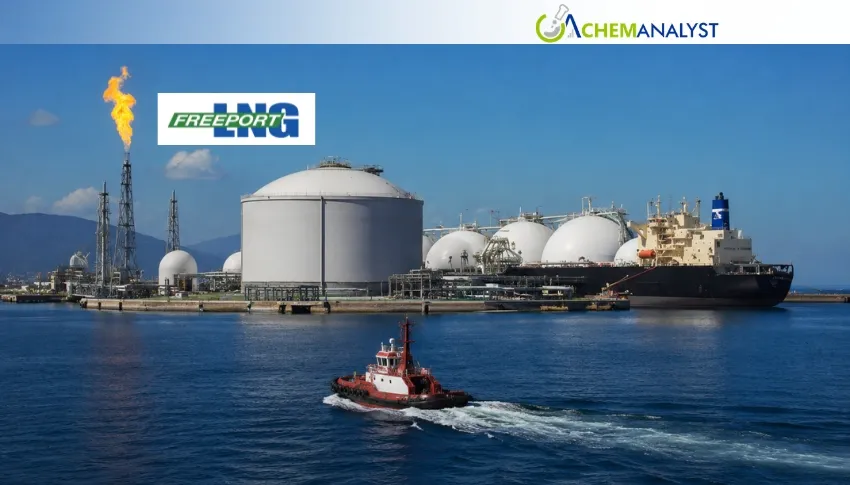
The scheduled annual maintenance at the Freeport LNG export terminal in the United States officially began on July 10 and is expected to continue through the end of August, marking one of the most significant planned outages in the country's LNG export infrastructure this year. The maintenance program, announced on July 9, involves the simultaneous shutdown of both the facility's natural gas pretreatment and liquefaction units to carry out comprehensive inspections, equipment servicing, and operational upgrades aimed at ensuring long-term reliability and safety.
With the temporary suspension of liquefaction operations, the facility's requirement for feed natural gas has declined substantially. As a result, the volume of natural gas consumed for LNG exports has fallen sharply during the maintenance period. This reduction in gas demand is expected to influence the broader U.S. natural gas market and affect downstream industries, particularly synthetic ammonia and nitrogen fertilizer manufacturing, which rely heavily on natural gas as both a feedstock and an energy source.
Despite the temporary reduction in LNG exports, the overall impact on the U.S. natural gas market is expected to remain limited due to abundant domestic gas supplies. The United States continues to maintain healthy storage levels, providing a significant buffer against the decline in export-related demand. According to the latest storage data for the week ending July 3, U.S. natural gas inventories increased by 61 billion cubic feet (Bcf). Total inventories currently stand 185 Bcf above the five-year seasonal average, highlighting a comfortable supply situation across the country.
The combination of robust inventories and reduced LNG export demand has helped stabilize domestic natural gas prices after weeks of downward pressure. U.S. benchmark gas prices have remained around $3.01 per MMBtu, suggesting that the market has largely absorbed the effects of the Freeport LNG maintenance without triggering supply concerns or significant price volatility. Instead of creating tighter market conditions, the outage has effectively redirected additional natural gas supplies into the domestic market.
The maintenance shutdown also has varying implications for downstream fertilizer production depending on the region. Natural gas serves as the primary raw material for hydrogen production through steam methane reforming and is the principal energy source used in synthetic ammonia manufacturing. Since ammonia is the key intermediate in nitrogen fertilizer production, fluctuations in natural gas prices directly influence production costs.
Within North America, the maintenance is expected to have little negative impact on ammonia and nitrogen fertilizer manufacturers. With LNG exports temporarily reduced, a larger share of domestically produced natural gas remains available for industrial consumers. The ample supply and stable pricing environment mean that fertilizer producers are unlikely to experience higher feedstock costs during the maintenance period. In fact, the increased domestic availability of gas could help maintain favorable operating margins for U.S. ammonia producers.
The situation is notably different in international markets. Countries across Europe and Asia remain heavily dependent on imported LNG to meet industrial and power generation requirements. During the summer season, when cooling demand increases and LNG consumption rises, any reduction in U.S. export volumes can tighten the global LNG market. If this coincides with geopolitical tensions or supply disruptions elsewhere, competition for spot LNG cargoes could intensify, keeping international LNG prices elevated.
Higher LNG prices in overseas markets would translate into increased natural gas procurement costs for ammonia and nitrogen fertilizer manufacturers that rely on imported gas. Consequently, fertilizer production costs outside North America may remain under pressure, potentially supporting higher fertilizer prices in import-dependent regions. Therefore, while the Freeport LNG maintenance is expected to have only a modest effect on the U.S. market, it could contribute to continued cost pressures across the global nitrogen fertilizer industry by limiting LNG availability during a period of seasonal demand.
Impact on Product Prices and ChemAnalyst-Traded Chemical Commodities
The planned maintenance at the Freeport LNG terminal is expected to create contrasting impacts across regional chemical and fertilizer markets. In the United States, reduced LNG exports will leave more natural gas available for domestic consumers, keeping feedstock costs stable for ammonia producers. Consequently, synthetic ammonia, urea, ammonium nitrate, UAN, and other nitrogen fertilizers tracked by ChemAnalyst are likely to witness stable to slightly softer prices in North America during the maintenance period due to comfortable gas availability and healthy inventories. Lower domestic gas prices may also support stable production costs for methanol and other gas-based petrochemicals.
In contrast, Europe and Asia could experience tighter LNG availability, particularly if seasonal demand or geopolitical disruptions intensify. Elevated LNG prices would increase feedstock and energy costs for regional ammonia and fertilizer manufacturers, potentially pushing ammonia, urea, ammonium sulfate, ammonium nitrate, nitric acid, and methanol prices upward. Overall, the maintenance is expected to widen regional price disparities, with North America remaining relatively stable while overseas markets face continued cost pressure.








 About ChemAnalyst
Leave a Comment
Comments (0)