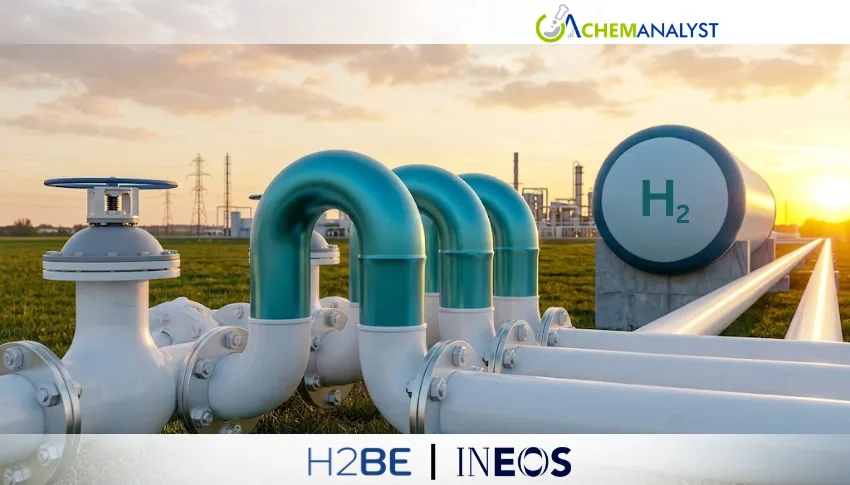
H2BE and INEOS have announced that they have reached preliminary commercial terms for the future supply of low-carbon hydrogen, marking an important milestone in Belgium’s industrial decarbonization efforts. Under the proposed agreement, H2BE will supply low-carbon hydrogen to INEOS, supporting the company's flagship Project ONE and its ambition to establish Europe’s first zero-carbon steam cracker. The arrangement lays the groundwork for a long-term partnership focused on reducing carbon emissions in one of the continent’s most energy-intensive industrial sectors while strengthening Belgium’s position as a leader in sustainable chemical manufacturing.
The agreement is made possible by the significant progress achieved in the construction of the Fluxys hydrogen pipeline connecting Ghent and Antwerp. With much of the pipeline infrastructure already in place, the project provides the necessary transportation network to deliver low-carbon hydrogen efficiently from production facilities to industrial consumers. Hydrogen produced by ENGIE and Equinor through the H2BE initiative will be transported via this pipeline and supplied to INEOS for use in its manufacturing operations. This infrastructure is expected to play a pivotal role in accelerating the transition from conventional fossil fuels to cleaner energy sources across Belgium's industrial landscape.
As one of the first major commercial commitments for the H2BE initiative, the agreement serves as an anchor project that will encourage broader investments in Belgium’s emerging low-carbon hydrogen economy. By securing a reliable industrial customer for hydrogen production, the partnership enhances confidence among investors, infrastructure developers, and policymakers. It also establishes the commercial foundation needed to expand hydrogen production capacity and associated transportation networks throughout the region.
The initiative has received strong support from both the Flemish government and the European Union, reflecting its strategic importance in achieving regional and continental climate objectives. Public backing demonstrates recognition of hydrogen's critical role in reducing industrial emissions while maintaining the global competitiveness of Belgium's chemical sector. Government support is also expected to facilitate further investments in clean energy infrastructure, helping industries transition toward more sustainable production methods without compromising economic growth.
Beyond supplying low-carbon hydrogen, the H2BE project is expected to contribute significantly to the decarbonization of INEOS Project ONE. The availability of cleaner hydrogen will reduce dependence on traditional fossil-based feedstocks and lower greenhouse gas emissions associated with steam cracking operations. This transition aligns with INEOS' broader sustainability strategy and Europe's ambition to achieve climate neutrality over the coming decades.
The collaboration could also stimulate additional investments across the hydrogen value chain. Future developments may include expanded hydrogen production facilities, storage infrastructure, transportation networks, and supporting technologies that improve supply reliability and efficiency. Such investments would strengthen Belgium's position as a regional hub for hydrogen innovation while creating new economic opportunities across multiple industrial sectors.
Another significant aspect of the project involves carbon capture and storage (CCS). Carbon dioxide captured during hydrogen production at H2BE will contribute to building sufficient CO2 volumes necessary to support future investment decisions for a Belgian carbon capture and storage hub. Establishing an integrated CCS network is considered essential for achieving deep industrial decarbonization, particularly in sectors where complete electrification remains technically or economically challenging. The combination of low-carbon hydrogen production and carbon capture technologies provides a comprehensive pathway toward reducing industrial emissions on a large scale.
The announcement also aligns with the broader objectives outlined in the VOKA-AKT Joint Declaration on the carbon capture and storage value chain, signed by the Flemish and Walloon regional governments. This declaration emphasizes the importance of coordinated efforts to develop hydrogen and CCS infrastructure as complementary technologies supporting Belgium's climate ambitions. By integrating hydrogen utilization with carbon capture initiatives, the H2BE and INEOS partnership demonstrates how collaborative investments can accelerate the transition toward a more sustainable industrial future while preserving the competitiveness of Europe's chemical manufacturing sector.
Impact on Products and Chemical Commodity Prices
The preliminary hydrogen offtake agreement between H2BE and INEOS is expected to strengthen the long-term competitiveness of low-carbon petrochemical production rather than create any immediate supply disruption. By supporting Project ONE's transition toward becoming Europe's first zero-carbon steam cracker, the agreement enhances the sustainability profile of downstream products such as ethylene, propylene, polyethylene (PE), and polypropylene (PP). In the short term, the impact on chemical commodity prices tracked by ChemAnalyst is likely to remain limited, as the hydrogen infrastructure and production capacities are still under development. However, over the medium to long term, increased availability of low-carbon hydrogen could reduce carbon compliance costs, improve production efficiency, and encourage greater investment in sustainable chemical manufacturing. This may stabilize production costs for basic petrochemicals despite tightening environmental regulations. Demand for low-carbon chemicals is also expected to rise, potentially supporting premium pricing for sustainable grades while keeping conventional commodity prices largely influenced by feedstock costs and overall market demand.







 About ChemAnalyst
Leave a Comment
Comments (0)