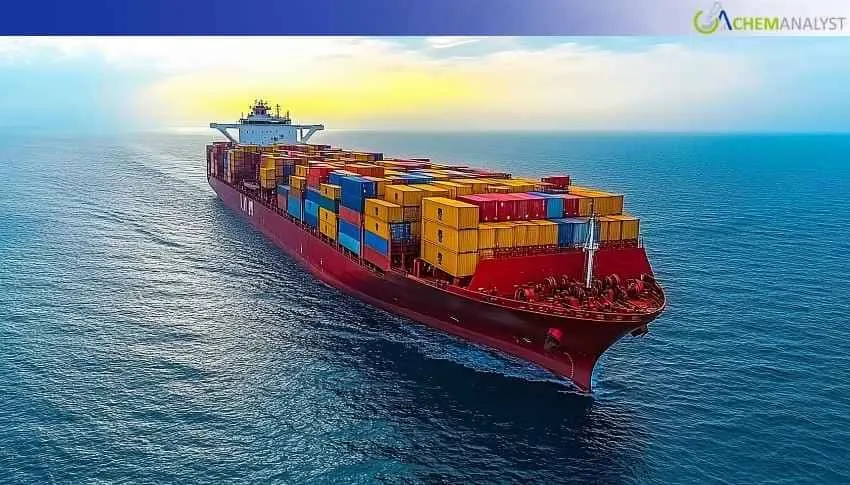
HD Hyundai Heavy Industries has announced a major breakthrough in sustainable maritime engineering with the successful construction of two ammonia-powered tankers, representing a global first in eco-friendly shipping innovation. This achievement highlights the company’s technological capabilities and its commitment to reducing carbon emissions in the shipping industry, which has long been a significant contributor to global greenhouse gases.
The two vessels, named Antwerpen and Arlon after cities in Belgium, were built for EXMAR through its subsidiary EXMAR LPG France. These ships are part of a larger order consisting of four medium-sized ammonia-fueled gas carriers commissioned between 2023 and 2024. The first two ships are scheduled to be delivered in May and July, marking the beginning of what could be a transformative shift in marine fuel usage.
Each tanker has been designed with impressive specifications. Measuring 190 meters in length, 30.4 meters in width, and 18.8 meters in height, the vessels can carry up to 46,000 cubic meters of cargo. They are equipped with three cargo tanks capable of transporting liquefied petroleum gas (LPG), ammonia, and other liquefied gases. Their dual-fuel capability allows for operational flexibility, enabling ship operators to transition toward cleaner fuels without compromising efficiency.
In addition to their fuel innovation, the ships incorporate several advanced environmental and safety technologies. Shaft generators and selective catalytic reduction systems are installed to minimize harmful emissions, aligning with stricter global environmental regulations. To address safety concerns associated with ammonia—particularly its toxicity—the vessels are fitted with ammonia gas detectors and purge recovery systems, significantly reducing the risks of leakage and enhancing onboard safety.
The official naming ceremony took place at the shipyard in Ulsan, South Korea, and was attended by around 70 distinguished guests. Among them were senior executives from both companies and diplomatic representatives, including Belgium’s ambassador to Korea. The event symbolized international collaboration in advancing sustainable shipping solutions.
Ammonia is increasingly being recognized as a promising alternative marine fuel due to its ability to burn without producing carbon dioxide emissions. According to projections by the International Energy Agency, ammonia could account for approximately 8% of global marine fuel demand by 2030 and nearly half—46%—by 2050. This growing interest is driven by the urgent need to decarbonize global shipping.
From a technical standpoint, ammonia also offers practical advantages. It can be stored either in high-pressure tanks at around 8 bar or in low-temperature tanks at minus 33 degrees Celsius without requiring complex cryogenic systems. Furthermore, its storage density is about 1.7 times higher than that of hydrogen, making it more suitable for long-distance transportation and large-scale storage.
Overall, this milestone by HD Hyundai Heavy Industries not only demonstrates engineering excellence but also sets a precedent for the future of greener maritime transport. As the industry seeks sustainable alternatives, ammonia-powered vessels could play a critical role in shaping a cleaner and more efficient global shipping ecosystem.








 About ChemAnalyst
Leave a Comment
Comments (0)