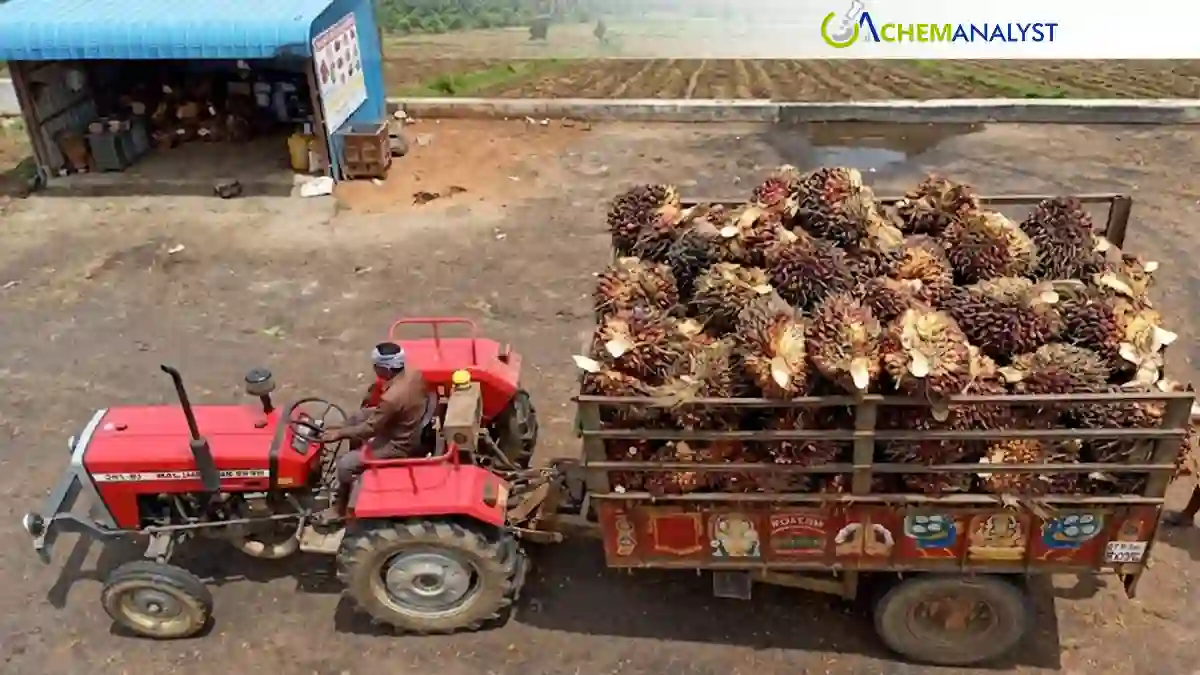
Palm oil prices are retreating due to a significant slowdown in Indian imports and a subsequent buildup of global stockpiles. India, the world's largest importer of vegetable oils, saw its palm oil imports drop to a 14-month low in June 2026, reaching 487,846 metric tons. This decline follows a similar trend in April 2026, when imports fell to a one-year low of 505,000 metric tons. While imports rebounded slightly in May 2026 to 549,356 metric tons, they remained below typical average levels.
The primary cause of the reduced Indian demand is a narrowing price discount between palm oil and competing soft oils, such as soy and sunflower oil. Historically, palm oil's cost advantage made it a preferred choice for Indian refiners. However, this advantage has diminished, prompting buyers to shift their purchases. For instance, palm oil's discount to rival oils dropped to under $50 per ton.
Another contributing factor is softening domestic demand within India, particularly from institutional buyers like eateries and restaurants. These establishments have faced cooking gas shortages and rising commercial cylinder prices, which have reduced their overall consumption of frying oils. Additionally, global biofuel mandates from Indonesia, Malaysia, and the United States are diverting millions of tons of vegetable oils from the food economy into the fuel economy, thereby driving up global spot prices for all edible oils.
The slowdown in Indian buying directly impacts major palm oil producers like Indonesia and Malaysia. Lower imports from India are expected to swell inventories in these top producing nations, putting downward pressure on benchmark Malaysian palm oil futures. This situation leads to reduced revenue for these countries and potentially lower incomes for palm oil farmers.
The shift in India's purchasing patterns is reshaping global edible oil trade flows and market dynamics. Indian refiners are increasingly opting for soyoil, mainly sourced from Argentina and Brazil, and sunflower oil, imported from countries like Russia and Ukraine. This strategic pivot is driven by evolving price dynamics and better refining margins for alternative oils. While palm oil imports may see a slight increase in the coming months if price competitiveness returns, the overall trend highlights a significant adjustment in the global vegetable oil market.
Impact & Chemical Commodity Outlook
The import slowdown signals weakening Indian demand, likely swelling inventories in Indonesia and Malaysia and pressuring benchmark Malaysian palm oil futures downward, squeezing producer revenues and farmer incomes. For ChemAnalyst-tracked commodities, this reshapes the broader oleochemical and vegetable-oil value chain: softer palm oil prices could reduce feedstock costs for downstream oleochemicals (fatty acids, glycerin, surfactants), while rising soyoil and sunflower oil demand may lift their prices due to tighter Argentine, Brazilian, Russian, and Ukrainian supply flows. Additionally, growing biofuel-driven diversion of edible oils could tighten feedstock availability for biodiesel-linked chemical markets, sustaining elevated prices across competing vegetable oil derivatives despite palm oil's softness.








 About ChemAnalyst
Leave a Comment
Comments (0)