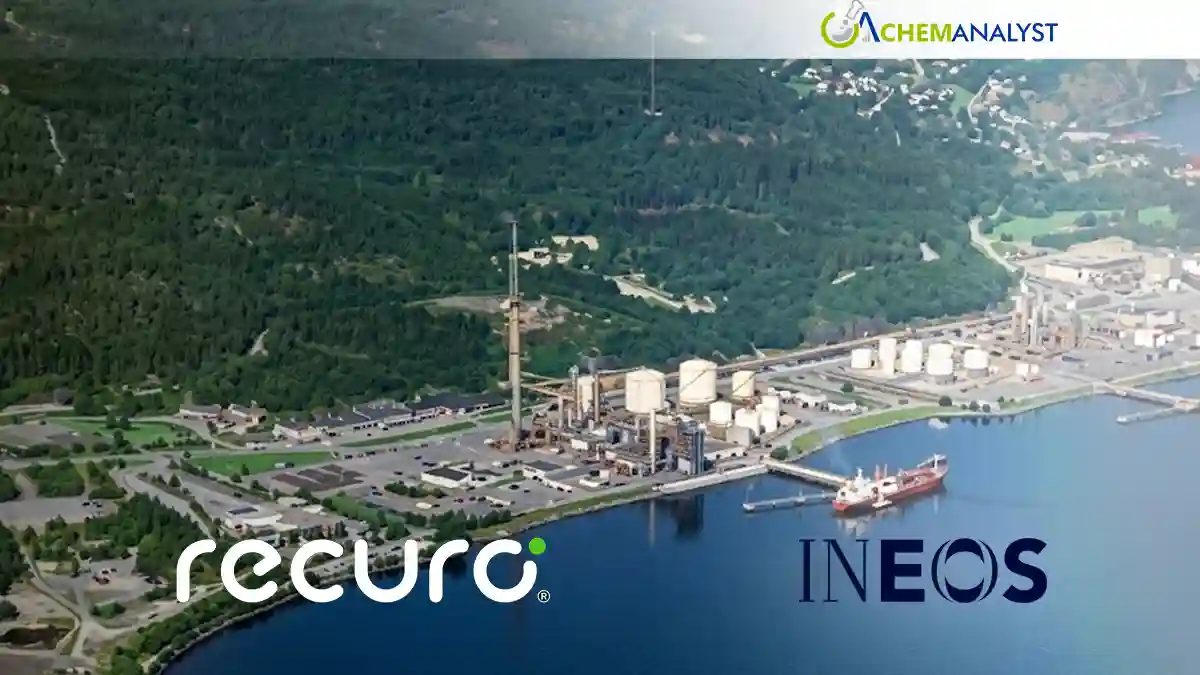
INEOS has entered into a Memorandum of Understanding (MoU) with Norwegian recycling company Recuro to jointly develop an advanced plastic recycling facility at the INEOS Bamble polymer complex in Norway. The proposed project marks a significant step toward strengthening circular plastic production in Europe by transforming difficult-to-recycle plastic waste into valuable recycled feedstocks. Once operational, the facility is expected to process up to 33,000 metric tonnes of end-of-life plastic waste annually, helping to increase the availability of recycled raw materials required to comply with the European Union’s Packaging and Packaging Waste Regulation (PPWR).
The project, known as "Full Circle," has been designed with a strong emphasis on both environmental sustainability and commercial feasibility. Instead of constructing an entirely new industrial site, the partners will utilize the existing infrastructure, land, and support services available at the Bamble polymer complex. This approach is expected to significantly reduce capital investment, operational costs, and the environmental impact associated with new industrial developments while accelerating project implementation.
A defining feature of the facility will be its reliance on 100% renewable electricity generated in Norway, allowing operations to maintain a very low carbon footprint. The plant will employ advanced pyrolysis technology, an innovative recycling process that converts plastic waste into valuable hydrocarbon feedstocks. Unlike conventional waste treatment methods that burn by-products for energy recovery, the pyrolysis process will retain both the oil and gas fractions generated during recycling. These recovered materials will be reused as valuable feedstocks for chemical production, maximizing carbon recovery and supporting the circular use of plastic materials. By keeping carbon embedded within the production cycle instead of releasing it through incineration, the project contributes to reducing overall greenhouse gas emissions.
The recycled output from the new facility will be supplied to INEOS’ Rafnes cracker, where it will serve as an alternative feedstock for the production of recycled ethylene. This recycled ethylene will subsequently be used at the nearby Bamble manufacturing site to produce virgin-quality recycled polyethylene suitable for demanding applications. The resulting material will comply with stringent European regulatory standards for sectors requiring high-performance plastics, including food packaging and medical packaging, while contributing to higher plastic recycling rates across the region.
Recuro CEO Arve Jakobsen highlighted that the "Full Circle" initiative distinguishes itself through its comprehensive circular economy approach. By integrating the recycling facility within an established industrial complex and positioning it alongside a steam cracker, both oil and gas streams recovered during pyrolysis can be efficiently reused instead of being discarded. According to Jakobsen, this integrated model represents one of the most effective examples of true circularity in plastic recycling, where waste materials are transformed back into valuable resources with minimal losses.
The collaboration also represents an important strategic milestone for Recuro as it works toward becoming a leading company in advanced plastic recycling. Jakobsen acknowledged that the project has been made possible through strong cooperation between multiple stakeholders, including financial support from the Norwegian government through Innovation Norway, technology contributions from Vixla, and the partnership with INEOS. He emphasized that successful collaboration among industry, technology providers, and public institutions is essential for scaling advanced recycling technologies.
Liz Rittweger, CEO of INEOS Olefins & Polymers Europe, stated that advanced recycling is becoming increasingly important in expanding plastic recycling opportunities and enabling a truly circular plastics economy. She noted that the project demonstrates INEOS’ commitment to producing lower-carbon materials while supporting customers seeking sustainable solutions for high-performance plastic applications. Rittweger also called on policymakers to establish clear and harmonized regulations that recognize advanced recycling outputs, provide legal certainty, and encourage long-term investment in innovative recycling technologies. According to INEOS, supportive regulatory frameworks will play a crucial role in accelerating the commercialization and wider adoption of advanced recycling solutions across Europe, ultimately helping achieve ambitious recycling and carbon reduction targets.
Impact on Product and Chemical Commodity Prices
The INEOS–Recuro partnership is expected to strengthen the availability of recycled polyethylene (r-PE) and chemically recycled feedstocks in the European market over the medium to long term. By processing up to 33,000 metric tonnes of end-of-life plastic waste annually, the project will increase the supply of recycled ethylene and virgin-quality recycled polyethylene suitable for high-value applications such as food and medical packaging. This enhanced supply is likely to improve feedstock security for packaging manufacturers while supporting compliance with the EU's PPWR regulations.
For chemical commodities tracked by ChemAnalyst, the development is expected to exert downward pressure on recycled polyethylene (r-PE) prices over time as production capacity expands. Demand for virgin polyethylene (HDPE, LDPE, and LLDPE) may face modest substitution in sustainability-driven packaging applications, potentially limiting price upside in Europe. Additionally, increased availability of recycled feedstocks could soften demand for fossil-based naphtha-derived ethylene, although the overall impact on virgin petrochemical prices will remain limited in the near term until advanced recycling capacity scales further.








 About ChemAnalyst
Leave a Comment
Comments (0)