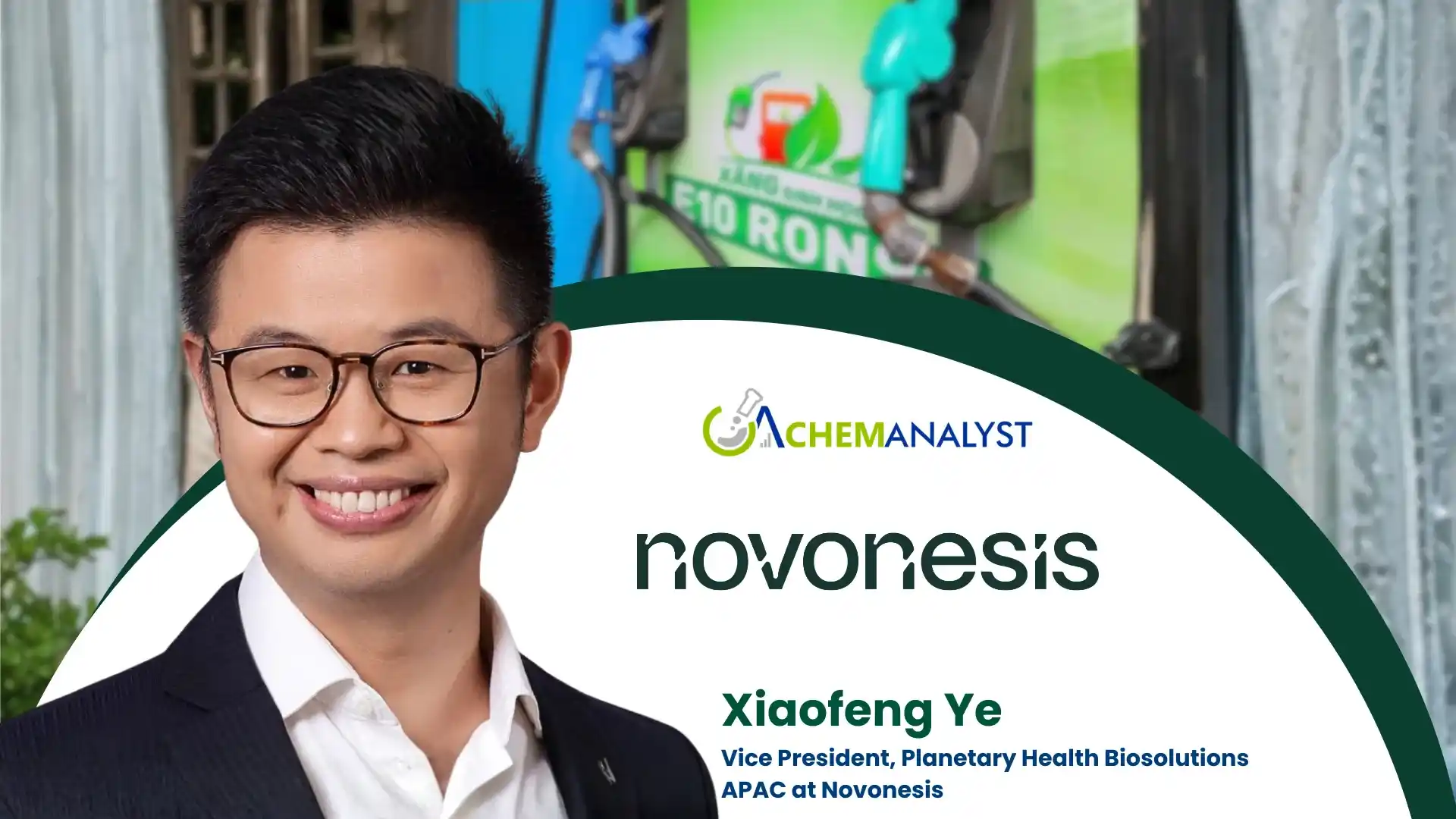
ChemAnalyst Talks with Mr. Xiaofeng Ye, Vice President of Planetary Health Biosolutions APAC at Novonesis
Novonesis, a leading global biosolutions company created through the combination of Chr. Hansen and Novozymes, leverages microorganisms, enzymes, and biotechnology to develop sustainable solutions across more than 30 industries. Its biosolutions help improve resource efficiency, reduce carbon emissions, and enhance productivity in sectors including food, agriculture, energy, household care, and industrial manufacturing. ChemAnalyst spoke with Mr. Xiaofeng Ye, Vice President of Planetary Health Biosolutions APAC at Novonesis, about the company's strategy to accelerate biofuel adoption and industrial decarbonization across the Asia-Pacific region. Drawing on his extensive leadership experience, Mr. Ye highlighted Novonesis' partnership with Nhà Xanh Viet Nam to strengthen the country's bioethanol industry through advanced enzyme and yeast technologies that improve feedstock utilization, fermentation efficiency, and production economics. Looking ahead, he emphasized the company's commitment to advancing next-generation biofuels, supporting sustainable aviation fuel (SAF) and low-carbon feedstocks, and fostering strategic collaborations that enable a more resilient, resource-efficient, and low-carbon energy future.
Complete Interview with Mr. Xiaofeng Ye
Q1: Please provide an overview of your professional journey in industrial biotechnology, biosolutions, and renewable fuels, and how these experiences have shaped your vision for Novonesis' role in advancing the global transition toward sustainable biofuels and industrial decarbonization.
Mr. Xiaofeng Ye: I joined Novonesis in 2011 in the United States and have since held leadership roles across our global headquarters, North America, China, and Asia-Pacific, working with customers and partners across a wide range of markets and industries.
Today, as Vice President of Planetary Health Biosolutions for Novonesis Asia Pacific, I lead our work across areas including Bioenergy, agriculture, food, household care, and industrial applications. Across all these areas, our aim is simple: to help industries do more with less, using fewer resources, improving efficiency, and reducing their environmental impact.
My experience across business development, strategy, and innovation has strengthened my belief that biology has a big role to play in solving some of the world’s biggest challenges. I see biosolutions as a core part of building more resilient and sustainable industries for the future.
In renewable fuels, this means helping producers get more value from available resources, improve production efficiency, and develop locally produced, lower-carbon fuels that can support both energy security and economic growth.
Q2: Novonesis recently signed a Memorandum of Understanding with Nhà Xanh Viet Nam to support the country's bioethanol industry and E10 fuel rollout. What strategic objectives drove this partnership, and why is it a significant milestone for Vietnam's renewable energy transition?
Mr. Xiaofeng Ye: This partnership with Nhà Xanh represents an important step in supporting Vietnam’s transition towards more sustainable fuel options. With the country moving towards E10, it’s increasingly important to strengthen local bioethanol production and make it more efficient and cost-effective.
By producing more bioethanol from locally available resources, Vietnam can make better use of its agricultural resources, reduce its reliance on imported fossil fuels, and strengthen its energy security.
We are exploring ways to get more ethanol from the same amount of raw materials, lower production costs, and support the continued growth of Vietnam’s bioethanol industry by bringing our experience in corn- and cassava-based biofuel technology.
And the benefits go beyond energy. A stronger bioethanol sector can also create new opportunities for local farmers by increasing demand for crops such as cassava and corn, helping support a more sustainable and resilient agricultural sector.
Q3: Vietnam possesses abundant agricultural feedstocks such as cassava and corn. How will Novonesis' biosolutions improve feedstock utilization, strengthen domestic ethanol production, and enhance the country's long-term energy security?
Mr. Xiaofeng Ye: From the same amount of raw materials, our biosolutions help producers maximize the value of their cassava and corn by improving ethanol yields, increasing process efficiency, and making the fermentation process more robust and reliable. In addition to that, our partners in Vietnam can also leverage our expertise and learnings from other more mature bioethanol markets to further improve competitiveness.
Strong bioethanol industry could pave the way to more advanced renewable fuels such as sustainable aviation fuel (SAF) domestic production with bioethanol as feedstock in the future. Even co-products of the corn ethanol process, such as corn oil can be converted into biodiesel, renewable diesel, or even SAF today. These are relevant building blocks for strong energy security.
We believe that building a strong and competitive domestic bioethanol industry is key to Vietnam’s long-term energy security, especially as the country continues to be one of Southeast Asia’s fastest-growing economies with rapidly increasing energy demand.
Q4: Feedstock quality often fluctuates due to seasonal and agricultural conditions. How do Novonesis' biosolutions help producers maintain consistent fermentation performance, improve process stability, and maximize ethanol yields under varying feedstock conditions?
Mr. Xiaofeng Ye: With many variables out of producers’ control, uncertainty in this industry is a given. You have factors such as raw material shifts, raw material quality, and operating conditions all affecting performance. That’s why producers need solutions that can help maintain stable and efficient fermentation, even when conditions change.
We want to ensure that producers can get reliable, consistent results every time to reduce variability and operate with greater confidence. Our plant-tested, end-to-end solutions combined with experienced on-site technical support help producers achieve more consistent fermentation performance, improve process stability, and maximize ethanol yields.
Q4: Cost competitiveness remains one of the industry's biggest challenges. From a biotechnology perspective, what are the primary cost drivers in ethanol production, and how can enzyme innovation improve long-term production economics?
Mr. Xiaofeng Ye: Feedstock cost has always been the primary cost driver for bioethanol production. This is why making more ethanol from same amount of feedstock through both enzyme and yeast innovations is so important to improve competitiveness.
Another often overlooked factor is reliability of bioethanol fermentation. Fermentation can fail due to various factors which drives cost in the long run. It is also important to use solutions that can make the fermentation more robust and reduce risk of incomplete fermentation. Latest innovations of enzymes and yeast are designed to address this challenge.
Q5: While first-generation ethanol continues to dominate global production, interest in second-generation and waste-based biofuels is increasing. How is Novonesis preparing its biosolutions portfolio to support these next-generation renewable fuel technologies?
Mr. Xiaofeng Ye: We have invested in second-generation and waste-based biofuels for over 20 years, and we continue to drive innovation in this area.
Over that time, we have had a series of biotechnological breakthroughs, and we have been able to improve the economics of using biosolutions to produce second-generation biofuels. Novonesis is ready to support potential partners that are interested in exploring this segment.
Q6: Beyond the Vietnam collaboration, what are Novonesis' broader strategic priorities for supporting the growth of the biofuels industry across the Asia-Pacific region, and which markets offer the strongest long-term opportunities?
Mr. Xiaofeng Ye: We’re excited to see so many biofuels opportunities in most markets in Asia-Pacific, whether in bioethanol, biodiesel, or biogas.
Our priorities are quite simple. First, we want to offer the best biosolutions portfolio to support these different segments, leveraging our strong R&D capabilities. Second, we want to ensure a reliable supply of biosolutions to support biofuel production through our global production scale. And third, we want to build strong partnerships with biofuel producers across the region by providing experienced, on-the-ground technical support in key markets.
Q7: Governments worldwide are implementing higher ethanol blending mandates and stricter decarbonization targets. How do evolving regulatory frameworks influence investment decisions, technology adoption, and the commercialization of biotechnology-enabled renewable fuels?
Mr. Xiaofeng Ye: What we have seen in recent years is that policy is critical to accelerating the transition to renewable fuels. Faster regulatory approvals for bio-based alternatives, incentives that create a level playing field with fossil-based inputs, and investment frameworks aligned with the urgency of the energy transition are all essential to unlocking scale.
Mandates and decarbonization targets provide the market signals needed for companies to invest in new capacity, adopt new technologies, and accelerate innovation across the biofuels value chain.
Long-term success depends on creating the right conditions for continuous improvement, from increasing production efficiency to developing new solutions that can make renewable fuels more competitive and sustainable.
Q8: Renewable transportation fuels now include bioethanol, biodiesel, renewable diesel, sustainable aviation fuel (SAF), biogas, and e-fuels. How do you see these fuel pathways complementing one another, and where does bioethanol maintain its strongest competitive advantage?
Mr. Xiaofeng Ye: The future energy system will require a range of solutions, as different sectors have different energy needs. I truly believe that biosolutions will play critical role in the overall global energy transition across many technologies.
In regions such as Southeast Asia, which have strong agricultural resources and growing energy demand, different renewable fuel pathways can complement each other, helping countries reduce emissions while strengthening energy resilience and creating value from local resources.
Looking ahead, one area with significant potential is the production of low-carbon-intensity (CI) sugars through biomass conversion.
Advancements in policies and demand for not just renewable fuels like sustainable aviation fuel (SAF) and sustainable marine fuel (SMF), but also renewable chemicals like sustainable plastics and other biopolymers would help drive the demand for low CI sugars. Biomass conversion is steadily becoming more of a necessity, especially when other raw materials are becoming less available, such as used cooking oil for SAF.
Q9: Finally, what message would you like to share with ChemAnalyst's global audience regarding Novonesis' long-term vision for industrial biotechnology, biosolutions innovation, and its commitment to advancing renewable fuels, sustainable manufacturing, and the global energy transition?
Mr. Xiaofeng Ye: The world is changing fast, and industries and economies are already being reshaped by climate challenges, resource pressures, and unstable supply chains.
Businesses, policymakers, and communities all have a role to play in viewing climate action not only as a response to challenges, but also as an opportunity to create value, support jobs, and drive growth. Adaptation is an investment in people, communities, and prosperity.
We believe biosolutions are one of the defining growth opportunities of our time, helping create a future where the economy, resilience, and the planet can thrive all at once.






Leave a Comment
Comments (0)