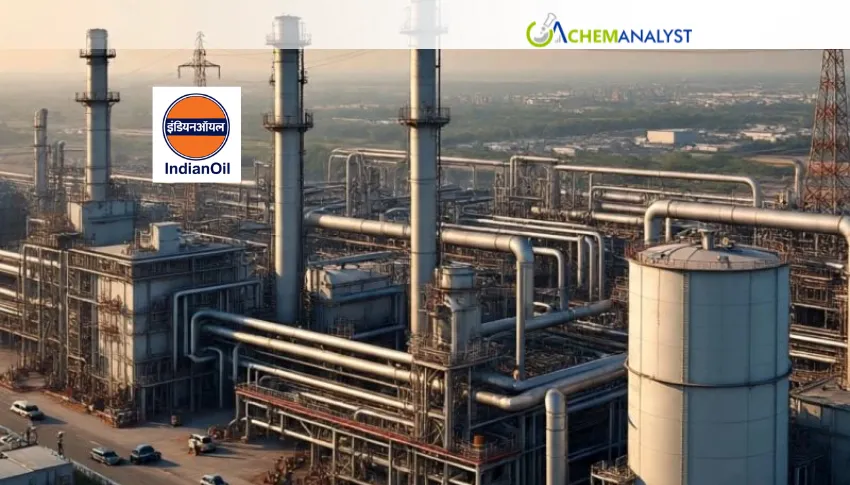
Indian Oil Corporation Ltd. (IOCL) is reassessing its proposed 9 million tonnes per annum (MTPA) greenfield refinery at Nagapattinam, Tamil Nadu, as the company considers shifting its investment toward a standalone petrochemical complex. The review reflects a broader transformation in India's downstream energy sector, where state-owned refiners are prioritizing higher-value petrochemical production over conventional fuel refining amid evolving market conditions.
The refinery project, initially approved in January 2021, carried an estimated investment of Rs 29,361 crore. It was planned as a joint venture between IOCL and Chennai Petroleum Corporation Ltd. (CPCL), with financial institutions expected to hold a majority stake. The facility aimed to strengthen fuel supplies across southern India while supporting domestic and export markets.
However, the project's economics have changed significantly. In March 2024, IOCL revised the capital expenditure to approximately Rs 33,023 crore due to inflation, higher engineering and construction costs, and modifications to the project design. At the same time, the company increased its proposed ownership in the venture to 75%, leaving CPCL with the remaining 25%. Although land acquisition has already been completed, the project continues to face commercial challenges.
Reports indicate that IOCL sought financial support from the central government to improve project viability, but the proposal did not receive approval. Without government incentives, developing a standalone refinery has become increasingly difficult as refiners face volatile crude oil prices, uncertain growth in transportation fuel demand, and tightening refining margins.
Industry analysts believe the shift toward petrochemicals aligns with global trends. Demand growth for petrol and diesel is expected to moderate over the long term as electric vehicles gain popularity, fuel efficiency improves, and decarbonization policies become stricter. In contrast, petrochemicals continue to benefit from expanding demand across plastics, packaging, construction materials, synthetic fibers, automotive components, and consumer goods.
A standalone petrochemical complex could require lower capital investment while delivering stronger profit margins through the production of high-value chemical feedstocks and specialty products. This strategy mirrors the approach adopted by several global energy companies that are increasing the conversion of crude oil into petrochemical products rather than transportation fuels.
India's refining landscape is already moving in this direction. BPCL is developing a large integrated refinery-petrochemical complex in Andhra Pradesh with state incentives and potential participation from Saudi Aramco, while HPCL has commissioned its integrated refinery and petrochemical facility at Pachpadra, Rajasthan.
IOCL's final decision will depend on the outcome of its ongoing commercial review. If the company proceeds with a petrochemical complex instead of a conventional refinery, it would reinforce India's growing focus on integrated downstream investments that generate higher value and reduce dependence on imported petrochemical products.
Impact on Products and Chemical Commodity Prices
IOCL's potential shift from a conventional refinery to a standalone petrochemical complex is expected to increase domestic production of petrochemical feedstocks rather than transportation fuels. In the long term, higher availability of products such as ethylene, propylene, benzene, toluene, xylene, polyethylene, polypropylene, and downstream polymers could improve supply security and reduce import dependence. For commodities tracked by ChemAnalyst, prices of key petrochemicals may face moderate downward pressure over time as domestic capacity expands, although the impact will materialize only after project commissioning. Refining products such as gasoline and diesel are unlikely to experience any immediate price changes due to this strategic review.







Leave a Comment
Comments (0)