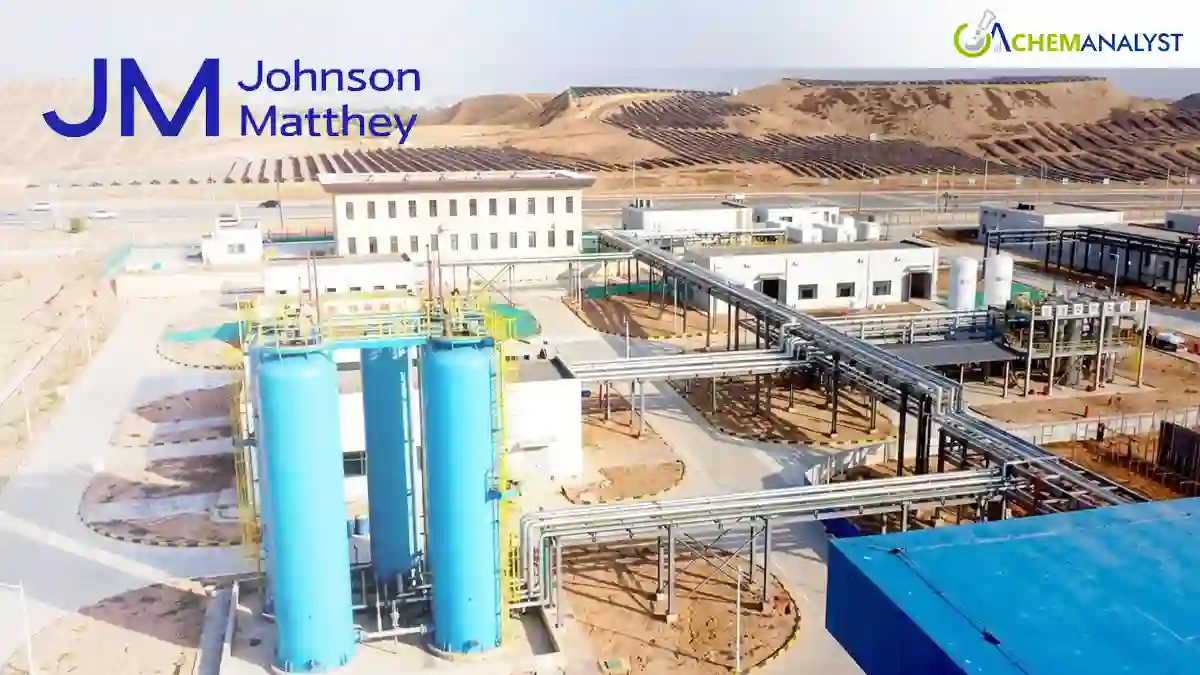
Johnson Matthey has been selected by Guangdong Liquid Sunshine as the technology partner for its first large-scale commercial biomethanol plant in China. The project will be developed in Tiandong County, Guangxi, and marks a significant milestone in China’s growing transition toward low-carbon fuels and renewable chemical production.
The collaboration also includes East China Engineering Science and Technology Co. (ECEC), which will play an important role in engineering and project execution. In addition to supporting the Guangxi project, the three companies have signed a Memorandum of Understanding (MoU) to jointly explore future green fuel and decarbonization opportunities across China and international markets.
China’s latest Five-Year Plan for 2026–2030 strongly emphasizes the country’s green transition strategy, with advanced fuels such as green methanol, ammonia, and sustainable aviation fuel identified as key strategic industries for long-term growth. As China seeks to reduce dependence on imported oil and gas, it is rapidly expanding domestic methanol production and strengthening its position as a global leader in low-carbon marine fuels and green chemicals.
The Guangxi biomethanol plant will serve as a showcase for next-generation innovation in biomass gasification and renewable power integration. Johnson Matthey will provide its advanced methanol synthesis technology, which converts gasified biomass waste into biomethanol, a cleaner alternative fuel widely seen as essential for decarbonizing shipping and industrial sectors.
Construction of the first phase is expected to begin later this year, with an annual production capacity of 75,000 tonnes of biomethanol once completed. This initial phase is designed to establish a strong foundation for scalable low-carbon methanol production at the site.
A second phase is also under consideration, pending approval. This expansion would involve the construction of an additional facility that captures excess carbon dioxide from the first plant and combines it with electrolytic hydrogen to produce e-methanol. This synthetic fuel can help meet increasingly strict international e-fuel regulations, especially in Europe. The approach would significantly increase the plant’s low-carbon methanol output without requiring additional biomass feedstock, improving both efficiency and sustainability.
Johnson Matthey’s methanol technology is already proven at industrial scale and is capable of converting syngas derived from a variety of feedstocks, including waste biomass, into methanol. Its proprietary methanol synthesis loop, combined with high-performance catalyst systems, provides strong long-term operational efficiency and reliability.
Alberto Giovanzana, CEO of Catalyst Technologies at Johnson Matthey, stated that the company has worked in China for over 30 years with some of the country’s largest energy and chemical producers. He noted that this project represents JM’s second green methanol plant license win in China and reflects the company’s growing role in supporting the country’s clean energy transformation.
He added that the company’s world-leading methanol synthesis technology will become increasingly important as the site moves toward integrating both biomethanol and e-methanol production. Once fully operational, the facility is expected to support growing fuel demand and improve energy security for the global marine sector.
Xi Jiang, Executive President of Liquid Sunshine, highlighted that China’s renewable energy and chemical industries are entering a period of rapid development. He expressed confidence that Johnson Matthey’s technical expertise will help create a world-class biomethanol facility and said the partnership opens the door for deeper collaboration with leading global technology providers.
The project is being jointly developed by Guangdong Liquid Sunshine, the Tiandong County People’s Government, and China Coal Guangxi New Energy, while ECEC will serve as a major engineering partner.
Liquid Sunshine is also co-developing Biomass Dual Fluidized Bed Chemical Chain Gasification Technology with the Qingdao Institute of Bioenergy and Bioprocess Technology under the Chinese Academy of Sciences. This advanced gasification technology will be integrated into the project to further improve biomass conversion efficiency.
Through this partnership, the three companies aim to accelerate decarbonization technologies, strengthen China’s green fuel supply chain, and expand opportunities in the fast-growing global low-carbon energy market.








 About ChemAnalyst
Leave a Comment
Comments (0)