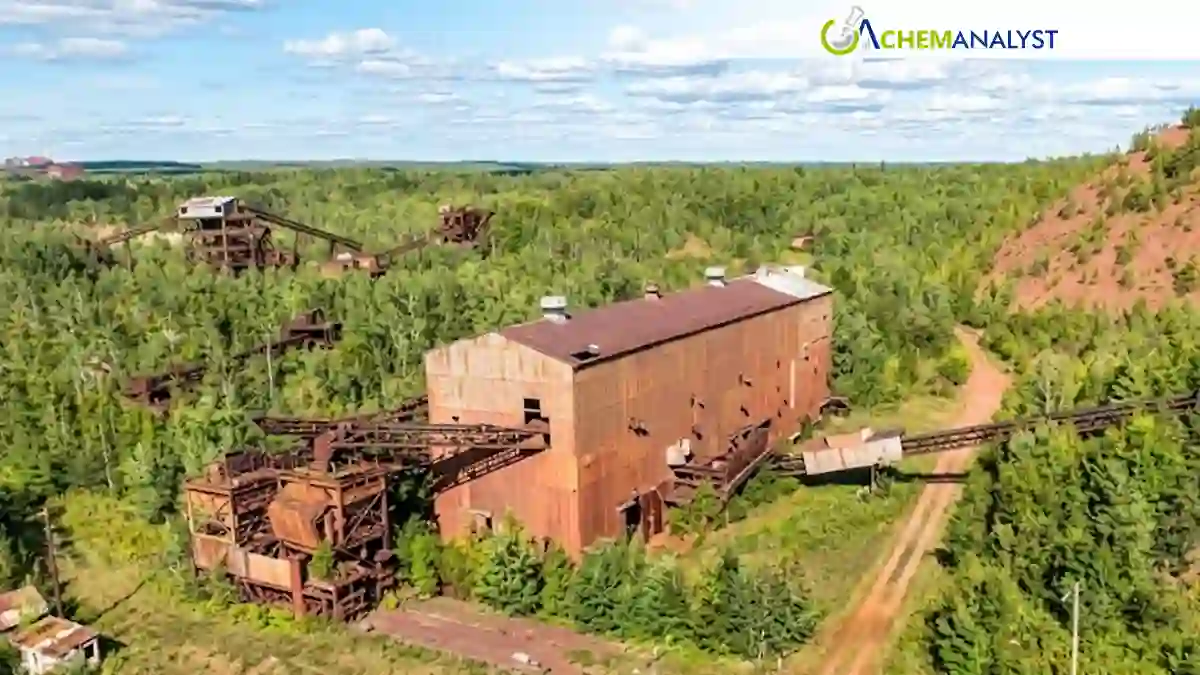
MagIron LLC has completed a concept and economic study with Primetals Technologies to evaluate the development of a large-scale granulated merchant pig iron production facility integrated with its existing mining and processing operations. The study marks a significant step in MagIron’s strategy to establish the first large-scale domestic merchant pig iron production operation in the United States.
The assessment examined three production technologies: MIDREX Flex direct reduction followed by electric smelting, MIDREX Flex direct reduction integrated with an electric arc furnace and ladle furnace, and the conventional blast furnace route. According to the study, all three pathways are technically feasible and capable of producing nearly two million metric tons of granulated pig iron annually.
MagIron believes the project will strengthen the U.S. steel industry's domestic supply chain while supporting decarbonization goals. Executive Chairman Julian Treger stated that the study validates multiple economically attractive production options and complements the company's ability to manufacture direct reduction (DR)-grade iron ore pellets. The company also plans to retain flexibility to supply DR-grade pellets if market demand offers stronger commercial returns.
Currently, the United States imports nearly all of its merchant pig iron requirements, creating supply vulnerabilities for industries such as automotive, aerospace, defense, infrastructure, and advanced manufacturing. MagIron estimates that an initial production capacity of two million tonnes annually could satisfy up to half of current U.S. merchant pig iron demand, with future expansion supported by its extensive iron ore reserves.
The preliminary study estimates capital investment requirements between $1.6 billion and $2.3 billion for the primary ironmaking and granulation facilities. Operating cash costs are projected at $305–345 per tonne of granulated pig iron, excluding carbon costs, financing expenses, and by-product credits. Based on these assumptions, MagIron expects the project could generate annual EBITDA of approximately $400 million to $500 million across commodity cycles.
A major advantage for the project is MagIron's existing mining, pelletizing, processing, rail, power, and logistics infrastructure, which the company values at roughly $1.3 billion in replacement cost. Leveraging these assets is expected to reduce capital requirements, shorten project timelines, and lower execution risks compared with a greenfield development. Subject to technology selection, permitting, financing, and a final investment decision, commercial operations could begin within two to three years.
The company also highlighted its long-life iron ore resource of approximately 2.6 billion tonnes, capable of supporting production for more than a century. Additionally, the direct reduction technologies evaluated offer a lower-carbon pathway through natural gas today and future hydrogen integration as infrastructure develops. MagIron will now evaluate the preferred production route and site while engaging with customers, government agencies, financing partners, and technology providers to advance the project.
Impact on Product and Chemical Commodity Prices
The project is expected to improve the long-term availability of merchant pig iron in the U.S., reducing dependence on imports and strengthening domestic steel production. Increased local pig iron output could support stable supplies of high-quality iron units for electric arc furnace steelmakers, benefiting downstream automotive, infrastructure, and manufacturing sectors. For chemical commodities tracked by ChemAnalyst, the immediate price impact is likely to be limited because the project remains in the planning stage. However, once operational, stronger demand for iron ore pellets, natural gas (for direct reduction routes), lime, graphite electrodes, and industrial gases such as oxygen could provide gradual price support, while improved domestic supply may stabilize pig iron prices over the long term.







Leave a Comment
Comments (0)