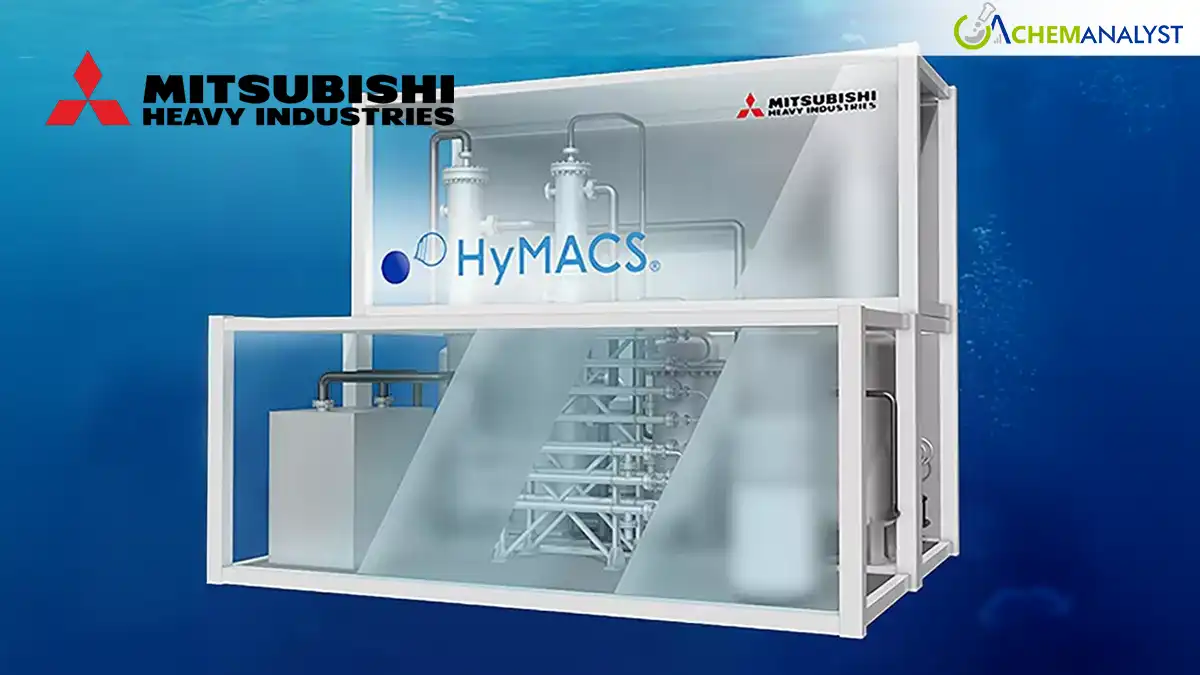
Mitsubishi Heavy Industries, Ltd. (MHI) has reached an important technological breakthrough in its ongoing efforts to advance next-generation ammonia cracking systems. The company has successfully produced hydrogen with a purity level of 99% at its ammonia cracking pilot facility by using steam as the primary heating source. This achievement, carried out at the Nagasaki District Research & Innovation Center, is recognized as the world’s first instance of hydrogen production from ammonia cracking at a pilot scale using steam-based heating. It demonstrates meaningful progress toward more efficient and scalable hydrogen supply solutions.
Traditional ammonia cracking systems typically rely on heat generated from burner combustion. Such an approach requires higher reaction temperatures and results in increased operational expenses. In contrast, MHI’s innovative steam-driven heating method operates at significantly lower reaction temperatures. This not only improves energy efficiency but also helps reduce operating costs. Furthermore, because the system eliminates the need for a combustion furnace, it has the potential to be made more compact. This offers major advantages for practical applications, especially in settings where space is limited or modular installation is preferred.
Globally, hydrogen is gaining traction as a clean energy source, particularly because it emits no CO2 during combustion. As countries and industries work to transition toward decarbonization, the development of efficient hydrogen production and supply systems has become increasingly important. Ammonia is emerging as a key enabler in this transition because of its role as a versatile “hydrogen carrier.” It can safely transport and store hydrogen in large quantities over long distances, making it highly suitable for future international hydrogen supply chains.
MHI aims to leverage this technological milestone to advance the creation of decentralized, medium-scale ammonia cracking systems that can be installed near end-use hydrogen demand centers. Such systems could support industries, power generation facilities, and mobility applications that require clean hydrogen. By scaling up deployment, MHI hopes to make hydrogen more accessible and economically viable.
The successful pilot test also lays the foundation for deeper collaboration with two major project partners—Nippon Shokubai Co., Ltd. and Hokkaido Electric Power Co., Inc. Together, these organizations will accelerate research and development activities that build on the pilot plant’s findings. The project itself has been selected by Japan’s New Energy and Industrial Technology Development Organization (NEDO) under its program focused on advancing technologies for competitive hydrogen supply chain development. This recognition further underscores the significance of MHI’s achievement and the strategic importance of ammonia-based hydrogen systems for Japan’s energy transition goals.
Ultimately, MHI intends to continue expanding and refining this technology, contributing to the establishment of practical decarbonization solutions. By advancing hydrogen production methods and supporting a wider hydrogen supply infrastructure, MHI hopes to play a key role in helping realize a sustainable, carbon-neutral global society.







Leave a Comment
Comments (0)