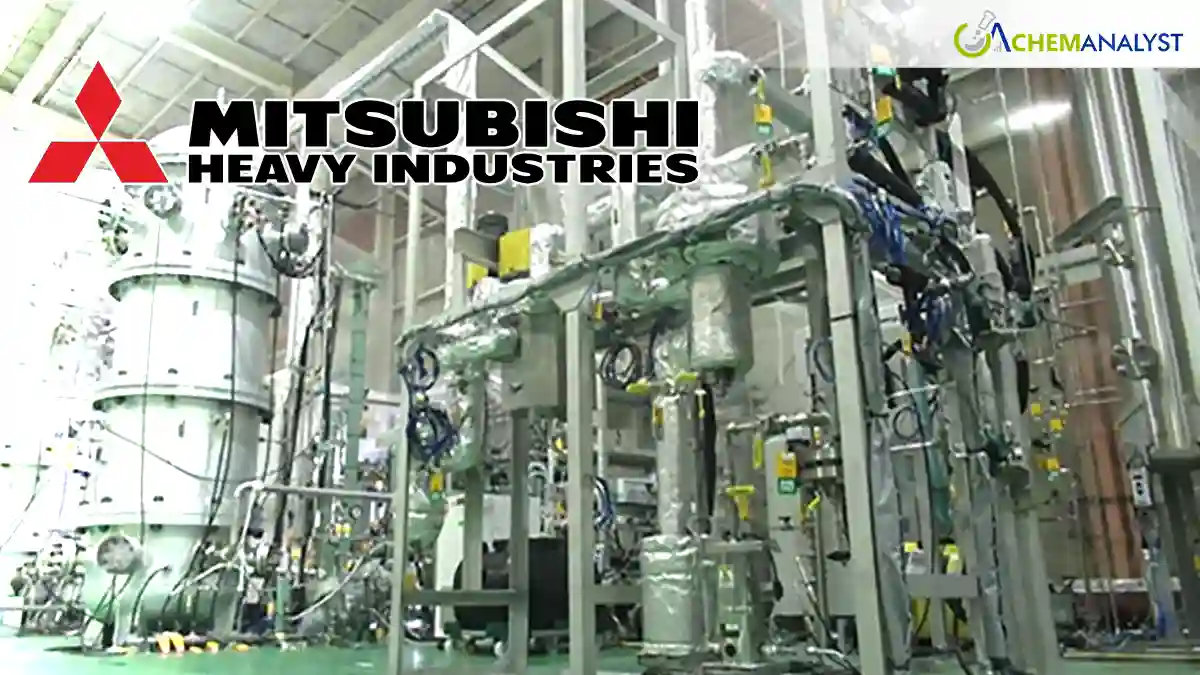
Mitsubishi Heavy Industries (MHI) has successfully demonstrated an integrated process for producing liquid synthetic fuels using carbon dioxide, water, and electricity as primary inputs. The milestone was achieved at the company’s Research & Innovation Center in the Nagasaki District, where MHI operated a fully integrated system combining Solid Oxide Electrolysis Cell (SOEC) co-electrolysis with Fischer-Tropsch (FT) synthesis. Through this advanced configuration, the company was able to synthesize liquid fuels and confirm their composition through chemical analysis, verifying that the resulting product contains components suitable for Sustainable Aviation Fuel (SAF).
The demonstration centers on SOEC co-electrolysis, an innovative process that simultaneously electrolyzes water vapor and carbon dioxide. Unlike conventional electrolysis systems that focus solely on hydrogen production, co-electrolysis generates both hydrogen and carbon monoxide in a single step. These two gases, collectively known as syngas, serve as the essential feedstock for downstream fuel synthesis. By integrating this step directly with FT synthesis technology, MHI has streamlined the pathway from captured carbon dioxide to finished liquid fuels.
A key technological advancement in this project is MHI’s proprietary tubular-type SOEC cell stack. This in-house development is designed to enhance durability, scalability, and operational efficiency. The tubular configuration supports high-temperature electrolysis, which improves energy conversion efficiency compared to lower-temperature alternatives. As a result, the process reduces energy losses and simplifies system design, contributing to improved economic performance. MHI believes this approach will play a critical role in enabling cost-competitive production of synthetic fuels at commercial scale.
The timing of this breakthrough aligns with growing global efforts to decarbonize the aviation sector. The International Civil Aviation Organization (ICAO) has established an ambitious objective of achieving net-zero carbon dioxide emissions from international aviation by 2050. Meeting this goal will require a substantial shift toward low-carbon alternatives, with SAF and carbon offset mechanisms expected to account for more than 70% of total emissions reductions. Consequently, worldwide demand for SAF is projected to expand significantly in the coming decades.
By integrating SOEC co-electrolysis with established FT synthesis processes, MHI aims to deliver high-value, scalable SAF production systems that can support airlines and fuel suppliers in meeting climate commitments. Importantly, the flexibility of the technology extends beyond aviation. The hydrogen and carbon monoxide generated through co-electrolysis can also be utilized to produce carbon-neutral fuels for automobiles and maritime transport, including gasoline, diesel, methanol, and methane. Additionally, methane produced through the process can serve as city gas, broadening the technology’s commercial potential.
Looking ahead, MHI intends to leverage the operational insights gained from this demonstration to accelerate deployment of decarbonization technologies. By refining system integration, improving efficiency, and scaling production capacity, the company seeks to contribute meaningfully to the global transition toward a sustainable and carbon-neutral energy ecosystem.







 About ChemAnalyst
Leave a Comment
Comments (0)