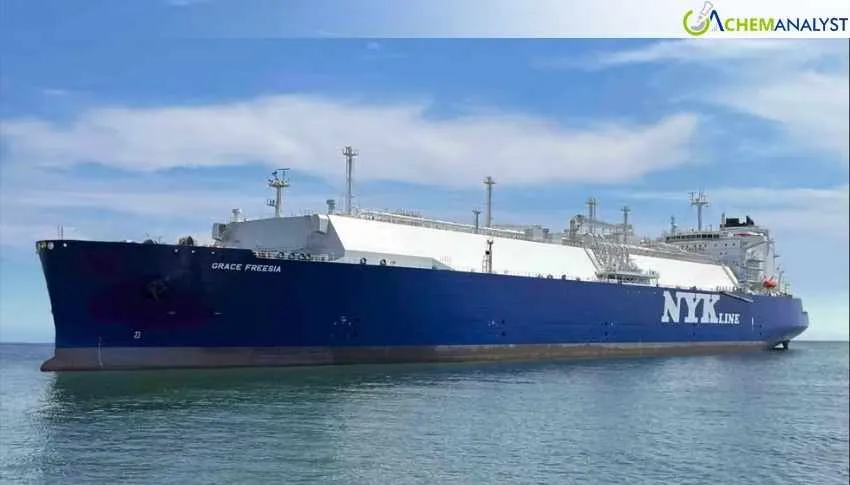
Japanese shipping giant NYK is significantly reorienting its 2026 investment strategy, focusing heavily on expanding its fleet of gas carriers and tankers, particularly liquefied natural gas (LNG) carriers. This strategic pivot is driven by burgeoning global demand for LNG and the fuel's crucial role in the ongoing energy transition.
A key aspect of this strategy is NYK's ambitious plan to increase its LNG carrier fleet by approximately 50%, aiming to grow from 89 to over 130 vessels by early 2029. To achieve this, NYK has entered into substantial co-investment agreements, notably with Norwegian lessor Ocean Yield. This partnership initially involved an order for four new LNG carriers, which has since been doubled to eight vessels through the exercise of options. These large carriers, each with a capacity of approximately 200,000 cubic meters, are slated for delivery between 2028 and 2029. They are secured by long-term charter contracts with major US LNG producer Cheniere Marketing International LLP, marking NYK's first long-term charter deal with this company.
The causes for this aggressive expansion are multi-faceted. Global LNG output is projected to rise sharply, particularly from projects in the United States and Qatar, necessitating a substantial increase in shipping capacity. Industry estimates suggest that an additional 241 LNG carriers will be required by 2034. Beyond LNG, the broader gas carrier market, including Very Large Gas Carriers (VLGCs) and petrochemical tankers, has seen tightening supply-and-demand conditions. Geopolitical factors, such as tariff policies and Middle East tensions, have altered trade patterns, increasing long-distance transport and driving up demand for these vessel types. The escalating tensions in the Middle East have also contributed to higher crude oil prices, further impacting the tanker market.
The consequences and impacts of this strategy are significant across economic, geopolitical, and industry-specific domains. Economically, these investments represent substantial capital deployment, with the NYK-Ocean Yield partnership alone adding an estimated $600 million to Ocean Yield's EBITDA backlog, enhancing earnings visibility through long-term charter agreements. The broader tanker market has experienced increased charter rates due to geopolitical disruptions, limited vessel supply, and less efficient trading routes, which benefits companies with robust and fuel-efficient fleets.
Geopolitically, the reliance on US and Qatari LNG exports underscores shifting global energy corridors. Ongoing instability in regions like the Middle East and the Black Sea emphasizes the rising premium on secure and flexible shipping capacity, influencing routing strategies and operational flexibility for charterers.
From an industry perspective, NYK's new vessels are designed with advanced technologies, including next-generation dual-fuel engines, re-liquefaction systems, and advanced insulating materials, aiming for superior efficiency and economical LNG transportation. Furthermore, NYK is actively pursuing decarbonization, aligning with its "Sail Green, Drive Transformations 2026" plan, and is involved in pioneering ammonia-fueled gas carriers, with one such vessel expected to be delivered in late 2026. This highlights a broader industry trend towards lifecycle optimization and the adoption of alternative marine fuels to meet tightening regulatory environments and sustainability goals.







Leave a Comment
Comments (0)