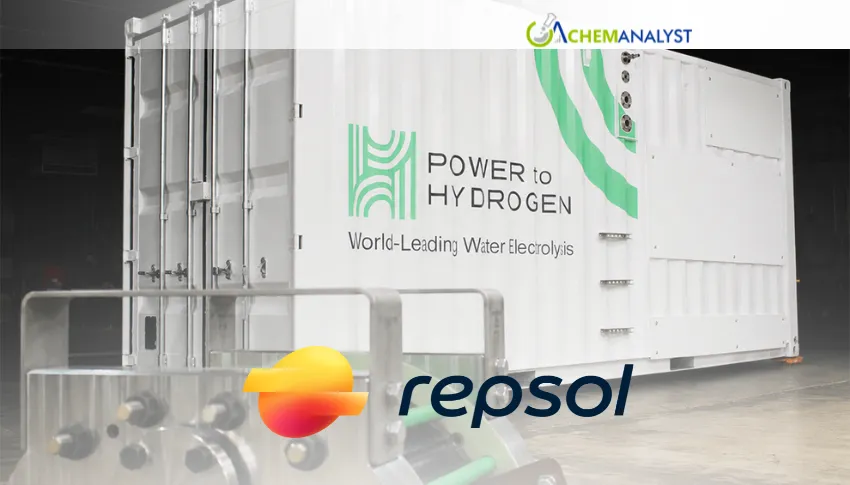
Power to Hydrogen (P2H2) and Repsol have successfully completed a pilot project demonstrating the performance and commercial potential of P2H2’s hybrid anion exchange membrane (AEM) electrolyzer technology for large-scale green hydrogen production. The pilot was conducted through Repsol’s All4Zero industrial innovation hub and subjected the technology to more than 1,250 hours of detailed performance and durability testing.
The testing evaluated the electrolyzer under conditions designed to replicate the variable operating environment associated with renewable power generation. The system underwent repeated load cycling between 40% and 100%, pressure conditions ranging from 2 to 30 bar, and simulated real-world operating profiles. According to the companies, the technology met or exceeded key targets related to efficiency, flexibility, and durability.
P2H2 estimates that its technology could deliver a levelized cost of hydrogen of approximately €3.86/kg when assessed using Repsol-specific inputs and the U.S. Department of Energy’s H2A-Lite framework. This represents an estimated 16% reduction compared with incumbent electrolyzer technologies. Under optimized renewable electricity conditions supported by hybrid power purchase agreements, the projected hydrogen cost could decline further to around €2.82/kg.
A major outcome of the pilot was the durability demonstrated by P2H2’s commercial-scale cells. The five-cell short-stack recorded irreversible degradation of only approximately 2 mV per 1,000 operating hours over the 1,250-hour test period. Average cell voltage remained nearly unchanged from the beginning to the end of testing. Based on these results, P2H2 projects potential system lifetimes exceeding 50,000 operating hours, which the company says could outperform current AEM industry benchmarks by five to ten times.
The electrolyzer also achieved hydrogen purity of up to 99.9% directly from the stack at 30 bar pressure, while maintaining consistent performance throughout the tested pressure range. Its rapid response to changing loads demonstrated compatibility with intermittent renewable electricity. The system also successfully recovered from unplanned shutdowns, including a facility-wide power outage.
Another potential advantage is P2H2’s iridium-free and PFAS-free materials pathway. This could reduce exposure to critical mineral constraints and regulatory concerns associated with some conventional PEM electrolyzer technologies while supporting lower capital requirements.
Following the successful pilot, P2H2 and Repsol are evaluating a larger demonstration ranging from 500 kW to the megawatt scale. The initiative could support Repsol’s objective of developing 600–800 MW of renewable hydrogen capacity by 2030.
Chemical Commodity Price Impact
The successful validation strengthens the commercial outlook for green hydrogen, potentially accelerating adoption of AEM electrolyzers in industrial applications. Lower projected production costs could improve hydrogen’s competitiveness against grey and blue hydrogen, increasing demand for renewable hydrogen over time. For ChemAnalyst-tracked commodities, stronger green-hydrogen deployment could support additional demand for hydrogen, renewable power and electrolyzer-related materials, while reducing the relative growth of fossil-fuel-based hydrogen feedstocks such as natural gas in the longer term. The iridium-free design could also moderate future demand pressure for iridium, potentially limiting price upside. However, near-term commodity price effects should remain limited because the project is still at the pilot-to-demonstration stage.








 About ChemAnalyst
Leave a Comment
Comments (0)