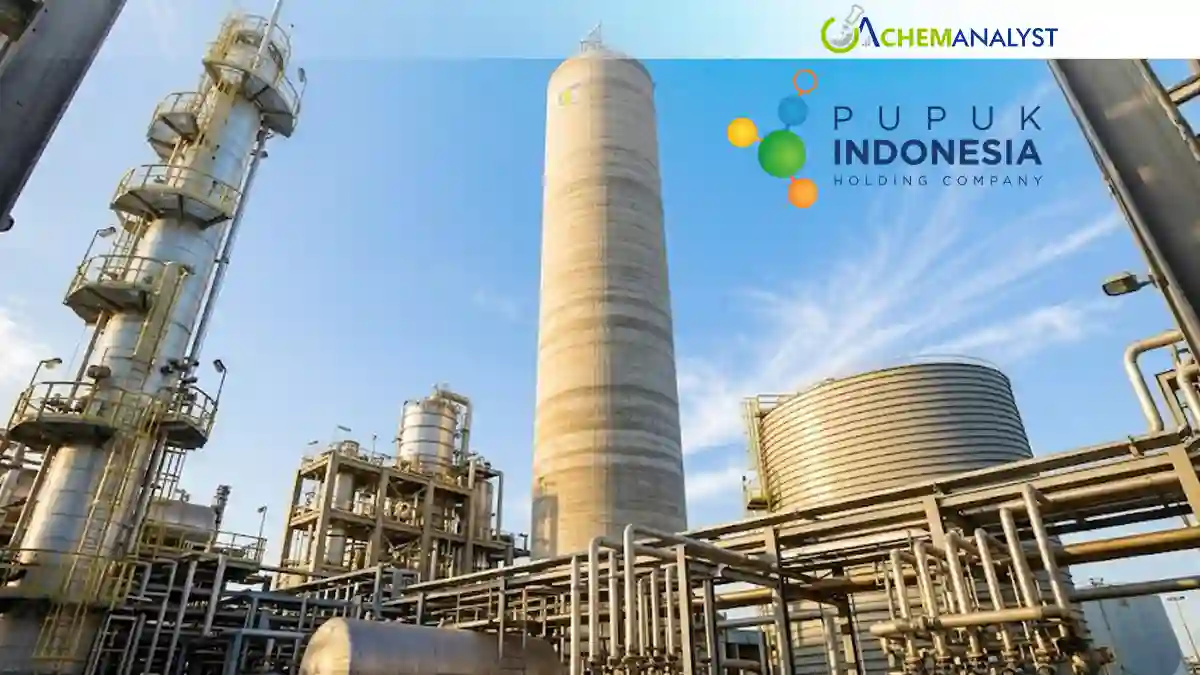
Pupuk Indonesia (Persero) is exploring a strategic partnership with Russia to participate in the development of the Nakhodka Fertilizer Plant Phase 2 (NFP-2), a large-scale fertilizer and chemical production project in Primorsky Krai, Russia’s Far East. The project is being led by Russian holding company JSC Ruschem and is expected to strengthen Pupuk Indonesia’s access to natural gas-based ammonia and urea production.
The two companies formalized their cooperation by signing a memorandum of understanding (MoU) for a joint study on September 3 during the 11th Eastern Economic Forum in Vladivostok. Under the agreement, the parties will evaluate the technical and commercial feasibility of potential collaboration before making any investment decisions.
The planned assessment will examine several key areas, including technical requirements, project economics, raw material availability, financing structures, potential risks, and compliance with relevant laws and regulations. The due diligence process will help determine whether participation in the Russian project can support Pupuk Indonesia’s long-term supply and investment objectives.
Pupuk Indonesia President Director Rahmad Pribadi said expanding production capabilities and diversifying raw material sources could improve the resilience of Indonesia’s fertilizer supply chain. He also highlighted the potential benefits of accessing competitively priced natural gas feedstock for ammonia and urea production while supporting more environmentally sustainable operations.
According to Rahmad, the proposed partnership forms part of Pupuk Indonesia’s long-term strategy to secure raw materials and increase access to international production capacity. The initiative is also aligned with Danantara’s objective of strengthening Indonesia’s food security while expanding the country’s participation in the global fertilizer industry.
Investment and Downstream Minister Rosan P. Roeslani, who also serves as Danantara’s CEO, described the initiative as a follow-up to discussions between Indonesian President Prabowo Subianto and Russian President Vladimir Putin during the Eastern Economic Forum. He said the cooperation could create new international investment opportunities while strengthening Indonesia’s raw material security and industrial resilience.
Pupuk Indonesia’s existing expertise in processing natural gas into ammonia and urea could support its evaluation of the Nakhodka project. The proposed facility is designed as a world-scale industrial complex producing methanol, ammonia, and urea. Once operational, it is projected to produce approximately 1.8 million tonnes of methanol, 2 million tonnes of ammonia, and 3.5 million tonnes of urea annually, with commercial operations targeted around 2030.
The project’s location near Vladivostok could further improve Pupuk Indonesia’s access to Asia-Pacific markets, an important region for the company’s fertilizer trading activities.
Product and Chemical Commodity Price Impact
The proposed partnership is strategically positive for ammonia and urea, but the immediate impact on product prices should remain limited because the Nakhodka project is still under feasibility and due-diligence evaluation, with operations targeted around 2030. If developed as planned, the facility’s annual capacity of 2 million tonnes of ammonia and 3.5 million tonnes of urea could significantly increase regional supply, potentially putting downward pressure on ammonia and urea prices over the longer term. Methanol prices could also face modest bearish pressure from the planned 1.8-million-tonne capacity. However, feedstock availability, financing, sanctions, logistics, and geopolitical risks could influence actual production and exports.








 About ChemAnalyst
Leave a Comment
Comments (0)