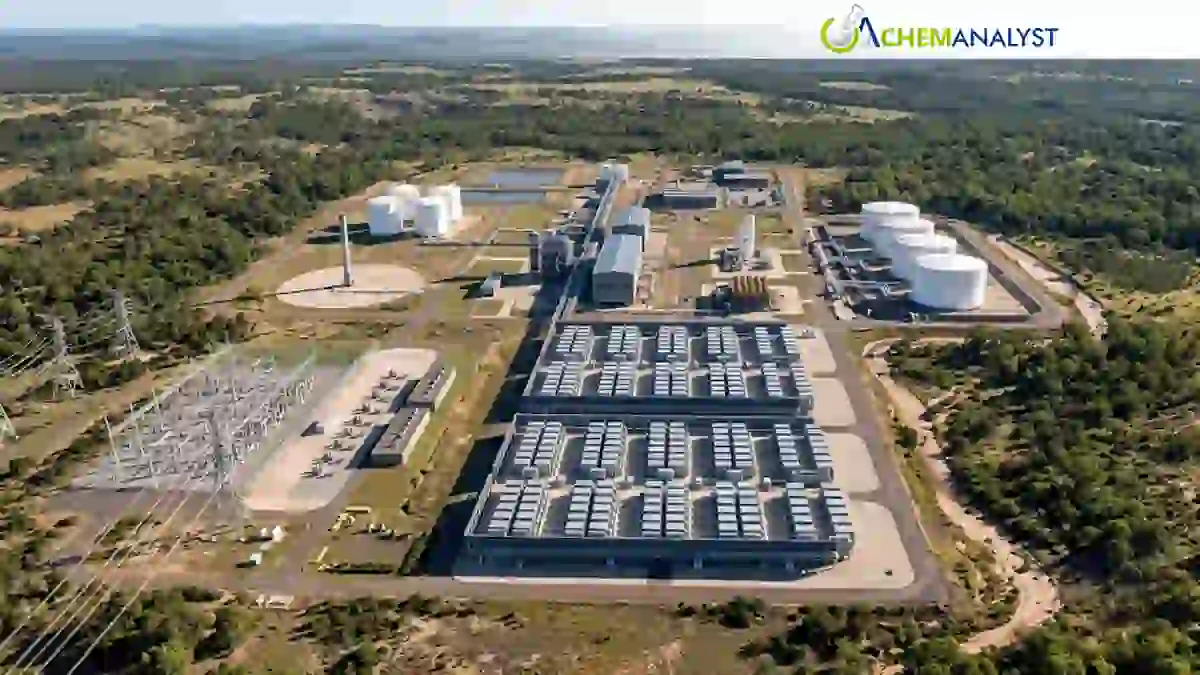
South Africa’s $5.8-billion green hydrogen and ammonia project in Nelson Mandela Bay is making steady progress, with developers indicating that the venture is moving well despite the challenges involved in advancing such a large-scale development. The project, being developed by Hive Hydrogen South Africa, could enter construction as early as 2027 and is targeted for commissioning in December 2029.
The facility will be located within the Coega Special Economic Zone near the Port of Coega in the Eastern Cape. Once operational, the project is expected to produce up to 1 million tonnes of green ammonia annually, using renewable power to generate green hydrogen through electrolysis and subsequently convert it into ammonia. Hive Hydrogen has already selected technology solutions for the electrolyser and ammonia production loop.
Hive Hydrogen South Africa is backed by Hive Energy and Built Africa, with former Eskom CEO Thulani Gcabashe serving as chairman. The company has been developing its renewable-energy-powered green ammonia concept since 2019. The broader renewable-energy portfolio supporting the project includes around 3,300 MW of planned renewable capacity.
A significant milestone has been achieved through environmental authorisation for the 1,000 MW Carissa wind-energy project near Beaufort West. The permitting process involved Hive Hydrogen, AMDA Developments and environmental consultancy Blue Crane Environmental. The renewable project is expected to contribute to the clean electricity supply required for the broader hydrogen and ammonia initiative.
Financing support is also emerging. SA-H2, a blended-finance private-equity fund focused on green hydrogen and Southern Africa’s energy transition, has signed a development funding agreement with Hive Hydrogen. The fund brings together public and private capital from institutions including the European Commission, Invest International, South Africa’s Public Investment Corporation, Sanlam Life and the Industrial Development Corporation, with additional backing from the Development Bank of Southern Africa.
The development forms part of a wider global expansion in green hydrogen. Sasol has commissioned a 2 kW platinum-based PEM electrolyser at its Sasolburg research campus, while Envision Energy is studying a potential green hydrogen system with Sasol. Elsewhere, Namibia, Spain and Saudi Arabia are also advancing major hydrogen projects.
In Spain, Moeve is developing the Andalusian Green Hydrogen Valley, while Saudi Arabia’s NEOM project has completed construction. Meanwhile, Air Products and Yara are preparing to market renewable ammonia from NEOM.
The global momentum is also extending to hydrogen fuel cells and heavy transportation. Toyota, Volvo, Daimler Truck and cellcentric are expanding fuel-cell collaboration, while Tata Motors is conducting hydrogen-truck trials in India. Together, these developments highlight accelerating investment in hydrogen, green ammonia and related technologies.
Chemical Commodity Price Impact
The project is bullish for green ammonia because its planned 1 million tonnes/year capacity would significantly increase renewable-based ammonia supply and strengthen South Africa’s position as a future export hub. In the short term, development activity could support demand for electrolysers, renewable power, catalysts and platinum-group metals. Once operational, additional green ammonia supply may place some downward pressure on conventional ammonia prices, particularly in export markets, although higher production costs could limit the effect. Hydrogen and methanol markets may also benefit from broader infrastructure development. For tracked chemical commodities, the overall impact is likely moderately bullish during construction but potentially price-neutral to bearish for ammonia after substantial capacity comes online.








 About ChemAnalyst
Leave a Comment
Comments (0)