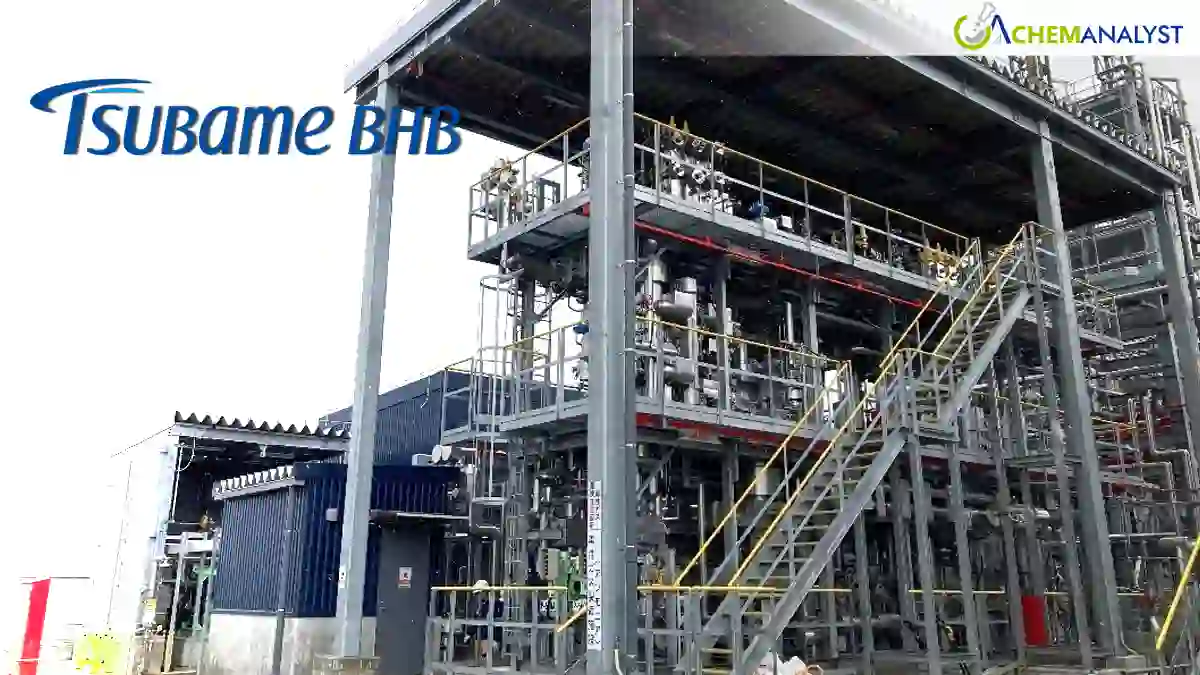
Tsubame BHB Co., Ltd. has announced the successful commencement of trial production at its newly deployed ammonia synthesis facilities, marking a major milestone in the commercialization of its proprietary low-temperature, low-pressure ammonia manufacturing technology. The facilities are based on Tsubame BHB’s original electride catalyst technology and have confirmed stable ammonia production during trial operations, demonstrating their readiness for practical, real-world application at a commercial scale.
The ammonia synthesis facilities have been installed at INPEX Corporation’s Kashiwazaki Hydrogen Park as part of the “Blue Hydrogen and Ammonia Production and Utilization Demonstration Project.” This project represents a pioneering effort in Japan to establish an integrated hydrogen and ammonia value chain with reduced environmental impact. The facilities were ordered and implemented by Daiichi Jitsugyo Co., Ltd., and notably constitute the first commercial-scale order received by Tsubame BHB, signaling strong confidence in the company’s technology and its industrial applicability.
One of the defining features of Tsubame BHB’s ammonia synthesis process is its ability to operate at significantly lower temperatures and pressures compared with the conventional Haber–Bosch method, which has been the industry standard for over a century. By lowering both operating temperature and pressure, the process substantially reduces energy consumption, particularly the power required to compress raw material gases. This not only improves overall efficiency but also enhances safety and enables a more compact plant design.
The ammonia synthesis facilities introduced at Kashiwazaki Hydrogen Park have an annual production capacity of approximately 500 tons. Their compact footprint allows for on-site installation close to the point of demand, making them particularly suitable for decentralized ammonia production. This approach supports a shift away from large, centralized plants toward smaller, flexible facilities that can be integrated into local energy systems.
Importantly, this project marks the first demonstration in Japan of next-generation ammonia production using blue hydrogen derived from domestically sourced natural gas. Blue hydrogen is produced by reforming natural gas while capturing and storing the resulting carbon dioxide emissions, significantly lowering the carbon intensity of hydrogen and downstream ammonia production.
According to INPEX, the demonstration tests at Kashiwazaki Hydrogen Park represent Japan’s first comprehensive model of “local production for local consumption.” The project covers the entire value chain, including blue hydrogen production, ammonia synthesis, carbon dioxide capture and underground storage through CCUS technologies, hydrogen-based power generation, and the supply of ammonia to end users. By integrating all these elements into a single demonstration, the project aims to validate the technical and economic feasibility of a low-carbon energy system at a regional level.
Tsubame BHB’s small-scale ammonia synthesis facilities have already earned strong recognition from INPEX, particularly for their high level of process safety and their ability to dramatically reduce energy requirements. The successful trial operation confirms that the company’s low-temperature, low-pressure technology can deliver reliable ammonia production while supporting decarbonization goals.
With trial production now underway, the Kashiwazaki project is expected to serve as a benchmark for future ammonia and hydrogen initiatives in Japan and beyond, reinforcing Tsubame BHB’s position as a key innovator in next-generation ammonia synthesis technologies.







Leave a Comment
Comments (0)