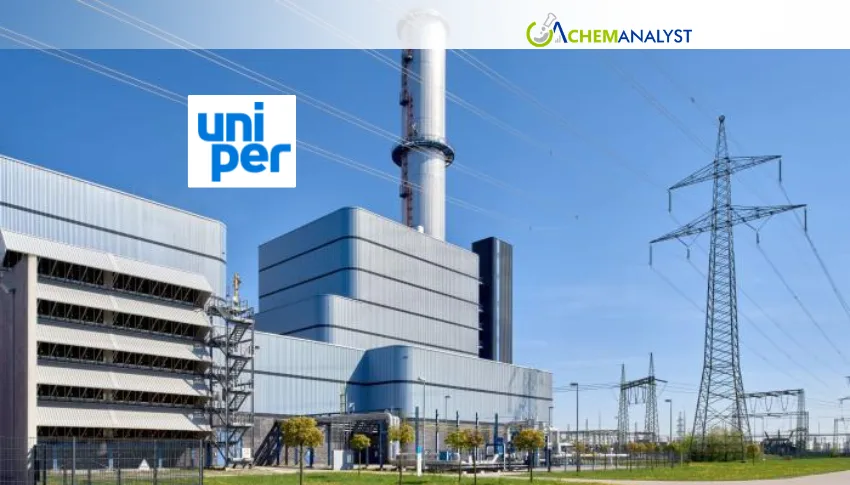
Uniper SE has reaffirmed its long-term transformation strategy, committing approximately €5 billion in investments between 2025 and 2030 to strengthen Europe's energy security while accelerating the transition toward a lower-carbon energy system. Nearly half of the planned capital expenditure will be directed toward projects in Germany, reinforcing the country's energy infrastructure and supply resilience.
The investment program focuses on expanding flexible power generation, renewable energy capacity, and the company's gas procurement portfolio. Through these initiatives, Uniper aims to enhance the reliability, predictability, and sustainability of Europe's energy supply while responding to evolving geopolitical, regulatory, and market conditions.
Commenting on the strategy, Uniper CEO Michael Lewis stated that the company remains committed to investing where energy security, competitiveness, and decarbonization intersect. He noted that increased investments in flexible generation, particularly in Germany, are intended to address the rising demand for dependable electricity capacity, modern power infrastructure, and hydrogen-ready generation assets.
Uniper's strategy combines dispatchable generation, renewable energy resources, and a diversified gas supply portfolio to improve operational flexibility and resilience. As energy markets continue to evolve rapidly, the company believes this balanced approach will strengthen its ability to meet future energy demands while supporting Europe's climate objectives.
Across its three core business divisions—Green Generation, Flexible Generation, and Greener Commodities—Uniper continues to pursue gradual decarbonization. The company plans to phase out coal while expanding investments in renewable energy, hydropower, and hydrogen-compatible gas-fired power plants. By 2030, Uniper aims to operate between 15 and 20 gigawatts of power generation capacity, with at least half expected to come from renewable, low-carbon, or decarbonizable sources.
Uniper's management has further refined its investment priorities by allocating a larger share of planned spending toward flexible generation projects. More than half of the €5 billion investment program will be directed to this segment, reflecting growing structural demand for dispatchable and low-carbon electricity generation.
The company's development pipeline includes new power plants, facility expansions, modernization projects, and conversions of existing assets designed for future climate-neutral operation through technologies such as carbon capture and storage (CCS) and hydrogen-ready systems.
A significant component of these investments will depend on Germany's upcoming StromVKG tenders, scheduled for September and December 2026. Uniper intends to participate with two hydrogen-ready power plant projects located at Gelsenkirchen-Scholven and Staudinger, representing a combined capacity of approximately 1.7 GW. Both projects have already reached advanced stages of engineering and site preparation.
Additional opportunities are being pursued across Germany, the United Kingdom, Sweden, and the Netherlands. Planned developments include the Connah's Quay power project in the UK featuring CCS integration and the Karlshamn conversion project in Sweden, where Uniper intends to decarbonize around 1.7 GW of generation capacity by 2030.
Around one-third of the total investment program has been allocated to the Green Generation business. The company plans to expand renewable power generation while modernizing existing hydropower facilities across key European markets.
Uniper expects to make investment decisions for an average of up to 500 MW of new solar and wind projects annually. Current flagship developments include the 160 MW Happurg pumped-storage hydropower project in Germany and a 54 MW hydropower expansion along Sweden's Ume River.
Within its Greener Commodities division, Uniper continues to diversify its natural gas portfolio to enhance supply security amid an increasingly volatile global energy landscape. The company maintains its medium-term objective of expanding its gas portfolio to between 250 and 300 TWh, supported primarily through long-term supply agreements.
Existing agreements with Woodside in Australia, Tourmaline in Canada, and ConocoPhillips in the United States form the foundation of this strategy. These contracts are intended to ensure stable gas supplies for approximately 1,000 municipal utilities and industrial customers in Germany while utilizing the company's extensive gas storage infrastructure.
Alongside natural gas, Uniper is increasing investments in renewable and low-carbon gases as well as hydrogen. Through the Bad Lauchstädt Energy Park project, the company and its consortium partners are demonstrating an integrated hydrogen value chain covering production, storage, transportation, commercialization, and end-use applications.
Uniper also views Europe's rapidly expanding digital infrastructure as a major future growth area. Rising electricity demand from data centers is expected to create new business opportunities through site leasing, co-investment arrangements, structured power purchase agreements (PPAs), and direct electricity supply from the company's own generation assets.
According to CEO Michael Lewis, the continued expansion of digital infrastructure requires dependable, long-term energy solutions. Leveraging its strategically located sites, strong grid connectivity, and extensive expertise in energy markets, Uniper aims to position itself as a key energy partner for Europe's growing data center industry.
The company has already identified more than ten owned sites suitable for future data center developments across major European digital hubs. Three projects have progressed to advanced development stages, with additional investment decisions anticipated later this year. Uniper has also successfully completed its first data center-related project in the United Kingdom.
The company expects this emerging business segment to generate attractive earnings while requiring relatively modest capital investment. Over time, these projects are also expected to increase the share of long-term, contract-backed earnings within Uniper's overall portfolio, supporting stable financial performance alongside its ongoing energy transition strategy.
Impact on Product and Chemical Commodity Prices
Uniper’s expanded investments in flexible generation, renewable energy, hydrogen-ready power plants, and diversified gas procurement will strengthen Europe’s long-term energy security while accelerating the transition to low-carbon energy. Rising deployment of hydrogen infrastructure, renewable projects, and gas-fired generation is expected to boost demand for industrial gases, engineering materials, power equipment, insulation products, and specialty construction chemicals. For chemical commodities tracked by ChemAnalyst, stronger natural gas availability could stabilize feedstock costs, limiting volatility in ammonia, methanol, hydrogen, and downstream petrochemicals. However, increased infrastructure development may moderately support prices of steel-related chemicals, coatings, lubricants, polymers, and industrial construction materials due to higher project activity.








 About ChemAnalyst
Leave a Comment
Comments (0)