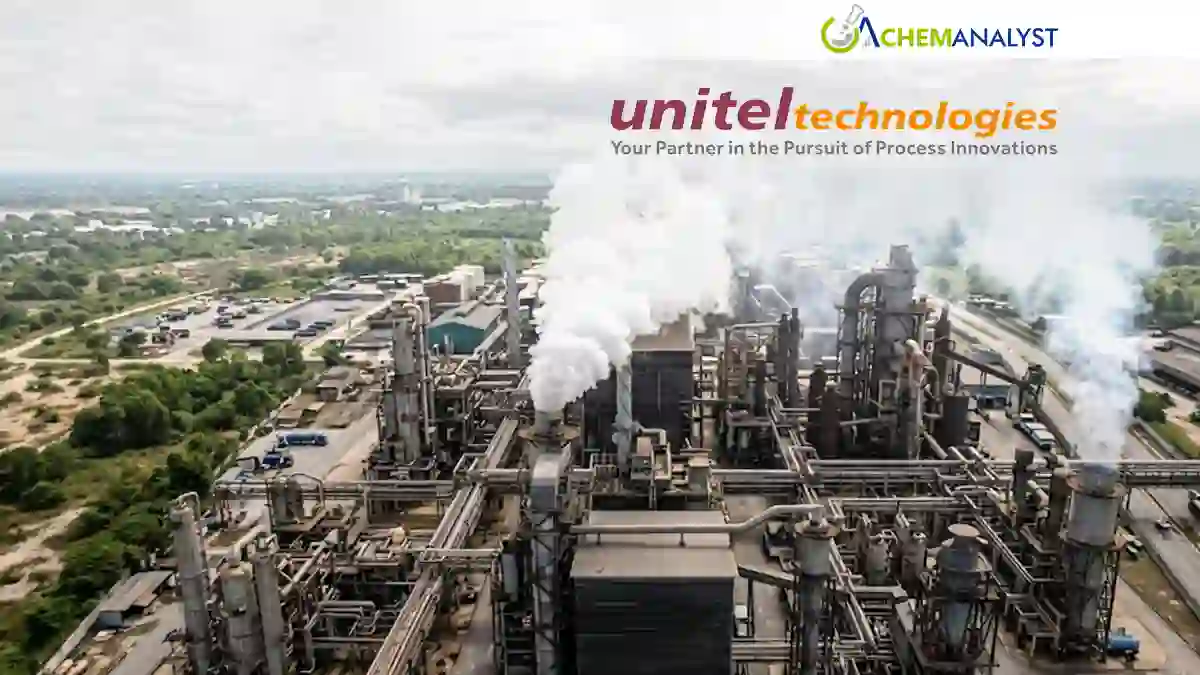
Unitel Technologies, Inc. has successfully demonstrated its Merlin process for producing methanol from captured carbon dioxide, marking progress in carbon capture and utilization (CCU) technology. The process is currently deployed at a facility in Danyang, South Korea, where it is being used to produce approximately 10,000 metric tons of methanol annually.
The Merlin process is designed to utilize around 30,000 metric tons per year of captured carbon dioxide to manufacture approximately 73,000 metric tons per year of blue methanol, equivalent to about 200 metric tons per day. Unitel believes the technology is particularly well suited for integration with existing ethanol plants, which generate a consistent stream of fermentation-derived carbon dioxide.
Ethanol facilities can also provide several resources required for methanol production, including natural gas, electricity, skilled workers and existing industrial infrastructure. This integration could help reduce the capital requirements associated with developing standalone methanol production facilities while providing ethanol producers with an additional revenue opportunity through carbon utilization.
Methanol has a broad range of applications across North America. Major demand segments include biodiesel production, formaldehyde, resins and adhesives, chemical intermediates, specialty chemicals, and fuel and energy applications. U.S. methanol demand reached approximately 11.5 million metric tons in 2025, with market prices reported at around $1,000-$1,400 per ton.
Demand for methanol is also expected to increase as the marine industry adopts lower-carbon fuels. The growing use of methanol as a marine fuel could push U.S. demand toward approximately 18 million metric tons annually by 2035, creating additional opportunities for low-carbon methanol producers.
Unitel said the Merlin CCU process could offer stronger economics than conventional carbon capture and storage (CCS). CCS projects typically generate net returns of around $55-$65 per metric ton of captured carbon dioxide after accounting for federal tax incentives. By converting carbon dioxide into a marketable product, CCU can potentially generate greater commercial value from captured emissions.
Unitel President Dr. Ravi Randhava also highlighted the economic challenges associated with another route for low-carbon methanol production, which combines captured carbon dioxide with electrolytic hydrogen. At an assumed electrolytic hydrogen cost of $5 per kilogram, hydrogen alone could represent approximately $1,000 per ton of methanol production, placing significant pressure on project economics.
By contrast, Merlin’s use of concentrated fermentation carbon dioxide from ethanol plants could provide a more cost-effective feedstock source. The technology therefore offers a potential pathway for expanding blue methanol production while reducing industrial carbon emissions and improving the value generated from captured CO2.
Product Impact
The development is positive for blue methanol production, as Merlin provides a potentially economical route to manufacture methanol from captured CO2. Integration with ethanol plants could lower feedstock and infrastructure costs while creating additional methanol supply. The technology may also strengthen methanol’s role as a lower-carbon marine fuel and support investment in carbon utilization projects. However, broader commercial adoption will depend on plant economics, carbon dioxide availability, hydrogen and energy costs, regulatory incentives, and demand for low-carbon methanol.







Leave a Comment
Comments (0)