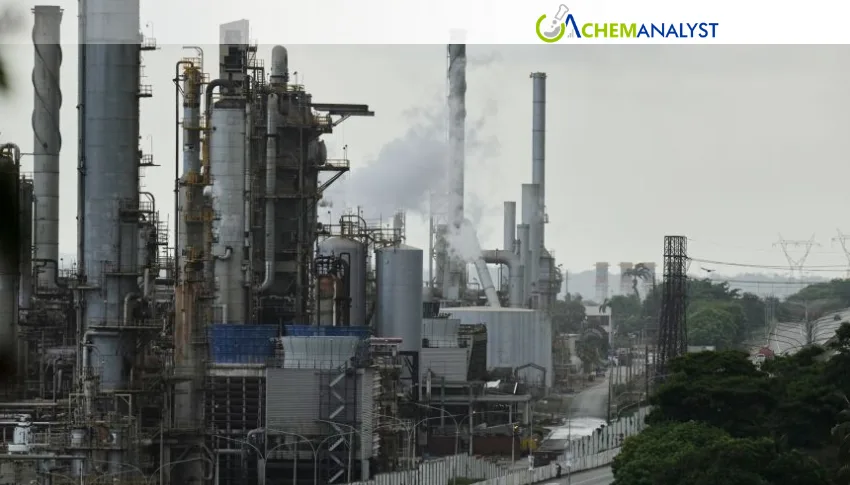
Damage to Venezuela's extensive oil, gas, and refining infrastructure following the recent earthquakes appears to be limited, according to preliminary assessments conducted by workers across the country's energy sector. The powerful earthquakes claimed the lives of more than 180 people, injured over 1,500 others, caused significant structural damage, and triggered widespread power outages across several regions. Despite the scale of the disaster, the nation's primary oil-producing assets have largely escaped major physical damage.
Most of Venezuela's major crude production regions, refineries, export terminals, and pipeline networks are situated far from the cities that experienced the strongest seismic impact. However, the extensive electricity disruptions have raised concerns regarding the industry's ability to sustain crude production at pre-earthquake levels of nearly 1.2 million barrels per day, media reports say. Reliable power remains essential for maintaining production, processing, and transportation activities throughout the country's energy infrastructure.
In central Venezuela, which is located closer to the earthquakes' epicenters, the Moron petrochemical complex—the country's second-largest operational petrochemical facility—began restarting operations on Thursday after experiencing a brief shutdown. Meanwhile, the smaller El Palito refinery continued operating only partially after suffering disruptions caused by power failures. Authorities and technical teams are expected to continue infrastructure assessments throughout the week while repair work progresses and equipment inspections are completed.
Despite the ongoing challenges, crude oil and refined fuel exports continued without interruption on Thursday at Venezuela's principal export terminals, including Jose, Puerto la Cruz, Amuay, Cardon, and Bajo Grande. Workers reported that vessel loading activities remained operational, although administrative procedures and authorization processes have slowed due to the aftermath of the earthquakes, resulting in expectations of minor logistical delays.
Employees at the Paraguana Refining Complex, Venezuela's largest refining hub, indicated that operations were continuing at levels comparable to those recorded before the earthquakes. Similarly, no significant structural damage has been identified in the country's primary oil-producing regions, particularly within the Orinoco Belt and western Venezuela, where the majority of national crude production is concentrated.
Several major international energy companies operating in Venezuela also confirmed that their projects remain functional despite the natural disaster. However, state-owned companies Pequiven and PDVSA have yet to release official updates regarding the operational status of their facilities. Likewise, Venezuela's oil ministry has not responded to requests seeking comments on the situation.
The condition of certain domestic fuel terminals and storage facilities located nearer to the affected areas remains uncertain as inspection teams continue evaluating infrastructure integrity.
The 146,000-barrel-per-day El Palito refinery, Venezuela's smallest refinery, experienced a complete loss of electrical power after transmission lines were damaged during the earthquakes, forcing several processing units, including its fluid catalytic cracker, to shut down, according to media reports. In Moron, Mayor Emily Riera confirmed that the petrochemical complex had begun its restart process. Although some storage infrastructure collapsed during the seismic event, sources indicated that many processing units may resume operations following detailed safety inspections. Videos circulating on social media also showed damage to certain storage facilities. It remains unclear whether a storage tank leak detected on Wednesday has been fully repaired.
Carlos Miquileno, the head of firefighters for Moron and Urama, stated that the state-operated Planta Centro power station was expected to gradually restore electricity beginning Thursday. The return of stable power supplies could significantly improve refinery and petrochemical operations over the coming days.
With widespread power outages continuing across multiple cities, executives from foreign energy companies operating joint ventures with state-run PDVSA have acknowledged that crude production could decline if electricity shortages persist at various oilfields. At the same time, numerous international energy firms have been accounting for employees while carrying out comprehensive inspections of oilfields, production facilities, and processing plants to evaluate operational conditions following the earthquakes.
Major international operators, including Chevron, Eni, Repsol, and Shell, confirmed that all personnel had been safely accounted for. Chevron stated that the company remains operational, while both Eni and Repsol reported that the earthquakes had not affected their ongoing activities. Furthermore, the Perla natural gas project, jointly operated by Eni and Repsol and responsible for supplying approximately half of the natural gas required by Venezuela's thermoelectric power plants, continues to operate normally, with gas production remaining uninterrupted despite the seismic event.
Impact on ChemAnalyst-Tracked Chemical Commodities
Crude Oil & Naphtha — Minimal immediate impact. Venezuela's exports continue uninterrupted, so global crude supply remains stable. However, if power outages persist and production dips below 1.2 million bpd, mild upward pressure on crude and naphtha prices is possible.
Petrochemicals (Ethylene, Propylene, Benzene) — Short-term neutral to slightly bullish. The Moron petrochemical complex restart and El Palito refinery partial outage reduce feedstock availability regionally, which could tighten propylene and benzene supply marginally.
Polyethylene (HDPE/LDPE) & Polypropylene (PP) — Limited direct impact since Venezuela is not a major polymer exporter, but any crude tightening could add modest upward pressure, especially in Latin American markets.
Urea & Fertilizers — Watch closely. The Moron complex, Venezuela's second-largest petrochemical facility, produces ammonia-based fertilizers. Its temporary shutdown could marginally tighten regional fertilizer supply.
Natural Gas — Stable. The Eni/Repsol Perla gas project, supplying ~50% of Venezuela's thermoelectric needs, continues operating normally.
Overall Verdict: The impact on ChemAnalyst-tracked commodities remains limited and short-term, provided power restoration happens quickly. Prolonged outages carry the bigger risk of upstream feedstock tightening.

Leave a Comment
Comments (0)