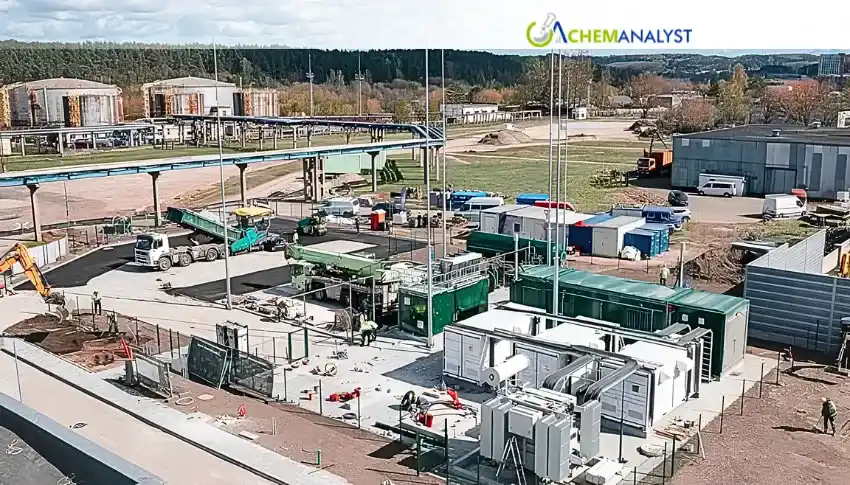
Vilnius has completed construction of a EUR 10 million green hydrogen production plant at the site of the Vilnius Second Combined Heat and Power Plant, marking a significant step toward expanding low-carbon transportation in Lithuania’s capital. The facility is currently undergoing equipment and systems testing, according to district heating supplier Miesto gijos.
Alongside the production facility, Vilnius is installing the city’s first publicly accessible hydrogen refuelling station at the Viršuliškes Public Transport Park. Once the remaining equipment has been tested and the refuelling infrastructure is fully commissioned, green hydrogen production is expected to commence before the end of 2026.
The project has received EUR 5.64 million in funding from the European Union, with the remaining investment provided by Vilnius City Municipality. The financial support is intended to establish local hydrogen production and create the infrastructure required to integrate hydrogen-powered vehicles into the city’s public transport system.
During its initial five-year operating period, the plant will be required to produce at least 1.42 million cubic metres, equivalent to approximately 128,000 kg, of green hydrogen annually on at least one occasion. At full operating capacity, the facility is expected to produce up to 285,000 kg of green hydrogen per year.
The project will initially supply green hydrogen to 16 public transport buses, allowing the city to replace conventional diesel-powered vehicles with cleaner alternatives. This transition is expected to reduce carbon dioxide emissions by approximately 1,400 tonnes annually.
The plant has an installed capacity of 3 MW, which is sufficient to support approximately 40 hydrogen-powered buses. This provides Vilnius with scope to gradually increase the number of hydrogen vehicles in its public transport fleet as demand and infrastructure develop.
The hydrogen refuelling station is also designed to serve customers beyond municipal buses. Once operational, the facility will be accessible to commercial transport operators and private vehicle owners, potentially supporting broader adoption of hydrogen-powered mobility in the city.
The completion of the plant represents an important development for Lithuania’s green hydrogen ecosystem. By combining domestic hydrogen production with dedicated refuelling infrastructure, Vilnius is establishing a foundation for reducing diesel consumption, lowering transport-related emissions and encouraging wider use of hydrogen as an alternative clean-energy fuel.
Chemical Commodity Price Impact
The project is expected to strengthen demand for green hydrogen in Lithuania’s transport sector while supporting the development of electrolyzer, hydrogen storage, compression and refuelling infrastructure. However, the plant’s relatively modest production capacity means its immediate impact on the broader European hydrogen market will remain limited. Increased electrolyzer deployment could gradually support demand for associated materials and chemicals, including water-treatment chemicals, specialty polymers and industrial gases. For chemical commodities tracked by ChemAnalyst, the project is unlikely to trigger a major near-term price movement. Nevertheless, continued expansion of European green hydrogen projects could provide a structural demand boost, particularly for chemicals and materials used across hydrogen production and infrastructure.








 About ChemAnalyst
Leave a Comment
Comments (0)