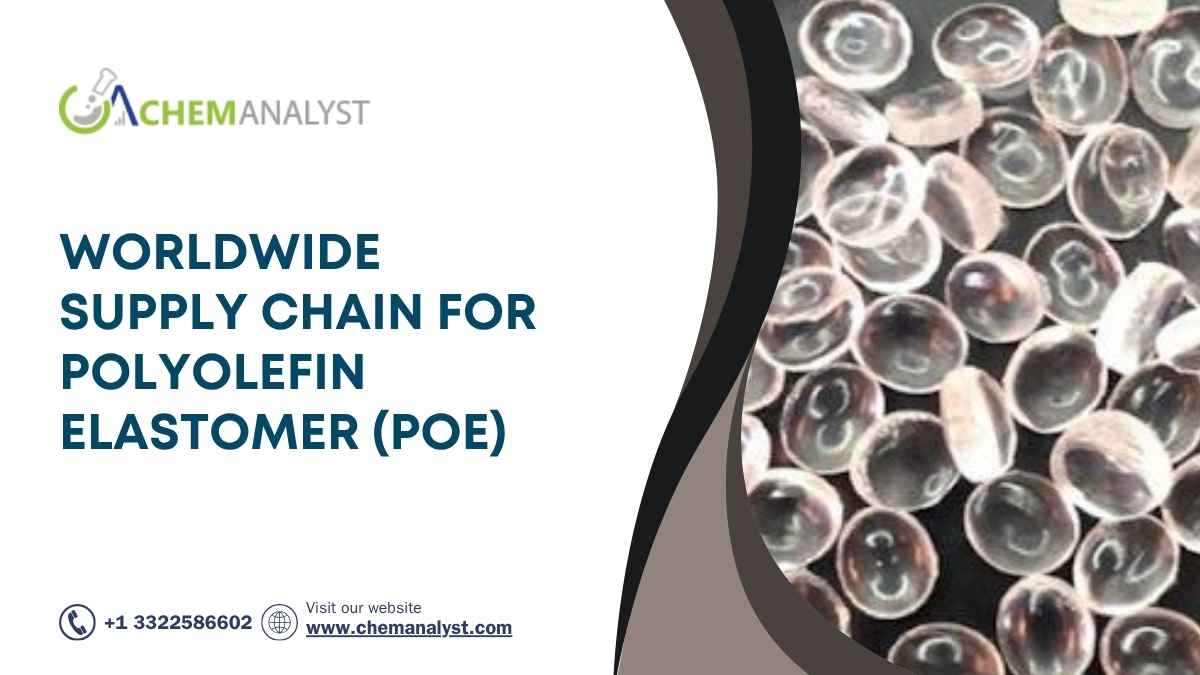
Polyolefin elastomers offer flexibility, light weight, and blendability, making them ideal for applications from packaging to electronics. As demand grows, understanding global supply dynamics and feedstock shifts is vital for navigating market trends and ensuring supply chain resilience.
I. Introduction
Polyolefin elastomers (POEs) a versatile class of thermoplastic elastomers are prized for their light weight, flexibility, and ease of blending with polyethylene and polypropylene. Because of their special combination of softness and ease of processing, they can be found in a wide range of products, including adhesives, footwear, packaging, cable insulation, and automobile interiors. However, it's more crucial than ever to stay on top of the supply chain as demand grows into more recent fields like flexible electronics and solar panel encapsulants. A clear understanding of global market dynamics is essential to staying ahead of the curve in the face of shifting feedstock availability, shifting trade flows, and evolving logistics.
Why is POE Important?
1. Adaptable Mechanical Characteristics
POEs provide softness and elasticity while retaining good durability and toughness.
2. Outstanding Processability
POEs can be processed with ease using common thermoplastic methods.
3. Polyolefin compatibility.
They improve flexibility and impact resistance by blending well with PE and PP.
4. Energy-efficient and lightweight.
In packaging and automobiles, lower density helps reduce weight.
5. Principal Uses:
• Soft trims and bumpers for automobiles.
• Film modifiers for packaging.
• Sole soles for footwear.
• Wire and cable jacketing.
• Hot melt adhesives.
II. Raw Material Sourcing
Metallocene or Ziegler-Natta catalysts are typically used to create POEs from ethylene and a co-monomer such as butene, octene, or hexene. Ethane or naphtha is steam-cracked to produce ethylene, the main building block. Octene and other higher alpha olefins are derived from refinery byproducts or ethylene oligomerization. Key suppliers of raw materials are located in Northeast Asia, the Middle East, and the United States. The United States leads the world in ethylene and alpha olefin production due to the abundance of shale gas.
Challenges in Sourcing:
• The volatility of ethylene prices linked to natural gas and crude oil.
• Duties or restrictions on exports of important feedstocks.
• Logistics bottlenecks from inland or coastal feedstock hubs to polymer plants.
• environmental concerns regarding cracker emissions.
Key Producing Regions:

Production Process:

III. Processing and Intermediate Logistics
POEs are created through the use of advanced catalysts in gas-phase or solution-phase polymerization. Specialized reactors with controlled temperature and pressure are where the reaction occurs. The polymer melt is then sent to converters or compounders after being pelletized.
Intermediate logistics include:
• Pipelines for ethylene delivery to polymer plants
• Rail or ISO tankers for co-monomers
• Road or bulk truck transport of POE pellets to downstream processors
South Korea, Japan, the Middle East, and the U.S. Gulf Coast (Texas, Louisiana) are important production locations. These areas gain from having integrated infrastructure and being close to export ports and feedstock sources.
Major Producers:
• ExxonMobil (Exact™)
• Dow (Engage™)
• Mitsui Chemicals (Tafmer™)
• LG Chem
• Borealis
IV. Storage, Handling, and Safety
POEs are normally kept in dry, ambient conditions in silos or large bags in pellet form. Even though they are not dangerous, they should be shielded from contaminants, heat, and UV light as these can deteriorate their qualities. Storage spaces must have adequate ventilation and be fire safe.
Guidelines for Handling:
• Avoid static accumulation during transfer as it may pose a safety hazard.
• When handling large volumes in dusty environments, personal protective equipment (PPE) must be used.
• To avoid contamination from foreign particles, cleanliness should be maintained.
Adherence to Regulations:
• REACH: Import/use registration in Europe
• OSHA: Exposure limits and worker safety
• TSCA: U.S. inventory listing.
Identification of the Product:
• Product Name: Polyolefin Elastomer (POE)
• CAS Number: Varies by grade and formulation
• Appearance: White/off-white pellets
V. Global Trade and Distribution
POEs are traded internationally with major exporters such as Japan, South Korea, and the United States. POE is used in consumer and automotive packaging in Western Europe, China, and India, which are major importers.
Trade Considerations:
• The availability of containers and freight rates, particularly for Asian routes.
• Tariffs, particularly in light of shifting trade policies between the US and China.
• Changes in regional demand brought about by the packaging and EV industries.
• OEMs demand certifications and quality approvals.
Distribution networks consist of direct distribution to converters or resin distributors after bulk shipments to masterbatch and compounders.
Global Trading Pattern:

VI. Conclusion and Outlook
High-tech polymerization, worldwide distribution, and feedstock procurement are all part of the intricate POE supply chain. Asia and the United States are important production centers, but global flows are changing due to trade dynamics, freight restrictions, and sustainability demands. POE supply chains are changing quickly as a result of growing demand for renewable energy, recyclable packaging, and lightweight cars. Future developments suggest the use of digital supply chain monitoring tools for real-time tracking and optimization, bio-based substitutes, and the integration of the circular economy.
FAQs
1. Is it possible to recycle POE?
In fact, thermoplastics that can be mechanically recycled make up the majority of POEs.
2. What are the differences between POE and EVA?
POE provides better flexibility and durability at low temperatures, while EVA provides more softness and clarity.
3. Can POE be used in place of rubber?
In some applications, like footwear and seals, POE can partially replace traditional rubber.
4. Are there any bio-based POEs?
Some companies are producing POEs from bio-ethylene, but adoption is still sluggish.