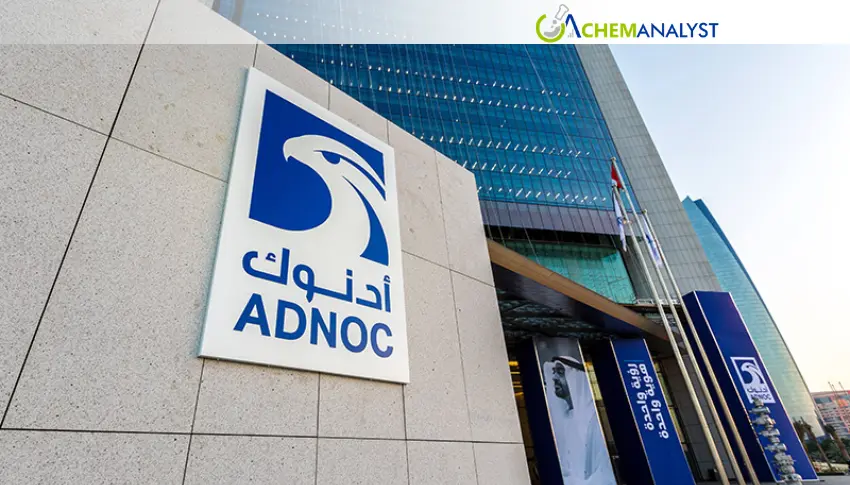
ADNOC has announced the launch of a new global liquefied natural gas (LNG) marketing and trading platform headquartered in Abu Dhabi Global Market (ADGM). The newly established platform brings together the LNG marketing operations of ADNOC Gas and XRG with the trading expertise of ADNOC Trading, creating a unified commercial organization aimed at strengthening the company’s position in the rapidly expanding global LNG market.
The integrated platform has been developed to improve commercial flexibility, optimize shipping capabilities, and provide greater optionality across ADNOC’s LNG operations. It is designed to support the continued expansion of ADNOC Gas’ LNG portfolio, including future production from the Ruwais LNG project, while also enabling XRG to accelerate its international gas and energy infrastructure ambitions. By consolidating marketing, trading, and shipping operations into a single commercial structure, ADNOC seeks to improve customer access to LNG supplies and enhance its ability to efficiently manage an increasingly diversified global portfolio.
As part of its long-term growth strategy, the platform aims to market a combined LNG volume of approximately 47 million tonnes per annum (mtpa) by 2035. Achieving this milestone would position ADNOC and XRG among the world's leading LNG marketers and traders. The initiative is expected to significantly strengthen the companies’ ability to optimize supply chains, respond to changing market conditions, and capitalize on growing global demand for cleaner energy. It also reinforces Abu Dhabi’s ambitions to emerge as a prominent international hub for energy trading and commercial LNG activities.
His Excellency Dr. Sultan Al Jaber, Managing Director and Group CEO of ADNOC and Executive Chairman of XRG, emphasized that global LNG demand is expected to increase substantially over the coming years. He stated that the energy transition will require dependable and responsible suppliers capable of delivering LNG at scale. According to Dr. Al Jaber, the new integrated commercial platform combines ADNOC’s extensive expertise in LNG marketing, trading, and shipping within a single operational hub located in Abu Dhabi. This integration marks a significant advancement in the company's commercial capabilities by improving operational scale, increasing market flexibility, and expanding commercial opportunities, enabling ADNOC to better serve growing international energy requirements.
To lead the commercial marketing operations, Rashid Al Mazrouei has been appointed Chief Marketing & Origination Officer (LNG). In his new role, he will oversee the combined equity LNG portfolios of ADNOC Gas and XRG, directing long-term LNG marketing and customer origination activities from ADGM. He will also work closely with ADNOC Trading to ensure that all marketing efforts are coordinated under the newly established platform.
Al Mazrouei brings considerable experience to the role and provides continuity within the integrated business. His appointment builds on ADNOC Gas’ legacy as one of the world's established LNG suppliers, having exported more than 3,500 LNG cargoes globally since commencing operations in 1977. The company’s existing commercial LNG agreements will continue without any changes, ensuring uninterrupted service for current customers while allowing ADNOC Gas to benefit from greater marketing optimization, particularly as new LNG volumes from the Ruwais LNG project become available.
The platform is further strengthened by XRG’s expanding international LNG portfolio, supported by operational hubs and commercial offices located in both London and Abu Dhabi. While long-term LNG marketing activities will now be centralized under the integrated platform, ADNOC Trading will continue to serve as the counterparty for trading transactions. Existing customer relationships and commercial interfaces will remain unchanged, ensuring continuity while benefiting from enhanced commercial coordination.
ADNOC Trading has rapidly established itself as a major participant in the global LNG market. Within just four years, the company has developed a substantial third-party LNG portfolio and has become one of the leading global LNG financial traders. Its international presence, with offices in Abu Dhabi, Singapore, and Geneva, enables it to support customers across major LNG trading regions and optimize market opportunities.
Shipping remains a critical component of the integrated platform. ADNOC Trading’s LNG shipping desk ranked among the world's leading LNG charterers in both physical shipping and freight derivatives during 2025. Complementing these capabilities, ADNOC Logistics & Services (ADNOC L&S) has expanded its owned LNG fleet to 20 vessels, including 14 modern two-stroke LNG carriers. This expanded fleet provides greater transportation flexibility, supports increasing LNG production from the UAE, and enhances ADNOC’s ability to serve global customers efficiently while strengthening its competitiveness in international LNG trade.
Impact on Products and Chemical Commodity Prices
The launch of ADNOC's integrated global LNG marketing and trading platform is expected to improve the availability and reliability of LNG supplies, benefiting gas-intensive industries such as petrochemicals, fertilizers, methanol, ammonia, and hydrogen production. Enhanced trading, shipping flexibility, and optimized portfolio management will enable ADNOC to respond more efficiently to regional demand fluctuations, reducing supply disruptions and improving feedstock accessibility for downstream manufacturers. As additional LNG volumes, including those from the Ruwais LNG project, enter the market, the increased supply could ease pressure on global natural gas markets over the medium to long term.
For chemical commodities tracked by ChemAnalyst, the move is likely to have a stabilizing to slightly bearish impact on prices of products heavily dependent on natural gas feedstocks, including ammonia, methanol, urea, hydrogen, polyethylene, polypropylene, and other petrochemical derivatives. Lower feedstock cost volatility and improved LNG availability could reduce production costs, particularly in Asia and Europe, supporting higher operating rates and moderating chemical price fluctuations.







 About ChemAnalyst
Leave a Comment
Comments (0)