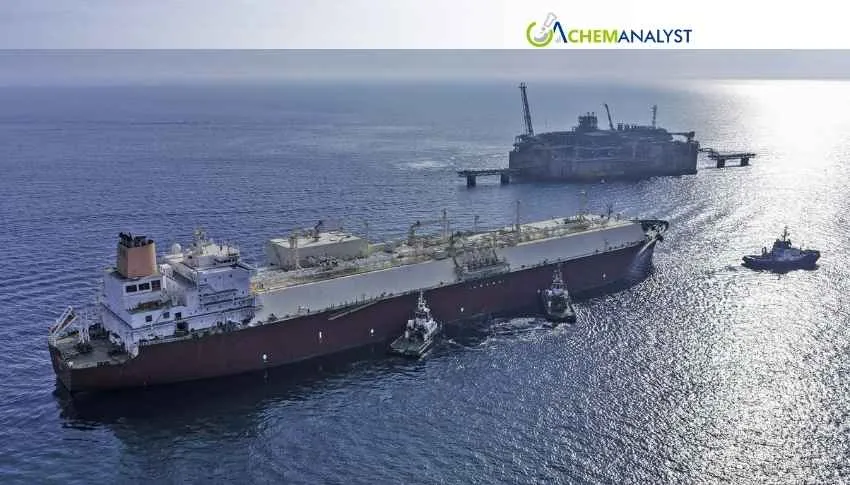
Adriatic LNG reinforced its strategic role in Italy’s energy infrastructure during the first six months of 2026 by supplying 4.4 billion cubic metres (bcm) of natural gas to the country’s national transmission network. This volume accounted for approximately 14% of Italy’s overall natural gas demand of around 32.6 bcm during the January–June period. The terminal also represented more than 40% of the country’s total liquefied natural gas (LNG) imports, making it Italy’s third-largest source of imported natural gas after pipeline deliveries from Algeria and Azerbaijan. The amount supplied remained consistent with the corresponding period in 2025, highlighting the terminal’s operational stability.
The performance was particularly noteworthy given the geopolitical instability in the Persian Gulf during the period. Rising tensions in the region temporarily disrupted LNG shipments originating from Qatar through the Strait of Hormuz, creating uncertainty in global LNG trade. Despite these challenges, Adriatic LNG demonstrated considerable operational flexibility by responding swiftly to changing customer requirements and facilitating alternative supply arrangements. The terminal adapted to revised shipping patterns, helping maintain uninterrupted gas deliveries while supporting the reliability and resilience of Italy’s energy system.
The disruption in Qatari LNG imports was effectively compensated by increased cargo arrivals from the United States. Consequently, the geographical composition of LNG imports shifted during the first half of the year. Adriatic LNG received 28 LNG cargoes from the US compared with 13 cargoes from Qatar, illustrating the growing importance of supply diversification in ensuring national energy security during periods of geopolitical uncertainty.
Since commencing commercial operations in the latter half of 2009, Adriatic LNG has become a vital component of Italy’s energy infrastructure. Over the years, the terminal has injected more than 113 bcm of natural gas into the national grid and has welcomed approximately 1,250 LNG carriers from multiple producing regions worldwide. This long operational history underscores its contribution to maintaining a diversified and dependable gas supply for the country.
Alexandra Thomas, Chief Executive Officer of Adriatic LNG, emphasized that dependable energy infrastructure becomes increasingly valuable during periods of heightened global uncertainty. She noted that the terminal’s contribution to Italy’s energy security stems from its ability to ensure uninterrupted operations, diversify supply sources, maintain rigorous safety standards, and prioritize environmental stewardship alongside constructive engagement with stakeholders and local communities.
Alongside its operational update, Adriatic LNG also published its latest Sustainability Report. The report was prepared according to the European Voluntary Sustainability Reporting Standard (VSME) developed by the European Financial Reporting Advisory Group (EFRAG) for non-listed small and medium-sized enterprises. It outlines the company's achievements across environmental, social, and governance (ESG) areas while demonstrating its commitment to responsible industrial development and continuous operational improvement.
The report highlights the company’s outstanding safety performance during 2025. Adriatic LNG concluded the year without any employee injuries or incidents affecting the environment or the integrity of its facilities. This achievement is particularly significant considering the extensive maintenance activities conducted during the year, including scheduled servicing of the LNG terminal and work associated with its capacity expansion project. These activities involved technicians, engineers, employees, and contractor personnel, who collectively completed more than 37,000 working hours without any injuries. The accomplishment reflects meticulous planning, comprehensive safety protocols, preventive risk management, and effective coordination among all project participants.
Human capital development also remained a key focus throughout 2025. Adriatic LNG delivered more than 1,600 hours of employee training to strengthen workforce capabilities and further expanded its employee wellbeing programme through additional initiatives designed to support staff health, engagement, and professional development.
The Sustainability Report further illustrates the company’s commitment to supporting surrounding communities. As part of its capacity expansion programme, Adriatic LNG established a voluntary fund worth €2.25 million to be distributed over six years. The fund will finance projects promoting economic development, fisheries, and aquaculture across the Polesine region and the Municipality of Cavarzere in Veneto.
The company also generated meaningful economic benefits within the region by collaborating with 25 Veneto-based businesses specializing in maintenance, logistics, environmental services, and safety operations. Additionally, Adriatic LNG supported 19 corporate social responsibility initiatives aimed at enhancing community welfare and local development.
Environmental performance remained another central priority. Adriatic LNG continued strengthening its emissions monitoring programmes and voluntarily participated in the Oil & Gas Methane Partnership (OGMP) 2.0, a United Nations Environment Programme (UNEP)-supported initiative focused on improving methane emissions measurement and reduction across the oil and gas industry. Furthermore, the company launched the "Custodi del Mare" environmental education programme in partnership with Plastic Free to encourage greater awareness and protection of marine ecosystems.
External Relations Director Alfredo Balena stated that sustainability remains fully integrated into Adriatic LNG’s business operations rather than existing as a separate corporate function. He emphasized that the company's long-term approach focuses on creating enduring value through responsible operations, continuous improvement, environmental protection, and meaningful engagement with employees and local communities.
Impact on Product and Chemical Commodity Prices
Adriatic LNG’s stable operations and successful diversification of LNG supplies, particularly through increased imports from the United States, strengthen Italy’s natural gas availability despite geopolitical disruptions. Reliable gas supply supports uninterrupted production across energy-intensive industries, including ammonia, methanol, hydrogen, fertilizers, petrochemicals, and industrial chemicals, reducing the risk of manufacturing disruptions. For chemical commodities tracked by ChemAnalyst, this development is expected to exert stable to slightly bearish pressure on European natural gas-dependent products by easing feedstock availability and limiting energy cost spikes. While geopolitical risks remain, diversified LNG sourcing enhances market confidence, helping moderate volatility in regional chemical and fertilizer prices.








 About ChemAnalyst
Leave a Comment
Comments (0)