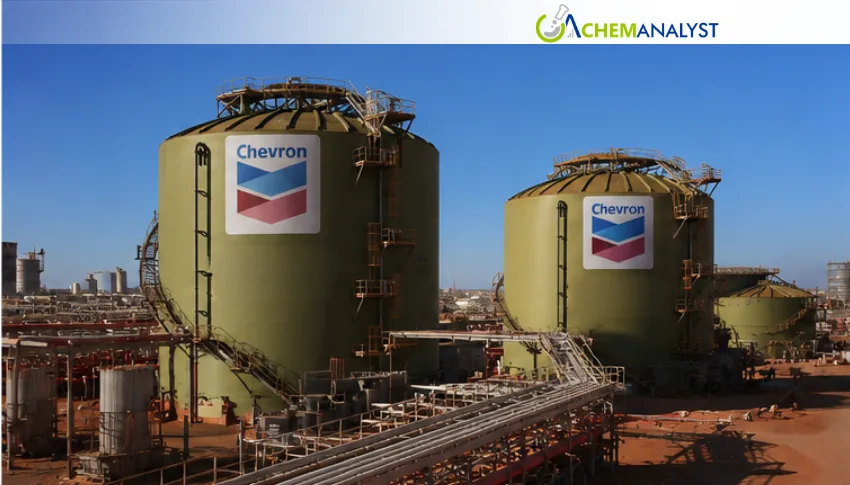
Chevron has entered into a long-term agreement with Microsoft to provide natural gas-powered electricity for a large-scale data center project in West Texas, highlighting the growing energy demands of artificial intelligence (AI) infrastructure. Announced on Monday, the 20-year partnership will support Microsoft's ambitious Project Kilby, a hyperscale data center development designed to meet the rapidly increasing computational requirements of AI applications and cloud services.
Project Kilby is expected to require approximately 2.7 gigawatts (GW) of electricity once operational, an amount of power comparable to the consumption needs of nearly two million households. To ensure a dedicated and reliable energy supply, the facility will be powered primarily through natural gas-fired generation units rather than drawing electricity from the public power grid. This approach is intended to provide uninterrupted energy availability while reducing dependence on regional grid infrastructure.
Under the agreement, Chevron will leverage its extensive natural gas resources from the Permian Basin, one of North America's most productive hydrocarbon regions, spanning West Texas and southeastern New Mexico. The company believes its access to abundant natural gas reserves positions it to deliver a stable and cost-effective energy solution capable of supporting large-scale data center operations over the long term.
The power generation infrastructure for Project Kilby will include large gas turbines supplied by GE Vernova, Chevron's strategic partner in the project. In addition, Caterpillar will contribute supplementary turbine technology to help meet the facility's substantial energy requirements. Importantly, the electricity generated for the project will be dedicated exclusively to the data center and will remain disconnected from the broader electrical grid, creating a self-contained energy ecosystem designed specifically for Microsoft's operations.
Although the project has generated significant industry attention, construction has not yet commenced in Reeves County, Texas. Chevron expects to reach a final investment decision later this year, which will determine the project's advancement toward development. If approved as planned, power delivery to the data center is anticipated to begin in 2028.
Microsoft's decision to partner with Chevron reflects the company's evolving strategy to secure dependable energy sources capable of supporting the exponential growth of AI technologies. The technology giant is undertaking an unprecedented expansion of its data center network and plans to invest approximately $190 billion in capital expenditures this year, representing a substantial 61% increase compared to its spending levels in 2025.
While Microsoft has historically focused on renewable energy investments to offset carbon emissions associated with its data center operations, the company is increasingly exploring additional energy sources that can provide continuous, around-the-clock power. Renewable resources such as wind and solar remain important components of its sustainability strategy, but their intermittent nature has prompted the search for complementary solutions.
This shift is evident in Microsoft's broader energy portfolio. In 2024, the company supported the revival of the Three Mile Island nuclear power plant in Pennsylvania as part of its efforts to secure reliable low-carbon electricity. The latest agreement with Chevron further demonstrates Microsoft's willingness to diversify its energy mix, including the use of natural gas, to ensure sufficient power availability for next-generation AI infrastructure.
According to Microsoft executives, the accelerating adoption of AI technologies requires energy systems capable of scaling rapidly and delivering dependable performance. Chevron, meanwhile, views the partnership as an opportunity to capitalize on growing demand for energy-intensive digital infrastructure while showcasing the Permian Basin's ability to supply competitively priced natural gas to emerging technology sectors.
Market Impact: he Chevron-Microsoft agreement is expected to have a moderately bullish impact on the U.S. natural gas market over the long term. Project Kilby’s anticipated power demand of 2.7 GW will require a substantial and continuous supply of natural gas, reinforcing demand growth from the rapidly expanding AI and data center sector. This development further strengthens the outlook for natural gas producers in the Permian Basin and could encourage additional investments in gas infrastructure and power generation assets.
For chemical commodities tracked by ChemAnalyst, the immediate price impact is likely to be limited because the project is still awaiting a final investment decision and commercial operations are not expected before 2028. However, the long-term implications are more significant. Higher natural gas consumption from large-scale data centers could tighten regional gas availability and support firmer U.S. natural gas prices.
As natural gas serves as both a feedstock and energy source for numerous petrochemicals, sustained increases in gas prices may elevate production costs for commodities such as Ammonia, Methanol, Hydrogen, Urea, and other gas-based derivatives. Consequently, these products could experience upward pricing pressure over the medium to long term. Nevertheless, the impact is expected to be gradual, with broader market fundamentals, feedstock availability, industrial demand, and energy supply conditions remaining the primary determinants of chemical commodity pricing.







Leave a Comment
Comments (0)