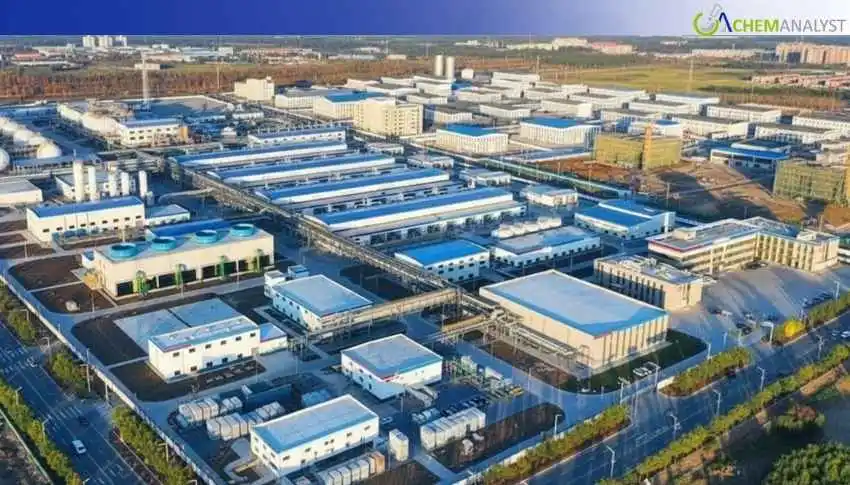
China Energy Engineering Group Co Ltd has officially begun operations at what is being described as the world’s largest integrated green hydrogen, green ammonia, and green methanol production hub, marking a major breakthrough in China’s clean energy ambitions. The project, developed by China Energy Engineering Group Co Ltd (Energy China), represents a significant step toward scaling up low-carbon fuels while improving the economics of renewable energy storage, conversion, and long-distance transportation.
Located within the Songyuan Hydrogen Energy Industrial Park in Jilin province, the first phase of the project has been engineered to deliver large-scale output across multiple green fuel streams. According to the state-owned company, annual production capacity in this initial stage includes approximately 45,000 metric tons of green hydrogen, alongside 200,000 tons of green ammonia and green methanol. These volumes place the facility at the forefront of global green fuel production, both in terms of scale and system integration.
Beyond its impressive production capacity, the project is expected to generate substantial environmental benefits. Energy China estimates that the first phase alone will reduce the equivalent consumption of standard coal by roughly 600,000 tons per year. At the same time, annual carbon dioxide emissions are projected to decline by about 740,000 tons, reinforcing the project’s role in supporting China’s decarbonization goals and its broader transition toward a low-emissions energy system.
One of the project’s defining features is its highly integrated design. The facility combines large-scale wind and solar power generation with advanced energy storage systems, water electrolysis units, and flexible chemical synthesis technologies. This configuration directly addresses one of the most persistent challenges in renewable energy deployment: balancing the intermittency of wind and solar power with the continuous, stable energy demands of industrial chemical production. By aligning these components within a single, optimized system, the project enables renewable electricity to be converted efficiently into storable and transportable green fuels.
Ni Zhen, Party secretary and chairman of Energy China, emphasized the strategic importance of hydrogen in China’s long-term energy roadmap. He noted that hydrogen is increasingly viewed as a cornerstone of future energy development and that China is actively promoting strategic emerging industries, including hydrogen energy, to serve as new engines of economic growth and industrial upgrading.
The project is also seen as a pathway to reducing the cost of green hydrogen and accelerating the development of global markets for green fuels. According to Energy China, several world-class technical challenges were overcome during development, including the precise coordination of wind power, solar generation, energy storage, and downstream hydrogen–ammonia–methanol production systems. Achieving this level of integration is critical for improving efficiency and lowering overall production costs.
Li Jingguang, chairman of Energy China’s hydrogen energy unit, highlighted the project’s potential to address renewable energy curtailment. He stated that the integrated model offers one of the most effective solutions to the problem of wasted wind and solar power by enabling surplus electricity to be converted into valuable chemical products. This, in turn, significantly enhances the financial viability of renewable energy investments.
As one of the world’s largest builders of energy and power infrastructure, Energy China has indicated that it will continue expanding its hydrogen and green fuel portfolio. Looking ahead, the company plans to leverage the Songyuan project as a foundation for further technological innovation, deeper digital integration, and wider replication. These efforts are expected to contribute meaningfully to China’s transition toward a modern, clean energy system and a more sustainable industrial structure.







Leave a Comment
Comments (0)