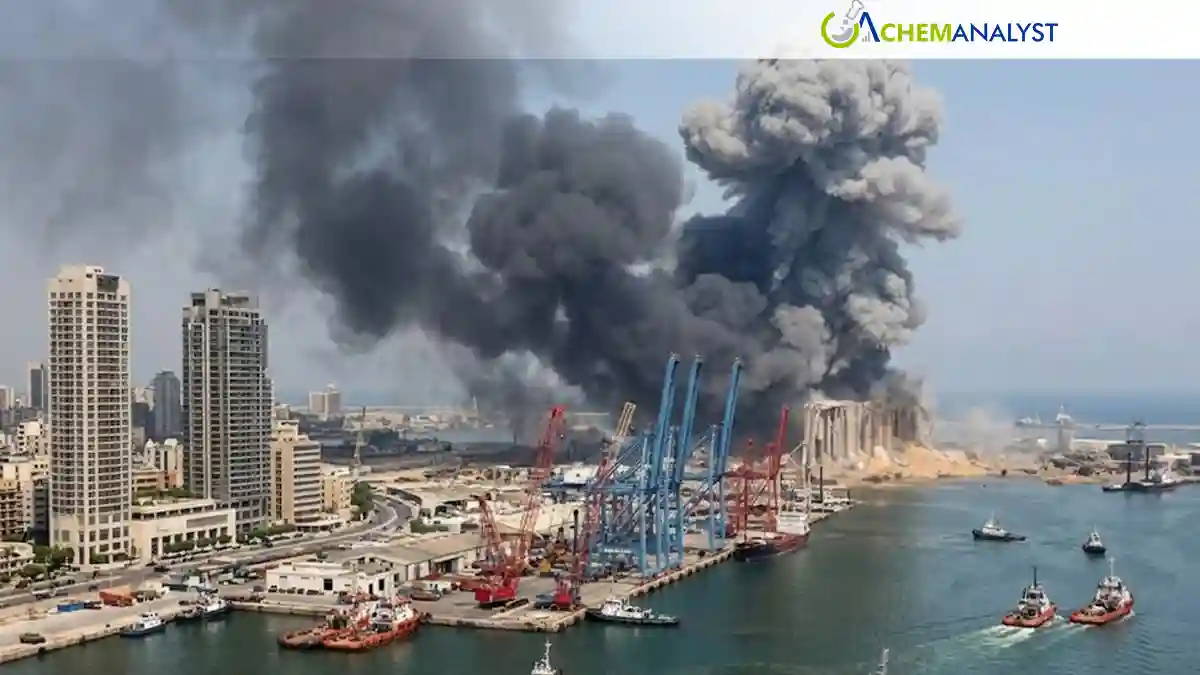
Ukrainian drone attacks have severely impacted Russia's oil refining capacity, pushing refinery runs to a more than 21-year low. This disruption has simultaneously led to record-high Russian liquefied natural gas (LNG) exports to Europe, creating a paradoxical energy market scenario.
Ukrainian drone strikes have caused significant damage to Russian oil refineries since August 2025, culminating in record low refining runs by July 2026. These attacks have impacted numerous facilities, including the Omsk refinery, which is Russia's largest. The International Energy Agency estimates that Russian plants processed 3.8 million barrels per day in June 2026, marking a 1.6 million barrels per day decrease from the previous year.
This sustained campaign has reportedly knocked out between 20% and 40% of Russia's oil refining capacity. Such damage has led to a substantial reduction in the production of refined products. Consequently, Russia's seaborne oil product exports fell to a record low in June 2026.
The decline in refining capacity has triggered a domestic fuel crisis across Russia. Many regions are experiencing shortages, rising gasoline prices, and long queues at filling stations. Some local authorities have implemented temporary rationing systems or recommended remote work to curb fuel consumption. This situation creates social pressure on the Kremlin, as ordinary citizens increasingly feel the war's economic impact.
Despite ongoing sanctions against Russia, its LNG exports to Europe reached unprecedented levels in March 2026. European Union (EU) imports of Russian LNG totaled approximately 2.45 billion cubic meters in March, a 40% increase year-on-year. This surge occurred as the Hormuz crisis disrupted Qatari LNG shipments, traditionally bound for Asia, thereby tightening global LNG supply to Europe.
European utilities and traders likely rushed to secure Yamal LNG volumes before a ban on Russian LNG spot cargoes took effect in April 2026. Although the EU plans to fully ban Russian LNG imports by early 2027, the short-term reliance highlights Europe's complex energy needs and market vulnerabilities.
The contrasting trends have significant implications. For Russia, while crude oil export volumes increased in June 2026, foreign currency revenues from these exports decreased due to falling prices. The country is now exporting more unrefined crude due to its damaged refining capabilities. Globally, the loss of Russian diesel, a key supplier, has contributed to multi-year high prices and a squeezed market.
Geopolitically, Ukraine's drone campaign has proven effective in disrupting Russia's energy infrastructure, succeeding where some sanctions have fallen short. Europe's continued reliance on Russian LNG, even temporarily, underscores the challenges of completely decoupling from Russian energy sources amidst global supply shocks.
Impact on Chemical Commodity Prices
Reduced Russian refinery runs will tighten global supply of refinery-linked feedstocks such as naphtha, benzene, and other aromatics, likely pushing prices upward due to constrained availability. Diesel and gasoil prices are expected to stay elevated, indirectly affecting downstream petrochemical costs. Meanwhile, record Russian LNG flows to Europe could ease near-term natural gas and LNG-linked feedstock prices (e.g., methanol, ammonia) in the region, but the upcoming 2027 EU ban on Russian LNG threatens renewed volatility and price spikes as Europe seeks alternative supply sources.








 About ChemAnalyst
Leave a Comment
Comments (0)