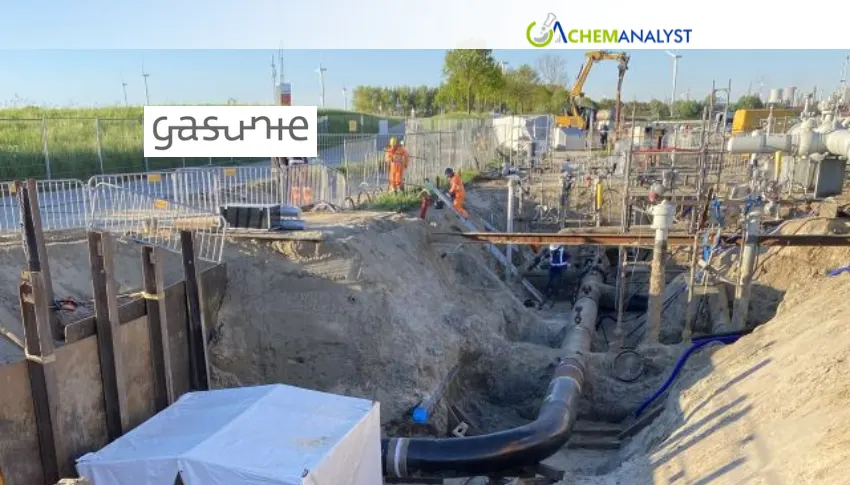
Gasunie has completed a new connection between its underground gas networks near Axel in Zeeland and Ossendrecht in Noord-Brabant, marking an important step toward strengthening the Netherlands' biomethane infrastructure. Finalized in late July, the project enhances transport capacity for biomethane, enabling both existing and future producers to inject larger volumes of renewable gas into the national transmission network. The expanded capacity is expected to improve the distribution of domestically produced sustainable gas to households, industries, and the transportation sector while supporting the country's broader energy transition goals.
A key feature of the project is the reuse of an existing natural gas pipeline that had become redundant for conventional gas transportation. By repurposing the pipeline instead of constructing new infrastructure, Gasunie minimized construction activities, reduced material consumption, and limited disruption to surrounding communities. The required work was confined to Gasunie-owned sites located outside residential areas, allowing the project to be completed with a lower environmental footprint.
The network connection addresses one of the major challenges associated with biomethane production. Unlike natural gas demand, which fluctuates significantly throughout the year, biomethane production remains relatively stable across all seasons. This often results in regional surpluses during periods of lower demand, particularly in the summer months. The new interconnection enables surplus biomethane produced in Zeeland and surrounding regions to be transported more efficiently to locations where consumption is higher, improving network flexibility and overall utilization.
The additional transport capacity comes at a time when the Dutch biomethane sector is experiencing rapid growth. Domestic biomethane production increased by 14% last year, while the number of producers expanded from 92 to 108. To support the Netherlands' ambition of raising biomethane production to 2 billion cubic meters annually in the coming years, further investments in transport infrastructure are becoming increasingly important.
Recognizing Noord-Brabant's strong potential due to its abundant agricultural and organic waste resources, Gasunie is also advancing additional infrastructure projects in the province. Biomethane booster stations are scheduled to become operational in Tilburg and Mill. These facilities will increase the pressure of biomethane delivered from the regional Enexis network, allowing it to enter Gasunie's high-pressure transmission system more efficiently.
Together, the newly completed network connection and the upcoming booster installations are expected to enhance the availability of renewable gas across the Netherlands. The investments will improve grid efficiency, facilitate greater biomethane production, and strengthen the country's efforts to expand the use of sustainable energy in residential, commercial, and industrial sectors.
Impact on Products and Chemical Commodity Prices
The expansion of Gasunie's biomethane transmission network is expected to strengthen the availability of renewable gas for industrial users, reducing dependence on conventional natural gas over the long term. Improved access to biomethane could support sustainable production of chemicals such as ammonia, methanol, hydrogen, and fertilizers, where natural gas serves as a key feedstock. However, the immediate impact on chemical commodity prices tracked by ChemAnalyst is likely to remain limited, as biomethane volumes are still relatively small compared to overall industrial gas demand. Over the medium to long term, increased renewable gas availability may help moderate feedstock cost volatility and support more stable pricing for gas-based chemical products.






Leave a Comment
Comments (0)