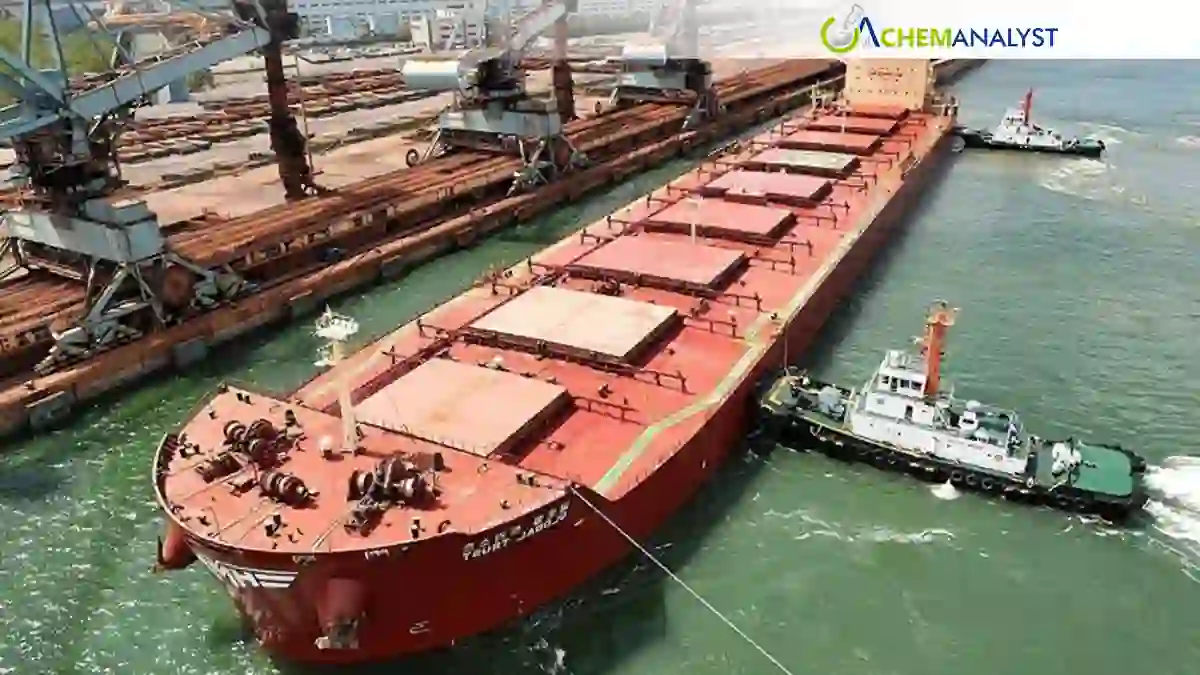
South Korean shipping company HMM has secured a major long-term transportation agreement worth 4.7 trillion won, or approximately $3.5 billion, with Brazilian mining giant Vale. Under the agreement, HMM will transport bulk cargo for Vale using eight newly built vessels, marking another significant expansion of the Korean shipping company's dry-bulk operations.
The eight vessels, each with a capacity of 210,000 deadweight tons, will be delivered sequentially beginning in 2030. HMM will operate the ships under 25-year contracts, providing the company with a long-term source of revenue while strengthening its relationship with one of the world's leading mining companies.
The latest agreement represents HMM's third major shipping contract with Vale. The companies previously signed two 10-year transportation agreements in May and September last year, with a combined value of approximately 1.1 trillion won. The latest deal substantially increases the scale and duration of their commercial relationship.
A key feature of the new fleet will be its advanced propulsion technology. The eight Newcastlemax bulk carriers will reportedly be fitted with the world's first tri-fuel propulsion engines capable of operating on methanol, ethanol and conventional fuel oil. This flexibility could allow HMM to adjust fuel choices depending on availability, economics and environmental requirements.
The vessels will also be designed to be LNG- and ammonia-ready. This means they can potentially be converted to operate on liquefied natural gas or ammonia as these alternative marine fuels become more commercially viable. Such flexibility could help HMM respond to increasingly stringent maritime emissions regulations and evolving fuel standards.
In addition, the ships will incorporate technologies aimed at improving energy efficiency. Rotor sails will use wind energy to provide additional propulsion assistance, potentially reducing fuel consumption and carbon emissions during voyages.
The agreement comes as HMM seeks to diversify its business beyond container shipping by expanding its bulk transportation operations. The company's bulk carrier fleet has already grown significantly, reaching 61 vessels in the first half of this year compared with 44 vessels at the end of March last year.
The Vale contract therefore represents both a major revenue commitment and a strategic step in HMM's broader fleet expansion and decarbonization strategy.
Product & Chemical Commodity Price Impact
The deal is unlikely to create an immediate major impact on chemical commodity prices, but it could gradually influence marine-fuel demand and transportation costs. Demand for methanol and ethanol as alternative marine fuels may strengthen as HMM deploys tri-fuel vessels, potentially providing modest bullish support to prices over the longer term. LNG demand could also benefit if the vessels are converted to LNG propulsion. Ammonia may gain additional demand as ammonia-ready shipping capacity expands, supporting positive long-term sentiment for ammonia prices. However, the eight vessels will enter service from 2030, so near-term price effects on methanol, ethanol, LNG and ammonia should remain limited.








 About ChemAnalyst
Leave a Comment
Comments (0)