Hy2gen Nordic AS, the Nordic subsidiary of global renewable hydrogen producer Hy2gen, has secured financial backing for its Albatros renewable hydrogen project under the European Hydrogen Bank (EHB). The selection highlights the project's strategic importance in supporting Europe's transition toward cleaner energy, reducing industrial carbon emissions, and strengthening the continent's renewable hydrogen ecosystem. By receiving this support, Albatros has been recognized as a key initiative capable of advancing Europe's ambitions for a low-carbon economy while enhancing long-term energy security.
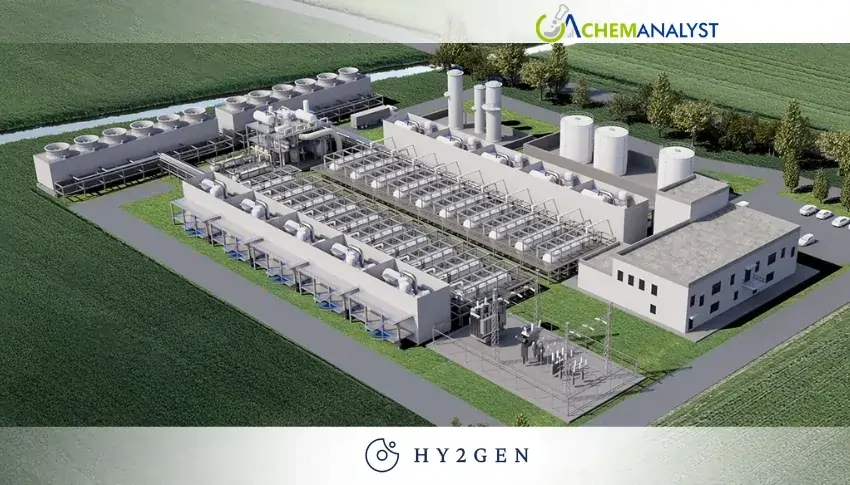
The Albatros project will be developed in Kassø, Denmark, where a state-of-the-art 100-megawatt electrolyser facility is planned. The installation will manufacture Renewable Fuels of Non-Biological Origin (RFNBO)-certified hydrogen for industrial consumers across Germany as well as other European markets. Over its first decade of commercial operations, the project is expected to generate around 144,000 metric tons of renewable hydrogen. This production is projected to prevent approximately 986,000 metric tons of carbon dioxide-equivalent emissions, making a significant contribution to the decarbonisation of industries that are difficult to electrify or transition away from fossil fuels.
The project earned its place through the European Hydrogen Bank's competitive auction mechanism by submitting a successful bid of €0.97 per kilogram of renewable hydrogen produced. Under the EHB framework, projects compete by proposing the minimum financial premium required to make renewable hydrogen commercially viable. Albatros secured one of the most competitive bids in the latest auction round, ensuring a production-based premium of €0.97 per kilogram during its first ten years of operation. This financial support is expected to narrow the price gap between renewable hydrogen and conventional fossil-based alternatives, making clean hydrogen increasingly attractive for industrial users while accelerating Europe's broader climate objectives.
One of the project's major strategic advantages is its location within one of Denmark's leading renewable energy regions. Albatros will be directly connected to the Danish-German Hydrogen Backbone, enabling efficient cross-border transportation of renewable hydrogen to industrial demand centers throughout Germany and other parts of Europe. Beyond improving hydrogen distribution, this infrastructure will strengthen Europe's energy independence by linking abundant Danish renewable energy resources with industrial consumers across the continent. In doing so, the project will contribute to reducing Europe's reliance on imported fossil fuels, aligning closely with the European Union's long-term energy security strategy.
Hege Økland, Managing Director of Hy2gen Nordic AS, emphasized that Albatros is well positioned to meet the rapidly growing demand for renewable hydrogen in Germany. She noted that the combination of Aabenraa's strong industrial base and support from the European Hydrogen Bank will allow the company to supply renewable hydrogen at competitive prices, helping industrial customers comply with the European Union's renewable hydrogen requirements. Økland also highlighted Hy2gen's commitment to working closely with Aabenraa Municipality, investing in local economic development, and becoming a long-term contributor to the Kassø community's emergence as a leading green industrial hub.
Cyril Dufau-Sansot, CEO of Hy2gen AG, stated that projects such as Albatros will become increasingly important as Europe seeks to decarbonise its industrial sector while enhancing energy resilience. He explained that connecting Denmark's renewable energy resources with industrial demand across Europe strengthens Hy2gen's growing portfolio and reinforces the company's commitment to supplying renewable molecules essential for the continent's energy transition.
Beyond its environmental benefits, Albatros is expected to generate substantial economic value. During the construction phase, the project is anticipated to create up to 500 jobs, while long-term operations will support approximately 30 to 40 permanent positions. Additional opportunities are also expected for regional suppliers, contractors, and service providers, providing a broader economic boost to the surrounding community.
Construction of the Albatros facility is currently scheduled to begin in 2028, with commercial operations expected to commence in 2031. Over the coming months, Hy2gen will continue advancing engineering and technical development, secure the necessary permits, and maintain close collaboration with municipal authorities and local stakeholders as the project progresses toward implementation.
Impact of Hy2gen Albatros News & Effect on ChemAnalyst-Tracked Commodities
The Albatros project signals a significant step in Europe's green hydrogen scaling. With a 100 MW plant producing 14,400 tonnes of renewable hydrogen annually from 2031, it will directly feed industrial demand in Germany, especially sectors with EU-mandated RFNBO sub-quotas under RED III.
The immediate price impact on ChemAnalyst-tracked commodities is likely limited since commercial operations are years away, but medium-to-long-term implications are more significant. Increased availability of cost-competitive green hydrogen could reduce production costs and carbon footprints for ammonia, methanol, and other hydrogen-dependent chemicals. As production capacity expands, prices of low-carbon ammonia and green methanol could become more competitive, potentially exerting downward pressure on premium sustainable chemical prices.
Currently, around 45% of hydrogen is used for ammonia manufacturing, meaning Albatros-style projects could gradually soften conventional ammonia pricing in Europe. Overall, the news is bearish long-term for fossil-based hydrogen, ammonia, and methanol prices in the European market, while being bullish for green hydrogen adoption and RFNBO-certified derivatives.







Leave a Comment
Comments (0)