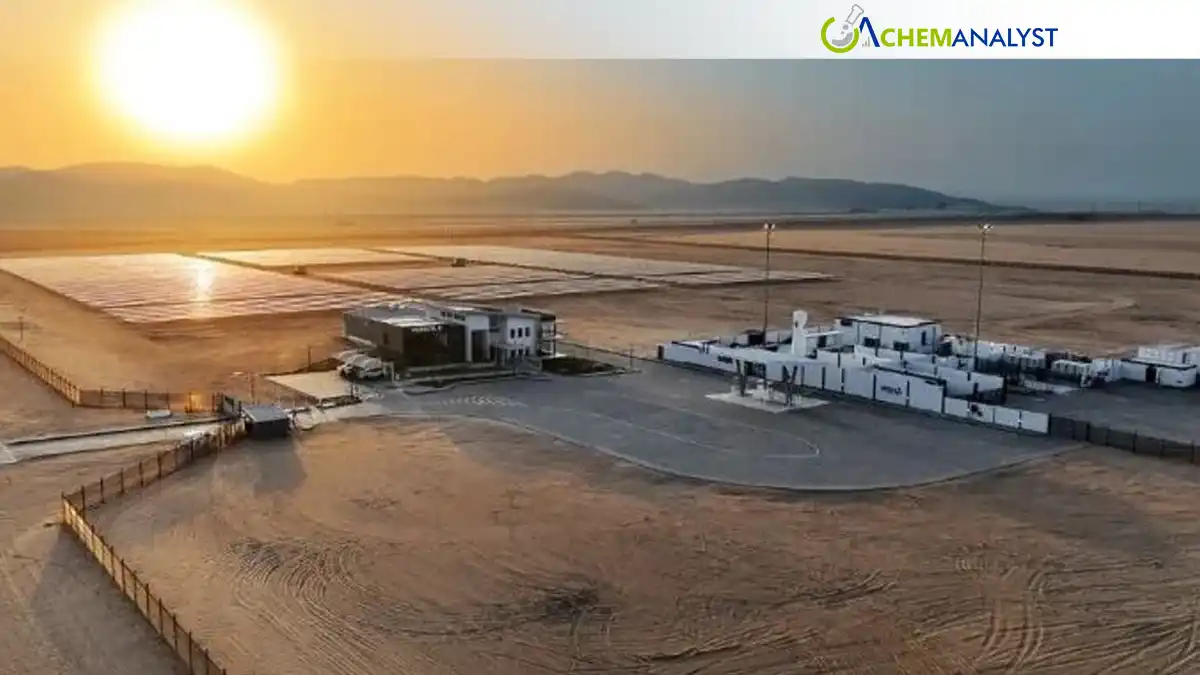
Namibia is taking a major step toward building a green hydrogen economy with the development of an integrated facility in Walvis Bay that combines solar power generation, green hydrogen production and battery energy storage. The project demonstrates how renewable electricity can be converted into clean hydrogen at an industrial scale while supporting decarbonization, energy security and new industrial opportunities.
The facility is designed to use Namibia’s strong solar resources to produce renewable hydrogen for local industrial applications. The hydrogen can initially support dual-fuel trucks, generators and other heavy-duty equipment, while future plans include the development of hydrogen-powered freight transport. The project also creates a pathway for hydrogen-derived fuels to support the maritime sector, including the potential production and supply of green ammonia for ships.
Namibia receives abundant sunlight, creating favorable conditions for large-scale solar energy development. At the Walvis Bay facility, electricity generated by a solar park powers an electrolyzer that uses water to produce hydrogen and oxygen. The hydrogen can then be combined with nitrogen captured from the air to produce ammonia, which can be liquefied and used as a lower-carbon marine fuel.
The current facility includes a 5 MWp solar park spread across approximately 6.5 hectares, supported by a 5 MW proton exchange membrane electrolyzer and a 5.9 MWh battery energy storage system. The combination allows the electrolyzer to operate using renewable electricity generated on-site and energy stored in the battery system. The largely off-grid configuration also demonstrates how renewable hydrogen production can operate independently of conventional power infrastructure.
An important feature of the project is its focus on actual hydrogen consumption. Using the hydrogen in local industrial operations creates an initial source of demand and provides an operating model for future projects. Establishing reliable offtake arrangements is considered critical for the development of green hydrogen projects because production capacity alone does not guarantee commercial viability.
The facility also incorporates a Hydrogen Academy aimed at developing local technical expertise. Drivers, technicians, engineers and other workers can receive specialized training related to hydrogen production, transportation and industrial applications. Such initiatives can help Namibia build a skilled workforce capable of operating and maintaining future hydrogen infrastructure.
Beyond direct energy production, the project could support broader industrial development around Walvis Bay. Increased renewable energy use may reduce reliance on fossil fuels, particularly in sectors such as heavy transport, logistics and shipping that are difficult to decarbonize through conventional electrification.
The current solar installation represents only an initial stage of a much larger development vision. Expansion plans could eventually increase solar generation capacity to hundreds of megawatts. If successfully scaled, Namibia could strengthen its position as a regional and international supplier of renewable energy and green hydrogen-derived products.
Overall, the project highlights the potential of integrated renewable energy systems to combine clean power generation, hydrogen production, energy storage, industrial applications and workforce development within one ecosystem. Its expansion could help accelerate Namibia’s energy transition while creating new opportunities for industrial growth, export revenues and long-term economic resilience.
Impact on Products and Chemical Commodity Prices
The project is positive for green hydrogen, ammonia and methanol by demonstrating commercially integrated renewable production and creating a potential pathway for larger-scale supply. Greater green hydrogen availability could gradually reduce production costs as solar and electrolyzer capacity expands. For ammonia, increased green hydrogen supply may place downward pressure on long-term production costs, particularly as renewable projects scale. Green methanol could also benefit from improved access to low-cost renewable hydrogen, although it additionally requires a reliable carbon source. However, the current facility is relatively small, so the near-term impact on global chemical prices should remain limited. Larger expansions toward hundreds of megawatts could create stronger downward cost pressure.








 About ChemAnalyst
Leave a Comment
Comments (0)