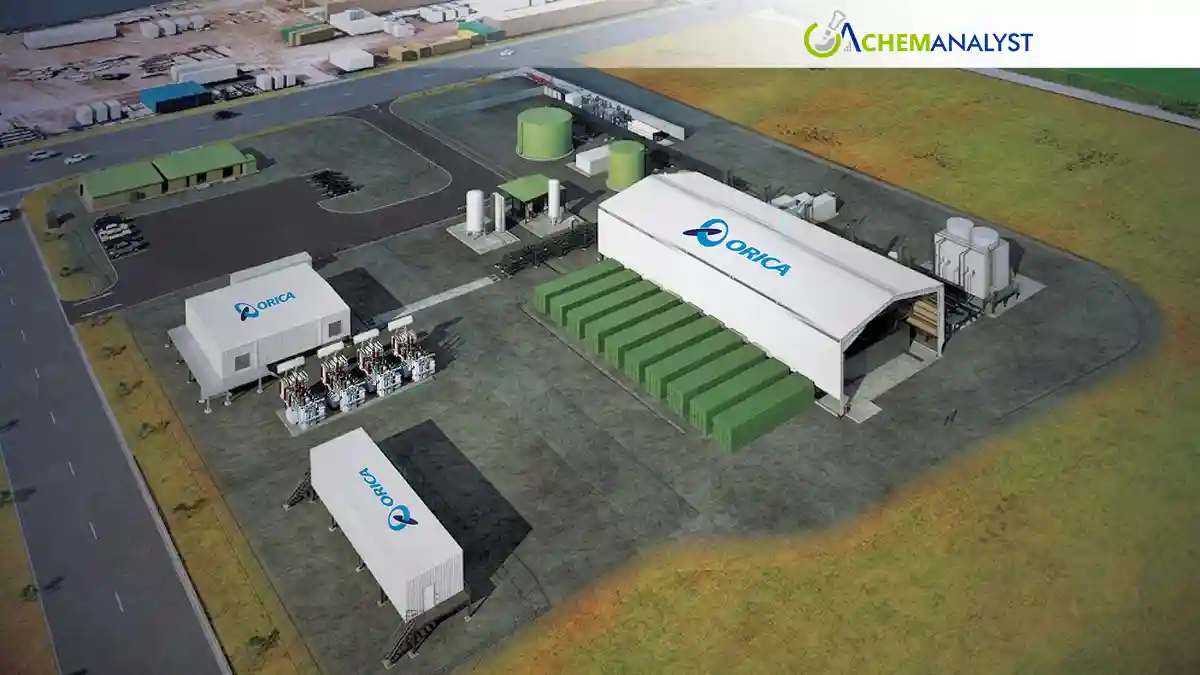
Orica, a prominent explosives and chemicals company, has announced a Final Investment Decision (FID) for its 50-megawatt (MW) green hydrogen project, the Hunter Valley Hydrogen Hub. This significant development marks a crucial step in decarbonizing Australia's heavy industry. Located at Orica's existing ammonia manufacturing plant on Kooragang Island, Newcastle, New South Wales, the project is set to become one of Australia's largest renewable hydrogen initiatives.
The Hunter Valley Hydrogen Hub will feature a 50MW electrolyser powered by renewable electricity. This technology will produce approximately 4,700 tonnes of green hydrogen annually. The primary goal is to replace natural gas in Orica's ammonia production process, reducing the facility's reliance on fossil fuels. This green hydrogen will enable the production of about 26,600 tonnes of low-carbon ammonia each year, which is vital for the mining and agriculture sectors.
The project has secured substantial financial backing, highlighting strong government commitment to Australia's hydrogen industry. It received a conditional award of A$432 million from the Australian Renewable Energy Agency (ARENA) through the Hydrogen Headstart program. This funding provides production credits over a decade to bridge the cost gap for renewable hydrogen. Additionally, the project benefits from A$70 million from the Commonwealth Hunter Hydrogen Hub and A$45 million from the NSW Hydrogen Hub Initiative. Orica's net capital expenditure for construction, after government funding, is estimated to be between A$245 million and A$283 million from 2026 to 2029.
This initiative represents a significant stride in reducing industrial emissions. The project is expected to displace 7.5 percent of Orica's current natural gas consumption. This shift will reduce carbon emissions by an estimated 35,000 to 52,000 tonnes of CO2 equivalent per year, comparable to removing approximately 26,500 cars from the road annually. The project directly supports Orica's ambition for net-zero emissions by 2050 and aids Australia's broader decarbonization objectives.
The Hunter Valley Hydrogen Hub creates approximately 160 construction jobs and 10 ongoing operational roles. It strengthens Australia's sovereign manufacturing capability by ensuring a stable, lower-carbon supply chain for critical industrial inputs like ammonia and ammonium nitrate. This project is the first to reach FID under the federal government's Hydrogen Headstart program, signaling a transition from conceptual ambition to tangible delivery within Australia's renewable hydrogen sector. It positions Australia as a leader in industrial-scale green hydrogen production, particularly for hard-to-abate sectors, despite previous setbacks in other Australian hydrogen ventures. Construction is slated to begin in late 2024, with first production anticipated in early 2029.
Impact & Price Outlook :
This FID marks a turning point for Australia's industrial decarbonization, validating hydrogen-based ammonia as commercially viable rather than experimental. Orica's move could pressure competitors and downstream mining/agriculture buyers to prioritize low-carbon ammonia sourcing, potentially reshaping procurement standards across the region.
For ChemAnalyst-tracked commodities, ammonia prices may see a bifurcation: conventional natural gas-based ammonia could face growing scrutiny amid tightening emissions regulations, while low-carbon ammonia may command a green premium as buyers lock in supply ahead of 2029 startup. Natural gas demand from Orica's Kooragang Island facility will ease slightly (7.5% reduction), offering marginal, localized softening in industrial gas consumption trends rather than a broad market shift.
Ammonium nitrate, used heavily in mining explosives, may see improved supply chain stability and reduced carbon-intensity premiums long-term. Overall, near-term price impact remains limited given the 2029 timeline, but signals a structural shift favoring green ammonia valuations across Asia-Pacific chemical market.







 About ChemAnalyst
Leave a Comment
Comments (0)